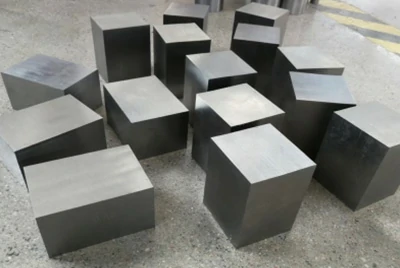
Titanium Forged Block
Titanium forged block is a solid square or rectangular forging made from titanium or titanium alloy billet through heating, upsetting, drawing and multidirectional open-die forging. Compared with titanium blocks obtained by direct cutting, the forging process provides sufficient plastic deformation of the billet, making the material more suitable as CNC machining stock for high-load, large-section and critical components.
Chalco Titanium can supply titanium forged blocks up to 6000 mm long, 2000 mm wide and 1200 mm high. Large-capacity rapid forging equipment can be combined with multidirectional forging to improve deformation penetration and structural uniformity in large-section billets.
We have supporting capabilities covering melting, forging, heat treatment, machining and inspection, and can provide a suitable forged block solution based on drawings, standards and final part requirements.
Titanium forged block specifications
Chalco Titanium can supply square, rectangular and flat rectangular titanium forged blocks in multiple grades for both conventional machining stock and large-size forged block requirements. Product dimensions, grades, inspection and applicable standards can be determined according to project requirements.
| Product | Titanium forged block |
| Product forms | Square forged block, rectangular forged block, flat rectangular forged block |
| Length | 40-6000 mm |
| Width | 40-2000 mm |
| Height / thickness | 20-1200 mm |
| Chinese grades | TA1, TA2, TA3, TA9, TA10, TC4, TC4ELI, TC6, TC9, TC11 |
| ASTM grades | Grade 1, 2, 3, 4, 5, 7, 11, 12, 23 |
| Reference standards | GB/T 16598, GB/T 25137, GJB 2744A, ASTM B381, ASTM B348, AMS 4928 |
| Routine inspection | Chemical composition, physical properties, hardness, metallographic analysis |
| Nondestructive testing | UT ultrasonic testing, PT penetrant testing; requirements can be determined according to the order |
| Machining support | Saw cutting, milling and subsequent machining |
| Special specifications | Custom sizes are available based on drawings and purchasing requirements |
| Typical applications | Aerospace, petrochemical, fine chemical, pharmaceutical, chlor-alkali, electrolysis, electroplating, seawater desalination, etc. |
For large-size or special-section machined parts, the forged block stock dimensions can be determined from the final part drawing and designed around subsequent machining requirements.
Titanium forged block standards
Chalco Titanium can organize production and inspection according to applicable GB/T, ASTM and AMS standards based on the titanium forged block grade, product application and customer purchasing specification.
- ASTM B381 - Standard for titanium and titanium alloy forgings
- GB/T 16598
- GB/T 25137
- AMS 4928
- ASTM B348
Titanium forged block grades available from Chalco Titanium
Chalco Titanium can supply titanium forged blocks in multiple commercially pure titanium and titanium alloy grades for different corrosion, strength and heat-resistance requirements.
| Material category | Available grades | Main properties and suitable uses |
| Commercially pure titanium | Grade 1, 2, 3, 4; TA1, TA2, TA3 | Focused on corrosion performance, ductility and different strength levels |
| Corrosion-focused titanium | Grade 7, 11, 12; TA9, TA10 | More suitable for chemical, chlor-alkali, seawater and other corrosive-media environments |
| High-strength titanium alloys | Grade 5, Grade 23; TC4, TC4ELI | Combines high strength, low density and good overall properties |
| Other titanium alloys | TC6, TC9, TC11 | Suitable for components requiring higher strength, heat resistance and overall performance |
-
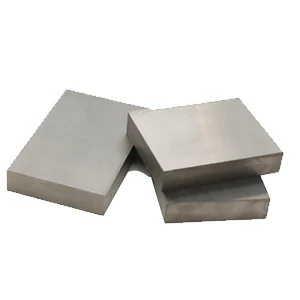 Grade 2 titanium forged block
Grade 2 is a commonly used commercially pure titanium option for parts where corrosion performance and general machinability are primary requirements. It can be used as machining stock for chemical, pharmaceutical, chlor-alkali and seawater desalination applications.
-
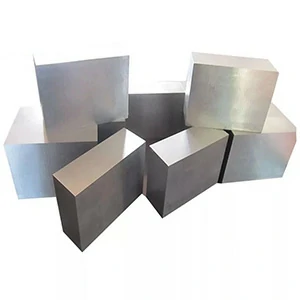 Grade 5 / Ti-6Al-4V titanium forged block
Grade 5 is a widely used high-strength titanium alloy suitable as forged stock for high-load structural and mechanical components.
-
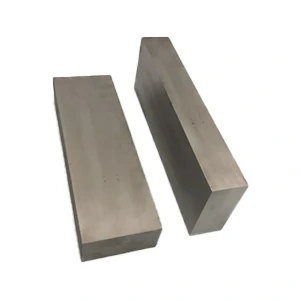 Grade 7 / Grade 12 corrosion-focused titanium forged block
For petrochemical, fine chemical, electrolysis, electroplating and other corrosive environments, Grade 7, Grade 12 or other suitable titanium grades can be selected according to the process medium.
In addition to the regular grades directly listed in the titanium forged block product information, the existing forging system also covers TA15, TA18, TB5, TB6, TC18, TC21, Ti-80 and other materials. Specifications, standards and production requirements for forged blocks in special grades can be confirmed separately for each project.
If you are unsure which titanium alloy grade to select, provide the operating medium, working temperature, load conditions and part drawing. Chalco Titanium can assist with material selection based on project requirements.
Titanium forged block shapes available from Chalco Titanium
Chalco Titanium can provide square, rectangular and flat rectangular titanium forged blocks. The appropriate forged block shape and dimensions can be determined according to the final part geometry, machining method and stock utilization.
-
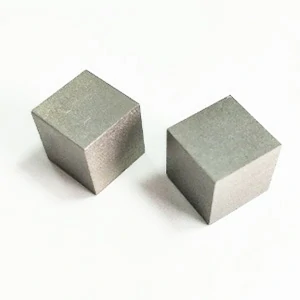 Square titanium forged block
The cross-section has similar width and height dimensions, making it suitable as forged stock for square, block-shaped and multidirectional CNC-machined parts. Allowance can be reserved for subsequent sawing, milling and finish machining based on the finished dimensions.
-
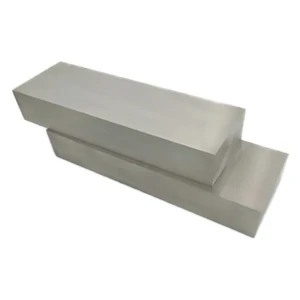 Rectangular / flat rectangular titanium forged block
The width and thickness differ more significantly, making this form more suitable for parts with larger length-to-width or width-to-thickness ratios. A stock shape closer to the final part can help reduce material removal and subsequent machining.
For parts with special dimensions, provide the finished-part drawing and Chalco Titanium can determine a suitable forged block shape and stock size based on the part geometry and machining requirements.
Titanium forged block applications
Titanium forged block combines high specific strength, corrosion performance and good overall mechanical properties. It is suitable as machining stock for large, thick-section and high-reliability components, with the titanium grade selected according to the operating conditions.
Aerospace
Used for high-strength structural parts, connectors and large machined components. High-strength titanium alloys such as Grade 5 and Grade 23 are commonly selected.

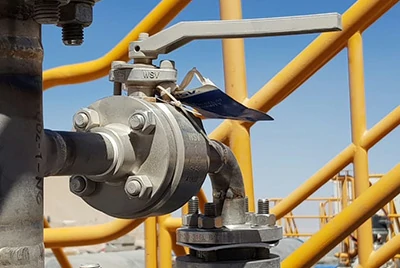
Petrochemical
Suitable for valve bodies, corrosion-service equipment parts and large machined components. Commercially pure titanium or corrosion-focused titanium alloys can be selected according to the corrosive medium.
Marine engineering
Used for structures and equipment parts in long-term contact with seawater or chloride-containing media, taking advantage of titanium's good suitability for seawater service.

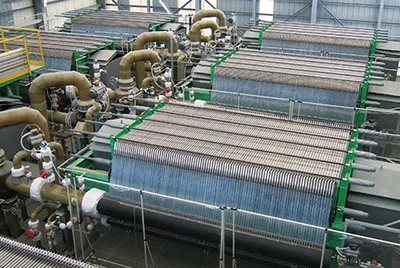
Chlor-alkali and electrolysis equipment
Suitable for electrolysis, electroplating and chlor-alkali equipment parts with higher corrosion requirements. Grade 2, Grade 7, Grade 12 and other suitable materials can be used.
Titanium forged block vs. conventional titanium block
Titanium block can be produced by forging, thick-plate cutting or billet cutting. Different manufacturing routes affect available section size, material structure and suitable applications. For high-load, large-section parts or components with higher internal-quality requirements, the appropriate stock form should therefore be selected according to the drawing and technical specification.
| Comparison | Titanium forged block | Plate-cut titanium block | Billet-cut titanium block |
| Manufacturing | Titanium billet is heated, upset, drawn and forged in multiple directions | Cut directly from titanium plate | Cut from billet, square billet or similar stock |
| Product form | Square, rectangular and large-section forged blocks | Mainly limited by available plate thickness | Limited by the original billet section |
| Microstructure | Plastic deformation improves the as-cast structure and microstructural uniformity | Retains the rolled structure of the original plate | Depends on the manufacturing condition of the original billet |
| Large-section capability | More suitable for thick and large-section stock | Very thick sizes are limited by plate production capability | Limited by available billet sizes |
| Internal quality | Can be controlled through the forging process, heat treatment and UT | Based on the quality requirements of the original plate | Based on the quality requirements of the original billet |
| Machining | Suitable as forged stock for large CNC-machined parts | Suitable for parts machined directly from thick plate | Suitable for parts close to the original billet section |
| Typical choice | High-load, large-section and critical structural parts | General plate-form machined parts | Conventional machined parts |
If the part has a large thickness or cross-section, carries high loads, or the drawing explicitly requires forged stock, titanium forged block is the preferred option to evaluate. For conventional CNC machining where the required size can be covered by thick plate or billet, a plate-cut or billet-cut block may be considered first to reduce material and machining costs.
Titanium forged block manufacturing process
Titanium forged blocks typically undergo multiple forging, heat-treatment and finishing operations to obtain the required dimensions, structure and properties.
- Billet preparation: Prepare a suitable titanium or titanium alloy billet according to the grade, target dimensions and order requirements.
- Heating: Heat the billet uniformly to the temperature conditions required for forging.
- Upsetting: Increase transverse deformation of the billet to support large-section forming and improvement of the internal structure.
- Drawing: Adjust the billet length and section dimensions so that it gradually approaches the target size.
- Multidirectional forging: Repeatedly turn and forge the billet in multiple directions to increase deformation and improve microstructural uniformity in different directions.
- Squaring and shaping: Shape the forging to obtain the required square, rectangular or flat rectangular section.
- Heat treatment: Apply the appropriate heat treatment according to the titanium alloy grade, applicable standard and property requirements.
- Sawing and machining: Perform cut-to-size sawing, milling and other machining so the stock is ready for subsequent processing.
- Inspection: Perform dimensional, chemical composition, mechanical-property, metallographic, UT and PT inspection according to order requirements.
Titanium forged block quality inspection
Chalco Titanium inspects titanium forged blocks for material composition, mechanical properties, internal quality and surface discontinuities, and can configure the required inspection items according to the applicable standard and order requirements.
Chemical composition testing
Spectrometric and gas analysis can be used to confirm the chemical composition and verify the specified titanium forged block grade.
Mechanical property testing
Tensile and hardness testing can be performed to verify the forged material against the requirements of the applicable grade and standard.
Metallographic analysis
Metallographic examination is used to assess the forged microstructure and provide a basis for evaluating microstructural uniformity and forging quality.
UT ultrasonic testing
Used to check for internal discontinuities in titanium forged blocks, especially large-section or critical-component forged stock with higher internal-quality requirements.
PT penetrant testing
Used to check for surface-breaking discontinuities in forged blocks. Testing requirements can be configured according to the product application and purchasing specification.
Inspection equipment includes universal tensile testing machines, gas analyzers, spectrometers, microscopes and ultrasonic flaw detectors.

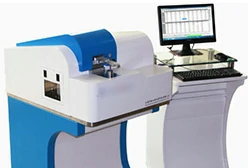

Titanium forged block equipment capabilities
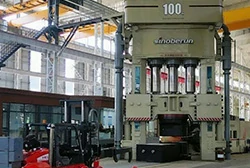
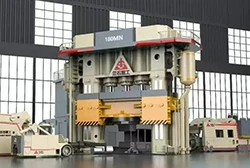
Chalco Titanium has supporting capabilities from large ingots and heating through open-die forging and subsequent machining, covering the production needs of titanium forged blocks in different sizes.
100MN large rapid forging press
The equipment has a nominal force of 100MN, maximum daylight of 6000 mm, working stroke of 3000 mm and a moving table measuring 8000 × 3000 mm. It can handle square billets with side lengths of 400-1800 mm, providing an equipment basis for upsetting, drawing and multidirectional forging of large-section titanium forged blocks.
Multi-capacity rapid forging equipment
Rapid forging equipment with capacities of 63MN, 45MN and 25MN is available. Suitable equipment can be selected according to billet size and forging stage for upsetting, drawing, multidirectional forging and shaping.
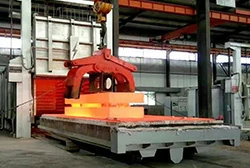
High-uniformity heating
The heating furnaces can reach up to 1250°C. TUS can reach ±7°C for gas-fired furnaces and ±5°C for electric furnaces, supporting control of heating uniformity for large billets.
Large-ingot support
The VAR melting system covers large titanium and titanium alloy ingots from Φ600-1260 mm, providing an upstream billet source for large titanium forged blocks.
Subsequent machining
Supporting heavy-duty saws, lathes, milling machines and other equipment can perform post-forging cut-to-size operations, surface machining and stock finishing, reducing subsequent processing steps for customers.
Related titanium forged products
In addition to titanium forged block, Chalco Titanium can provide various titanium and titanium alloy forgings for different structural, dimensional and subsequent machining requirements.
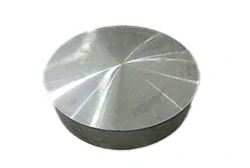
Titanium forged disc
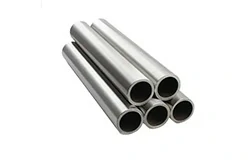
Titanium forged tube
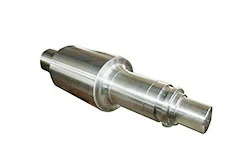
Titanium forged shaft
How to request a titanium forged block quote
For an inquiry, provide the titanium forged block grade, length × width × thickness, purchase quantity, applicable standard and inspection requirements. If subsequent CNC machining is required, providing the finished-part drawing is recommended so Chalco Titanium can determine suitable stock dimensions, machining allowance and delivery condition based on the part dimensions and machining requirements.
Titanium forged block FAQ
What is the maximum size of a titanium forged block?
Chalco Titanium can supply titanium forged blocks up to 6000 mm long, 2000 mm wide and 1200 mm high. The actual available size should be confirmed based on the grade and project requirements.
Can you supply Grade 5 titanium forged block?
Yes. Available materials include Grade 5 / Ti-6Al-4V, Grade 2, Grade 7, Grade 12, Grade 23 and multiple Chinese titanium alloy grades.
Can titanium forged blocks be produced to drawings?
Yes. The forged block shape, stock dimensions, machining allowance, inspection and delivery requirements can be determined from the customer's drawing.
Can UT ultrasonic testing be provided?
Yes. UT ultrasonic testing can be performed according to the applicable standard and purchasing requirements. PT, mechanical-property and metallographic inspection can also be specified.
What is the difference between titanium forged block and a cut titanium block?
Forged block undergoes upsetting, drawing and multidirectional forging, making it more suitable for large-section, high-load parts or components whose drawings explicitly require forged material. For conventional machined parts, plate-cut or billet-cut blocks can also be selected according to actual requirements.
Can machined titanium forged blocks be supplied?
Saw cutting, milling and other subsequent machining support is available. Specific dimensions, tolerances and surface condition can be confirmed according to the drawing and order requirements.