

Chlor-Alkali Anodes: MMO Coated Titanium Anodes for Membrane and Diaphragm Cells
Updated : Aug. 21, 2026A chlor-alkali anode is the core component in industrial chlor-alkali cells that carries out the chlorine evolution reaction. Henan Chalco supplies MMO coated titanium anodes for membrane cells and diaphragm cells.
We supply industrial-scale brine electrolysis installations, not electrodes for pool salt chlorinators or small sodium hypochlorite generators — the current density and brine conditions for these are entirely different.
In addition to new anodes, we also provide anode recoating and reactivation services.
Industry experience generally indicates that the ion-exchange membrane process has become the dominant technology route for current chlor-alkali capacity.
Chlor-alkali anodes and services at a glance
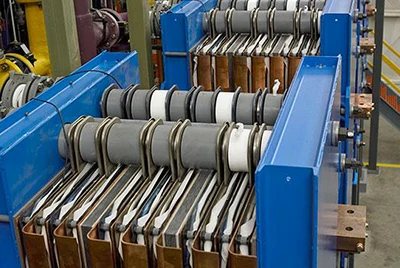
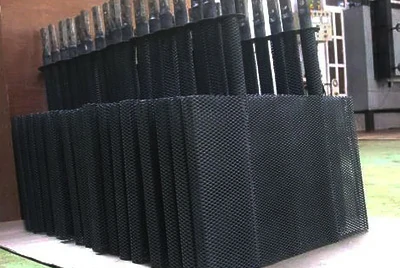
Membrane cell anodes
For ion-exchange membrane chlor-alkali cells — the leading technology route for new-build and upgraded chlor-alkali plants.
Diaphragm cell anodes
For anode replacement, repair, and retrofit in in-service diaphragm cells.
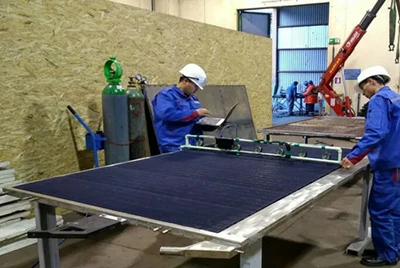
Recoating and reactivation
Strips the spent coating from deactivated anodes, inspects the titanium substrate, reapplies and sinters a new coating, and re-verifies performance.
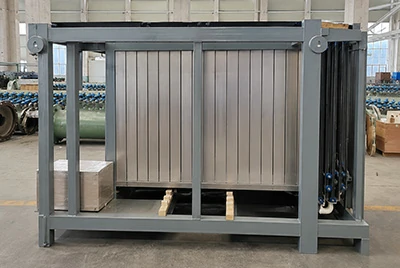
Built to drawing
Anode shape, perforation pattern, conductive structure, connection location, and dimensional tolerances can all be executed to customer drawings.
Why cell voltage rises — and whether the anode is the cause
Chlor-alkali is a classic power-intensive process.
Industry analysis generally points out that electricity cost accounts for a large share of total chlor-alkali production cost, so every increment in cell voltage ultimately shows up in kWh per ton of NaOH. This is also why "rising voltage" is almost always the first signal that starts a customer's anode-purchase evaluation.
But a rise in cell voltage doesn't necessarily mean the anode is at fault. Before deciding to replace or recoat, it's worth separating out the possible causes:
- Ion-exchange membrane aging — after prolonged operation, the membrane is degraded by chemical attack, electrolyte erosion, and fouling from adsorbed impurities. Ion-exchange capacity and permeation stability decline gradually, and membrane resistance keeps rising with operating time.
- Anode coating deactivation — the electrocatalytic activity of the precious-metal oxide declines, and the chlorine evolution potential rises accordingly.
- Cathode-side coating degradation — reduced cathode coating performance also pushes up overall cell voltage.
- Anolyte acidity running high — excess anolyte acidity accelerates anode corrosion, indirectly driving up cell voltage.
- Anode/cathode compartment differential pressure anomalies — poorly controlled or excessively fluctuating differential pressure reduces the contact tightness between membrane and electrode, increasing membrane resistance.
- Brine impurities — calcium and magnesium ions and other impurities scale onto the electrode surface, while fluoride and cyanide ions severely corrode the titanium substrate.
To judge whether the anode is the cause, a few angles are usually worth checking: whether the voltage rise scales with current density; whether it's accompanied by falling current efficiency or a change in chlorine gas quality; and whether the issue is isolated to one cell or occurring across the whole system — an isolated cell points more toward that cell's electrode or membrane, while a system-wide rise usually shares a common process cause. These clues help narrow things down, but they don't replace an actual shutdown inspection.
Once the cause has been separated out, the next question follows: recoat or replace?
Recoating and reactivation: recoat or replace?
The economics of recoating
Titanium is a valve metal. Once the coating deactivates and the substrate surface is exposed, it self-passivates and generally is not further corroded under normal operating conditions, so the titanium substrate can often be reused many times over — this is the physical basis for the economics of recoating chlor-alkali anodes, and also a structural advantage of titanium anodes over soluble anodes.
The decision formula itself isn't complicated: when, at the same current density, the power loss from the rise in cell voltage exceeds the cost of stripping, recoating, and re-testing, recoating is the more sensible choice.
The difficulty isn't the formula — it's the step before it: confirming the voltage rise is really coming from the anode, and whether the substrate is still usable.
Decision path
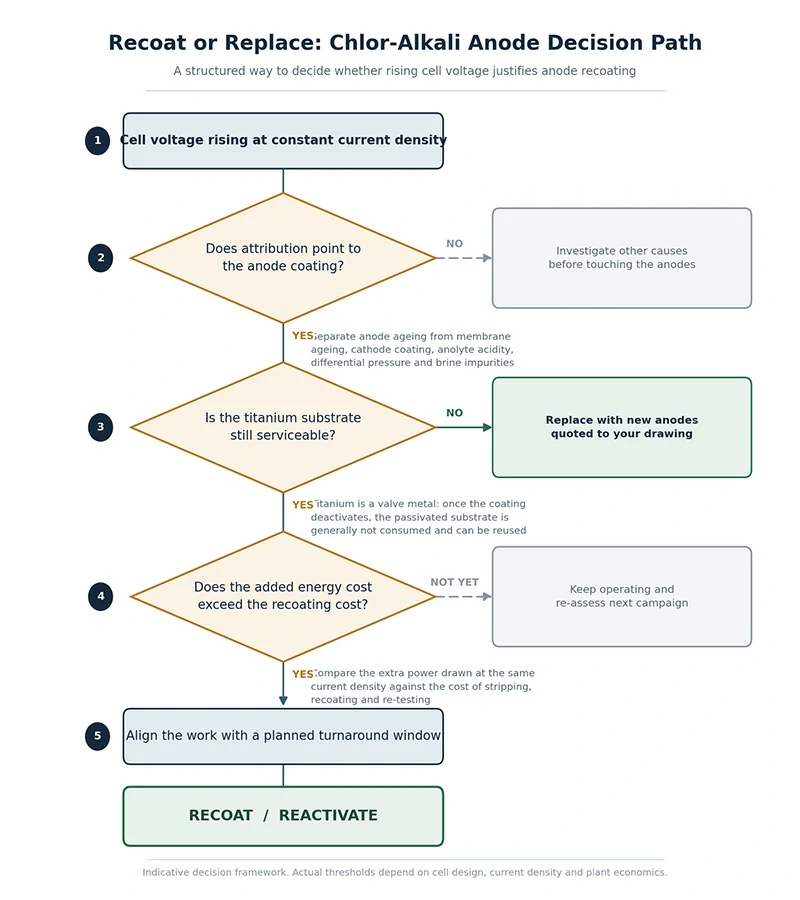
Referring to the diagram above, the actual sequence is: first confirm whether the voltage anomaly is attributable to the anode; then assess whether the titanium substrate is still serviceable — if the substrate condition is poor, recoating cannot recover it and direct replacement is needed; next make the economic judgment; and finally align with the planned turnaround window, to avoid scheduling a separate unplanned shutdown just for recoating.
The thresholds shown in the diagram are indicative only; actual values depend on cell design, operating current density, and plant electricity price.
What Henan Chalco's recoating covers
Our recoating and reactivation service covers: stripping the deactivated coating, inspecting the condition of the titanium substrate, reformulating the precious-metal solution to match operating conditions and reapplying and sintering the coating, and delivery only after life verification with furnace-accompanying test coupons.
It's worth noting that not every returned anode is suitable for recoating. Where inspection shows the substrate is no longer usable, we'll say so and recommend replacement rather than force a recoat.
Performance after recoating depends on substrate condition and the extent of the prior failure.
For an evaluation, you can send us photos of the anode's condition and cell voltage records for a recoating assessment.
Anode geometry and cell compatibility
Anode geometry directly determines whether it will fit into the existing cell.
Available forms include:
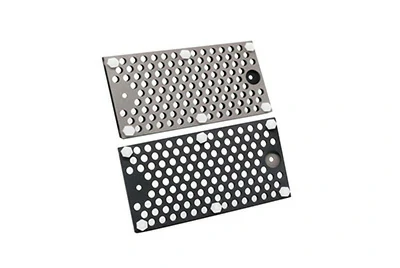
Punched mesh(perforated plate)
Round, oval, or custom perforation, for cells that need a stable open-area ratio and gas pathway.
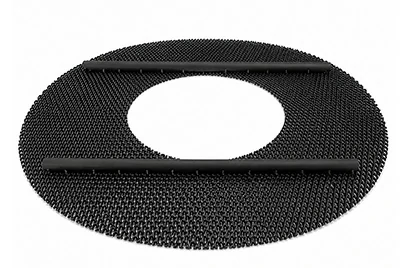
Expanded mesh
Expanded-mesh structure, with a good balance of open-area ratio and rigidity.
Louver type
Louver (slat) structure, for cells with specific requirements on the gas-escape path.
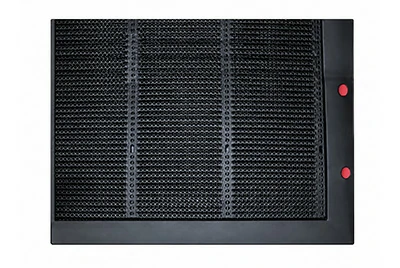
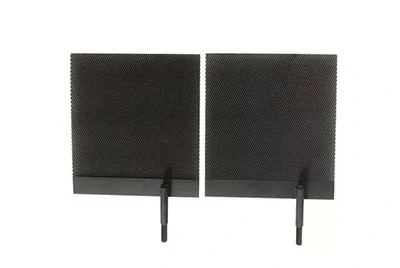
Flat mesh
Flat mesh — simple structure, easy to install.
Mesh basket / monopolar multi-element plate
Mesh-basket and monopolar multi-element plate anode assemblies, mainly for diaphragm cells.
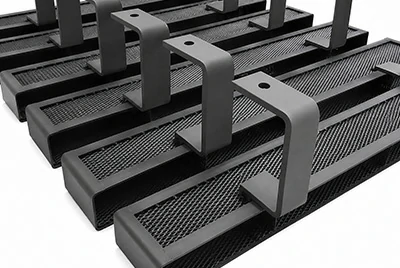
Outer dimensions, perforation pattern, conductor-bar interface, and tolerances can all be executed to customer drawings.
For major membrane cell platforms, we quote and review against the drawings and cell specifications you provide.
Membrane cell vs diaphragm cell anodes: specifications
Anodes for membrane cells and diaphragm cells are not interchangeable.
The potential test baseline, geometry, and failure mode differ between the two — a single parameter set describing both cell types usually means the parameters weren't given specifically for chlor-alkali service.
| Parameter | Membrane cell anode | Diaphragm cell anode |
| Chlorine evolution potential | ≤1.10 V vs SCE(saturated NaCl, C.D. = 3 kA/m²) | ≤1.13 V vs SCE(saturated NaCl, C.D. = 2 kA/m²) |
| Tafel slope | — | ≤30 mV/dec |
| Accelerated life test | — | ≥1200 min(1N H₂SO₄, C.D. = 10 kA/m²) |
| Accelerated weight loss | — | ≤11 mg(6N NaOH, C.D. = 20 kA/m², 95 ℃ / 203 °F) |
| Service life | Expected service life 9 years | Warranty 6 years under normal operating conditions |
| Geometry | Punched mesh, expanded mesh, louver type, flat mesh | Mesh basket, monopolar multi-element plate |
Three notes on the values in the table.
First, every entry is labeled with its test conditions — electrolyte, current density, and reference electrode. A potential figure without its test conditions isn't comparable in an electrolysis engineer's hands, so we'd rather make the table longer.
Second, the test baselines for membrane cell and diaphragm cell differ (3 kA/m² vs. 2 kA/m²), so the two columns should not be compared directly against each other.
Third, the two potential figures for the membrane cell anode correspond to different stages of service: ≤1.10 V vs SCE is the initial chlorine evolution potential of a brand-new anode; ≤1.172 V vs SCE is the in-service potential ceiling permitted within the warranty period — the coating naturally degrades over operating time, and is considered acceptable as long as it stays under this ceiling.
If you'd like to confirm the parameters match your own operating conditions, you can send us your cell type and actual operating current density for a spec review.
Coating system and titanium substrate
Why chlorine evolution uses a ruthenium-based coating
Coating selection is determined by the target reaction.
Chlorine-evolving environments use a mixed metal oxide system based mainly on RuO₂, typically paired with an iridium component. It's characterized by low chlorine overpotential and good selectivity for the chlorine evolution reaction. Oxygen-evolving environments (such as electrowinning of non-ferrous metals or electroplating), on the other hand, use an iridium-tantalum system.
The two coating types serve different purposes and are not interchangeable — the parameters on this page apply only to chlorine-evolving service.
Substrate
The anode substrate is commercially pure titanium, primarily TA1, which has lower iron and oxygen content than TA2 for higher purity and more stable electrode performance. Available to international grade designations Grade 1 and Grade 2, with chemical composition per ASTM B265 and ASTM B348; final values per MTC.
Process chain
Coating-to-substrate bond strength comes from control across every step of the process, not from any single stage:
- Machining and forming — edge folding, threading, and welding, machined to the customer's required specification with guaranteed tolerances;
- Stress-relief annealing and leveling — treated at >500°C (>932°F) to relieve stress and ensure flatness;
- Surface treatment — removes the dense titanium oxide layer formed during annealing, restoring a metallic luster to the surface;
- Acid pickling and etching — etched in 10% oxalic acid at near-boiling, giving a surface roughness of about 6 µm;
- Coating and sintering — the precious-metal solution is formulated to match operating conditions, applied by hand, sintered at a set temperature, then cooled to room temperature and reapplied, repeated 12–20-plus times;
- Pre-shipment verification — life testing with furnace-accompanying test coupons; packed and shipped only after passing.
Coating thickness is on the micron scale. Once the coating surface is scratched, the damaged spot will corrode preferentially during electrolysis and affect the performance of the whole anode.
Avoid any hard-object contact with the coated surface during handling, installation, and removal.
Manufacturing and in-house testing
Henan Chalco's chlor-alkali anodes are produced in our own coating workshop, machining workshop, and packing/shipping workshop, equipped with multiple production lines and dedicated processing equipment such as anode-plate leveling machines.
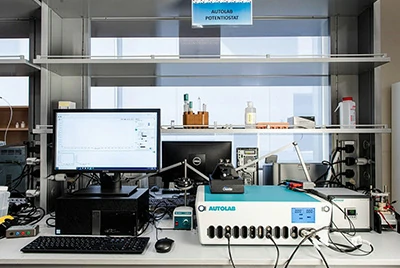
Testing is carried out by our own product inspection department and laboratory, equipped with an electrochemical workstation and other test capabilities.
Life testing with furnace-accompanying coupons is a routine pre-shipment step — test coupons are placed in the furnace alongside each batch of coating during sintering, and only after they pass are the anodes packed and shipped.
On the quality-system side, we have been certified to the ISO 9001 quality management system. The products have also passed third-party testing to the EU RoHS directive requirements.

Supply options, inspection documents, and RFQ boundaries
Supply routes
Two routes are available: new anodes and recoating of deactivated anodes.
Substrate grade, geometry, and coating formulation are determined by the project's operating conditions.
Surface treatment and packaging
Export packaging is designed to match the actual product and the requirements of the destination port.
Inspection documents
The following documents can be arranged in the quotation on a per-project basis:
| Document | Description |
| Chemical composition report | Substrate composition |
| Electrochemical performance test report | Electrochemical performance test |
| Certificate of Compliance (COC) | Statement of compliance |
| Certificate of origin | Provided on request |
| Packing list | Packing list |
Boundaries and compliance
- We do not commit to compatibility with a specific cell type without first reviewing drawings;
- We supply anodes and anode recoating; we do not provide turnkey membrane or cathode-coating packages for the whole cell;
- Recoating requires a prior substrate evaluation; some substrates may be judged unusable;
- Lead time, MOQ, and price are determined per order.
Related products
Ir-Ta Oxygen Anodes
MMO CP Anodes MMO

Platinized Anodes
Titanium Plate & Mesh
Water Treatment Electrodes
Flexible Linear Anodes
Frequently asked questions
How long does a chlor-alkali anode coating last?
It depends on current density and actual operating conditions. Diaphragm-cell anodes carry a 6-year guaranteed life under normal operating conditions; membrane-cell anodes have an expected life of 9 years.
Actual life is affected by current density, brine quality, and shutdown/startup frequency — we recommend a separate evaluation based on your own operating conditions.
Should I recoat or replace my chlor-alkali anodes?
If the titanium substrate is still serviceable and the power loss from the voltage rise exceeds the recoating cost, recoating is usually the more economical choice. Where inspection shows the substrate is unusable, go straight to replacement. See the recoating section on this page for the evaluation sequence.
Is rising cell voltage always caused by the anode?
No. Membrane aging, cathode coating degradation, anolyte acidity, anode/cathode compartment differential pressure, and brine impurities can all drive up cell voltage.
Doing the root-cause analysis before replacing the anode avoids a second shutdown caused by replacing the wrong part.
What is the difference between membrane cell and diaphragm cell anodes?
The potential test baseline, geometry, and failure mode differ between the two, and they are not interchangeable. Membrane-cell anodes are typically punched mesh, expanded mesh, or louver form, while diaphragm cells commonly use mesh-basket or monopolar multi-element plate form. See the specification comparison table on this page for details.
Are MMO anodes the same as what the industry calls dimensionally stable anodes?
Yes, they're different names for the same product category. These anodes use a titanium substrate with a sintered precious-metal mixed-oxide coating on the surface, remaining dimensionally stable and non-dissolving during electrolysis.
Can you match my existing cell geometry?
Yes — we can quote and review against your drawings and cell specifications. Outer dimensions, perforation pattern, and conductive structure can all be customized.
What documents come with the anodes?
A chemical composition report, electrochemical performance test report, and Certificate of Compliance can be arranged per project in the quotation; a certificate of origin is provided on request.
Request a quotation
If you're evaluating new anodes or anode recoating, send us the information below and we'll run a spec review and get back to you with a quotation:
- Cell type and platform — membrane or diaphragm
- Cell specifications or drawings
- Operating current density (kA/m²) and brine conditions
- Anode geometry and dimensions
- Quantity, and whether new anodes or recoating are needed
- Destination port
For recoating inquiries, attaching photos of anode condition and cell voltage records will speed up the evaluation.
Chalco can provide you the most comprehensive inventory of titanium products and can also supply you customized products. Precise quotation will be provided within 24 hours.
Get a quote

