

Custom Titanium Springs
Updated : Jul. 22, 2026Chalco coordinates the production and supply of custom titanium springs for OEMs and industrial projects through a qualified supplier network.
Available products include compression springs, extension springs, torsion springs, and custom wire forms, made from Beta-C (TB9), Ti-6Al-4V, or other customer-specified grades, with titanium wire diameters ranging from 0.1–10 mm. This solution is suitable for projects requiring reduced component mass, resistance to corrosive environments, or specific load–stroke performance.
Customers may submit a drawing or sample along with requirements for load at height, spring rate, dimensions, and operating environment. Chalco organizes material selection, process review, prototype development, volume production, and quality inspection per project, and can provide material traceability, MTC, COC, and inspection reports.
Popular titanium spring products and types
Chalco can customize titanium springs with various configurations based on drawings, samples, or technical specifications, with processable titanium spring wire diameters ranging from 0.1–10 mm.
Specific wire diameter, dimensions, and tolerances must be evaluated together with the titanium alloy grade, spring configuration, heat treatment condition, and performance requirements-please send your details for engineering review.
Titanium Compression Springs
Custom Ti-6Al-4V titanium compression springs in multiple coil sizes
Contact us now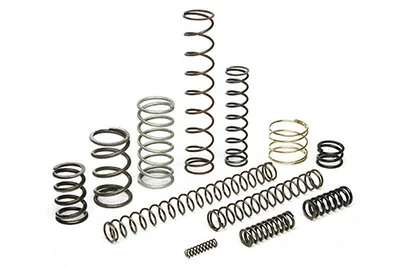
Titanium Extension Springs
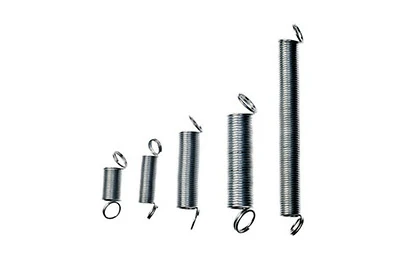
Titanium extension spring with custom hook ends for industrial applications
Contact us nowTitanium Torsion Springs
Titanium torsion spring with custom leg geometry and rotation angle
Contact us now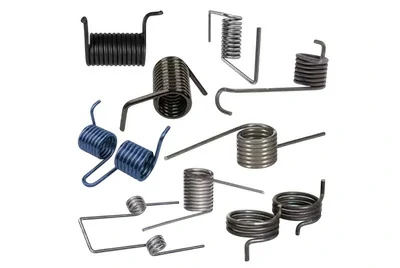
Custom Titanium Wire Forms
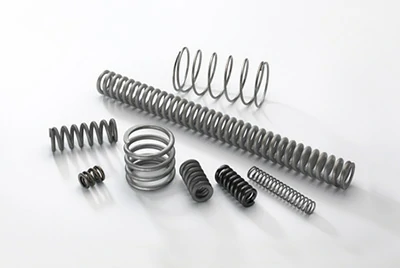
Custom Beta-C titanium wire forms manufactured to an OEM drawing
Contact us nowTitanium compression springs
Titanium compression springs can be customized by OD, ID, free length, pitch, end type, and target load.
Providing load at height, stroke, and spring rate allows preliminary evaluation of spring dimensions, material, and installation space.
Titanium extension springs
Titanium extension springs can be customized for body dimensions, hook configuration, and initial tension.
When requesting a quote, specify working length, end style, and force requirements to enable assessment of hook design and service load.
Titanium torsion springs
Each titanium torsion spring can be designed according to coil dimensions, leg geometry, rotation angle, and target torque.
Customers should provide torque, operating angle, leg orientation, and available installation space.
Custom titanium wire forms
Custom titanium wire forms support complex bends, non-standard end features, and unconventional mounting structures.
Forming feasibility and dimensional control can be evaluated based on 2D or 3D drawings, physical samples, and key dimensional requirements.
| Spring type | Main customizable features | Typical RFQ inputs |
| Compression springs | OD, ID, free length, pitch, ends | Load at height, stroke, spring rate |
| Extension springs | Body diameter, hooks, initial tension | Working length, hook style, force |
| Torsion springs | Coil diameter, legs, angle | Torque, rotation angle, installation direction |
| Custom wire forms | Shape, bends, ends, mounting points | Drawing, material, key tolerance |
Final manufacturability must be confirmed based on titanium alloy grade, wire diameter, geometry, heat treatment, tolerances, and inspection requirements.
When ordering custom titanium springs, please specify spring type, material grade, drawing, load, working stroke, and required inspection documentation.
Titanium alloy options for custom springs
Titanium spring material selection should consider not only strength, but also spring rate, allowable stress, fatigue life, operating temperature, corrosion environment, and formability.
For projects where weight, packaging space, or high-cycle fatigue are critical, high-strength beta titanium alloys often offer advantages over medium-strength alpha+beta alloys. However, the final grade should still be confirmed based on drawings, material standards, and delivery condition.
Beta-C (TB9) titanium springs
Beta-C titanium springs and TB9 titanium springs typically refer to the metastable beta titanium alloy system Ti-3Al-8V-6Cr-4Mo-4Zr.
This material offers relatively high strength, low shear modulus, and good cold-formability in wire form, making it suitable for high-stress, fatigue-sensitive springs where weight and space are constrained.
High-strength beta titanium alloys are readily drawn into wire and formed into springs, which is why they are commonly selected for high-performance spring designs.
Aerospace spring comparisons show that Beta-C springs achieve approximately 50% of the volume and 31% of the weight of equivalent 17-7PH stainless steel springs.
Chemical composition, material standard, wire condition, and heat treatment parameters must be verified during procurement.
Ti-6Al-4V (Grade 5) springs
Ti-6Al-4V springs use an alpha+beta titanium alloy with broad availability and balanced general properties, suitable for medium-stress and general industrial spring applications.
For applications where material availability, corrosion resistance, and general engineering performance outweigh extreme weight reduction, Ti-6Al-4V is often included in initial customer evaluations.
However, it is not always suitable for all high-stress springs. Design comparisons show that replacing steel springs with TC4 (Ti-6Al-4V) reduces weight by ~20% but increases volume by ~42%; using high-strength TB9 reduces weight by ~52% and volume by ~22%.
These results are from specific spring design cases, illustrating how alloy strength directly affects final wire diameter, coil count, volume, and weight savings.
Other titanium grades
Other titanium alloys can be evaluated based on project-specific requirements for corrosion media, temperature, load, fatigue life, and end-use application.
For commercially pure titanium, specialty beta alloys, or medical-grade materials, customers should provide applicable standards and usage requirements.
Titanium spring alloy comparison:
| Alloy | Selection focus | Information to confirm |
| Beta-C (TB9) | High stress, fatigue-sensitive and weight-critical springs | Material standard, wire condition, heat treatment |
| Ti-6Al-4V | General engineered springs and broader material availability | Wire condition, load, stroke, cycle life |
| Other grades | Project-specific corrosion, temperature or end-use requirements | Drawing, standard, operating environment |
Final material selection should be based on spring rate, allowable stress, cycle life, operating temperature, environment, and formability-not solely on alloy popularity.
Titanium spring applications
Titanium springs are primarily used in applications where weight savings, corrosion resistance, fatigue performance, or dynamic response outweigh per-part material cost.
Industrial, Marine and Corrosive Equipment
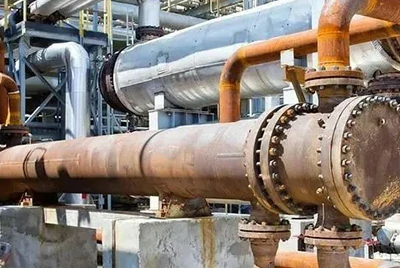
In chemical pumps and valves, marine equipment, and subsea systems, titanium springs are primarily used to withstand seawater, salt spray, or other corrosive media.
Automotive and Motorsport
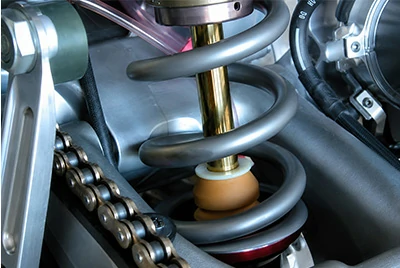
Automotive titanium springs can be used in suspension systems, exhaust components, valve mechanisms, and shock absorbers for motorcycles or bicycles.
Aerospace and Defense
Aerospace titanium springs are commonly found in components requiring weight reduction, fatigue resistance, and traceability-such as door balance mechanisms, landing gear locks, and flight control actuators.

Medical Devices
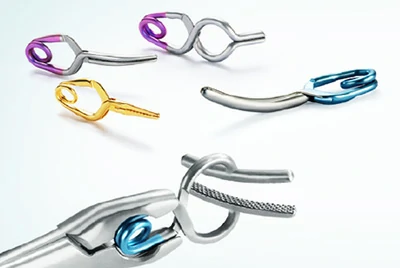
Medical titanium springs can be used in certain device components requiring corrosion resistance, low magnetic response, cleanliness, or compatibility with sterilization processes.
Why use titanium alloy springs?
Customers choose titanium springs not because titanium outperforms steel in all aspects, but because benefits in weight reduction, packaging space, corrosion resistance, or dynamic response can offset its higher material and manufacturing costs.
The actual value of a titanium spring depends on the alloy grade, wire diameter, number of coils, allowable stress, and working stroke-it cannot be achieved by simply replicating steel spring dimensions.
Weight and space reduction
The lower density of titanium alloys significantly reduces the mass of springs and associated moving components.
In suspension, valve, and reciprocating mechanisms, lower spring mass helps reduce unsprung mass or moving inertia, enabling faster system response to load changes.
Suspension spring studies show that, when titanium alloys are used with redesigned wire diameter, coil count, and geometry, weight reductions of approximately 40%–60% can be achieved compared to steel springs.
Lower shear modulus
The lower shear modulus of titanium alloys alters the relationship between load and deflection.
We can adjust wire diameter, active coil count, and free length to achieve the target spring rate, and in some cases reduce coil count or installation height.
This is why titanium springs typically require redesign around target loads rather than serving as direct drop-in replacements with identical dimensions to steel springs.
Corrosion resistance and low magnetic response
Corrosion-resistant springs are suitable for humid, salt-spray, marine, and chemical environments because titanium alloys typically do not rely on additional protective coatings to achieve basic corrosion resistance.
In standard salt-spray corrosion fatigue tests, the fatigue life of steel springs decreases by up to approximately 50% compared to air environments, whereas titanium springs in the same tests show a reduction of less than 4%.
Under specific operating conditions, the service life of titanium springs can reach about 5–10 times that of steel springs; in pump and valve applications within urea plants, titanium springs have an average lifespan exceeding 4,000 hours, with the highest recorded value around 17,000 hours.
Service life is still influenced by load, medium, surface condition, and cycling parameters, and cannot be translated into a uniform lifetime guarantee from Chalco.
Titanium alloys also exhibit low magnetic response, making them suitable for certain electronic, instrumentation, or magnetically sensitive environments.
| Material | Relative density | Relative shear modulus | Corrosion resistance | Magnetic response | Relative material cost |
| Titanium alloy | Low | Low | High in many environments | Low | Significantly higher |
| Spring steel | High | High | Requires protection in corrosive service | Magnetic | Low |
| Stainless steel | High | High | Moderate to high, grade-dependent | Grade-dependent | Medium |
Titanium spring manufacturing and quality control
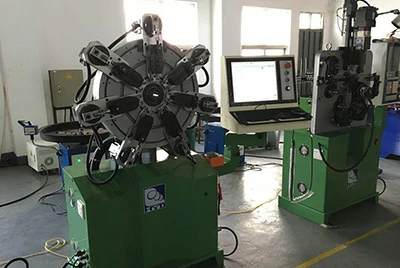
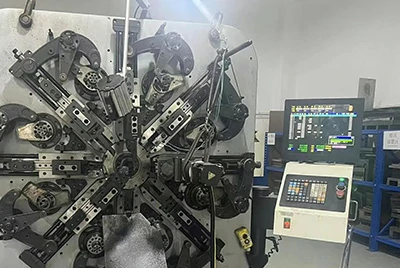
Chalco organizes material verification, forming, heat treatment, surface finishing, inspection, and documentation delivery on a per-project basis, ensuring each batch of custom titanium springs is traceable to drawings, material lots, and quality requirements.
Manufacturing process
- Material verification: Confirm titanium alloy grade, wire temper, and dimensional requirements.
- CNC spring forming: Perform forming, tooling adjustments, and dimensional compensation based on geometry.
- Heat treatment and presetting: Achieve target strength and elasticity while reducing the risk of initial permanent set.
- Polishing and shot peening: Enhance surface condition and fatigue performance as required by the project.
- Nondestructive testing (NDT): Used to inspect for surface or near-surface defects.
Inspection
- dimensional inspection
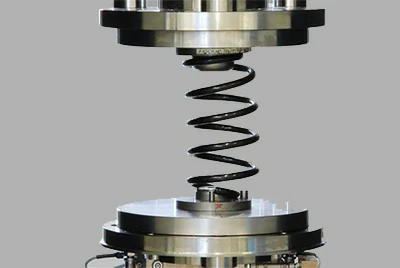
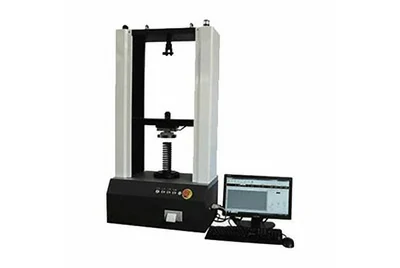
- load at height testing
- spring rate verification
- torque and rotation-angle testing
- surface inspection
- NDT where specified
Traceability and documents
- MTC
- COC
- material or heat number traceability
- dimensional inspection report
- load or torque test report
- NDT report where specified
- Applicable supplier quality certificates
Design inputs that control load, spring rate and fatigue life
Titanium springs cannot simply replicate the dimensions of steel springs.
Design should be re-established around target load, working stroke, installation space, and cycle life to determine wire diameter, coil count, and geometry, with actual performance verified through a load-deflection curve.
Load, deflection and spring rate
When confirming spring rate, customers should provide load at height, stroke, free length, OD, ID, active coils, and end configuration.
For extension springs, preload or initial tension must also be provided; for torsion springs, target torque, rotation angle, and leg orientation are required.
Wire diameter is a critical parameter affecting load and stiffness. Experience from manufactured TB9 suspension springs indicates that a ~1% wire diameter deviation can cause a ~4% load deviation; therefore, wire diameter tolerance and measured values must be included in engineering review.
Temperature and operating environment
The elastic modulus and spring rate of titanium alloys vary with temperature.
Based on TB9 spring manufacturing experience, within the tested range from room temperature to 380°C, stiffness gradually decreases as temperature rises, with a more rapid decline above 300°C.
Surface condition and stress concentration
Fatigue life is not determined by material strength alone. Surface scratches, machining marks, sharp transitions, and localized stress concentrations can all act as initiation sites for fatigue cracks.
Failure analysis of TB9 springs shows cracks originated from surface mechanical damage and propagated in stress-concentrated regions; finite element analysis also confirms the dominant role of stress concentration in fatigue failure.
Therefore, for high-cycle applications, transition radii, end configurations, and contact locations should be controlled during the design phase, and surface finishing, shot peening, and NDT requirements should be reviewed according to project specifications.
Steel-to-titanium redesign considerations
Common calculation formulas for cylindrical helical steel springs primarily apply to helix angles of approximately 5°–9°. Due to titanium's lower elastic and shear moduli, fewer active coils are typically required, and the helix angle may exceed this range.
The helix angle of the TB9 suspension spring reaches 9.45°, so a modified stiffness formula accounting for both elastic modulus and helix angle was used.
Springback after cold coiling is also more pronounced in titanium than in steel. Both cold coiling and heat treatment alter free height and outer diameter, so mandrel size and total coil count must be pre-compensated during winding.
How to request a custom titanium spring quote
When preparing a titanium spring RFQ, it is recommended to provide drawings, load requirements, operating environment, quantity, and inspection criteria.
The more complete the information, the faster material selection, geometry, prototype approach, and manufacturability can be confirmed.
| Required information | Why it matters |
| Spring type | Determines forming method and inspection items |
| Titanium grade or applicable standard | Used for material procurement and process review |
| Wire diameter | Affects load, fatigue performance, and manufacturability |
| OD, ID, free length | Confirms installation space |
| Load at height or target angle | Defines functional requirements |
| Spring rate | Confirms load-displacement relationship |
| Working stroke or rotation | Confirms operating range |
| End, hook, or leg configuration | Affects assembly and stress concentration |
| Operating temperature | Influences stiffness and material temper selection |
| Corrosive medium | Used to determine alloy grade and surface requirements |
| Required cycle life | Determines depth of fatigue evaluation |
| Tolerance and inspection level | Impacts process route and inspection cost |
| Prototype and production quantity | Used to assess tooling, MOQ, and lead time |
| Required documents | Confirms MTC, COC, NDT, and traceability requirements |
To obtain a titanium spring quote, please send drawings, target load, working stroke, material requirements, quantity, and required quality documentation.
FAQ
What titanium grades are available for custom springs?
Common options include Beta-C (TB9) and Ti-6Al-4V. Other grades can be reviewed based on spring rate, allowable stress, fatigue cycles, operating temperature, corrosion environment, and forming requirements.
What wire diameter range is available for titanium springs?
The available titanium spring wire diameter range is approximately 0.1–10 mm. Final manufacturability depends on the alloy grade, spring geometry, heat treatment, and tolerance requirements.
Can a titanium spring directly replace a steel spring?
Usually not. Titanium springs should be redesigned around the target load, stroke, and installation space because titanium has a lower shear modulus than steel, which affects wire diameter, coil count, and spring rate.
How do I specify the load and spring rate of a custom titanium spring?
Provide the load at height, working stroke, free length, OD, ID, and end configuration. For extension or torsion springs, also include the initial tension or required torque and rotation angle.
What processes are used to improve titanium spring fatigue life?
Fatigue performance is managed through surface-quality control, presetting, shot peening, and NDT where specified. The final process route depends on the alloy grade, load range, required cycle life, and inspection standard.
Can Chalco provide prototype titanium springs?
Yes. Chalco supports prototype titanium springs and subsequent production orders. Prototype quantity, MOQ, and lead time are reviewed according to alloy availability, spring geometry, tooling, and inspection requirements.
Get a custom titanium spring RFQ review
Submit your drawing, load data, operating conditions, required quantity, prototype needs, and quality-document requirements.
Chalco will review material availability, manufacturability, inspection scope, MOQ, and lead time before preparing a quote.


