

Electrochemical Reactor for Water Treatment
Updated : Aug. 21, 2026Henan Chalco supplies electrochemical reactors and matching titanium electrode assemblies for industrial water treatment equipment, covering electrocatalytic oxidation of wastewater, electrolytic chlorine generation and circulating water treatment units. Cell dimensions, throughput and connections can be customized to your drawing.
Anodes use an industrial-grade pure titanium substrate with a mixed precious metal oxide coating; cathodes are pure titanium plate; housings are available in PVC, PP or acrylic. If you already have cell drawings, a sample electrode or operating parameters, we can use them to assess the configuration and supply plan.
Please note: we do not supply pool salt cell replacements, water electrolyzers for hydrogen production, or laboratory electrosynthesis reactors.
What Henan Chalco supplies: cells, electrode assemblies and skids
| Supply level | What is included |
| Complete cell | Housing + electrode assembly + conductive parts + connections, customized to drawing or duty conditions |
| Electrode assembly | Anode plates, cathode plates, insulation and connection structures, for new equipment or re-coring existing cells |
| Skids and integrated units | Complete units including rectifier, feed pump and control cabinet |
| Recoating and refurbishment | Recoating of used titanium anodes; return-to-factory cell repair |
| Design consultation | Assessment of cell type and parameters against your treatment targets and site conditions |
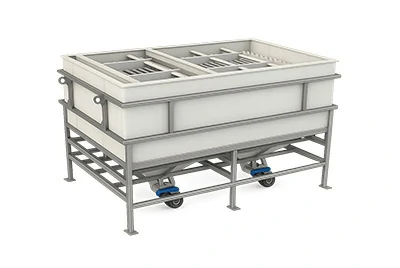
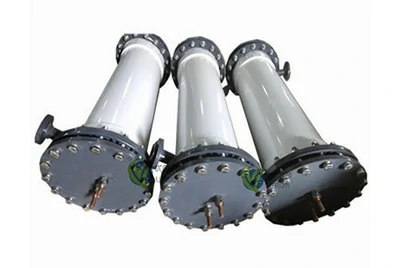
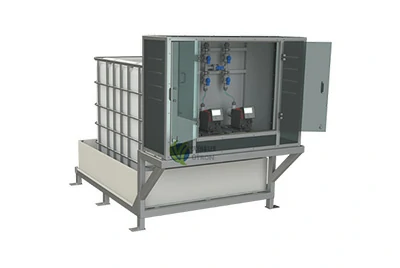
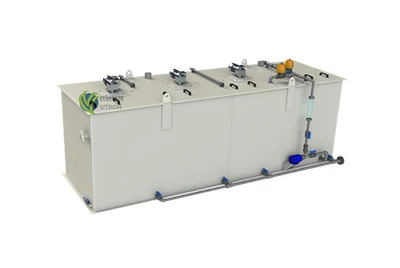
Reactor types and capacity ranges
| Cell type | Primary application | Throughput / capacity | Current density | Housing material | Typical service life |
| Tubular electrocatalytic oxidation cell | Reduction of COD, ammonia nitrogen, total nitrogen and color in industrial wastewater | 1–10 m³/h, customizable | ≤1000 A/m² | PVC, PP or acrylic | 2 years, 3 years or >3 years |
| Plate electrocatalytic oxidation cell | As above; suited to regular installation spaces | Configured by number of units | ≤1000 A/m² | PVC, PP or acrylic | 2 years, 3 years or >3 years |
| Undivided sodium hypochlorite cell | For on-site chlorine generation and disinfection equipment | 50–2,000 g/h (approx. 2.6–106 lb/day) | — | Acrylic or PVC | — |
| Parallel plate cell (bipolar stack) | Seawater chlorination; power plants and seawater cooling systems | 2–1,000 kg Cl₂/h | — | Acrylic, PVC or PVC-lined FRP | — |
| Cyclone electrowinning cell | Electrowinning recovery from metal-bearing waste liquor | 5–10 L per cell | 300–600 A/m² in practice | — | — |
The ranges above are the ones in common use. The service life bands depend on water quality, current density and continuous running time; other specifications can be redesigned to your duty conditions.
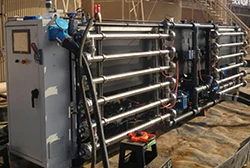
Tubular Electrocatalytic Oxidation Cell
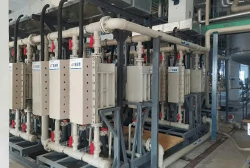
Plate Electrocatalytic Oxidation Cells
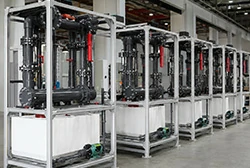
Undivided Sodium Hypochlorite Cell
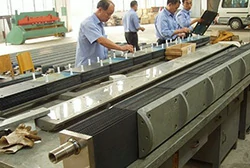
Bipolar Parallel Plate Electrolyzer
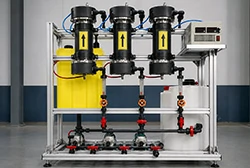
Sodium Hypochlorite Electrolysis System
Where these reactors are used
Electrocatalytic oxidation of industrial wastewater
Reduction of COD, ammonia nitrogen, total nitrogen and color; advanced treatment of landfill leachate; RO / NF membrane concentrate treatment; upgrading of chemical park tail water and biological effluent.
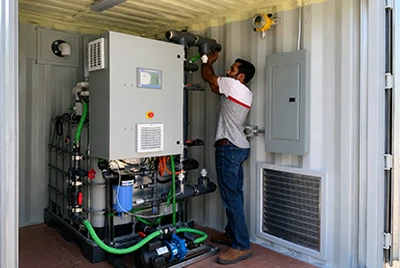
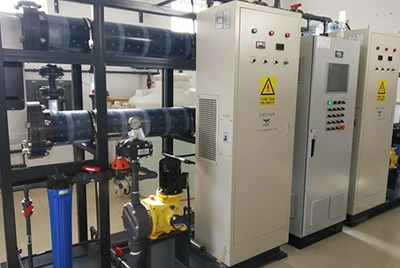
Electrolytic chlorine generation equipment
Undivided sodium hypochlorite cells and titanium electrode assemblies for on-site chlorine generation and disinfection equipment.
Electrodeposition and metal recovery
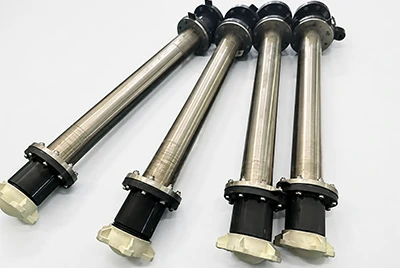
Cyclone cells and titanium anode rods can be used for electrowinning recovery from waste liquor containing copper, nickel, cobalt and similar metals.
The U.S. General Services Administration and the National Renewable Energy Laboratory carried out a field assessment of a third-party vendor's electrochemical water treatment system in a federal office building over a full cooling season, recording an approximately 99.8% reduction in blowdown, an approximately 31.6% reduction in make-up water, and chemical dosing brought to zero.
What that assessment shows is that the technology route is workable in a cooling water application.
How to size an electrochemical reactor for your water
Most sizing mistakes are not the wrong coating choice, but a failure to work out how much reaction area and how much residence time are actually needed. Work through four steps.
- Define throughput and targets. Confirm m³/h, the target pollutants and target values, and whether operation is continuous or intermittent.
- Work back from the target to the required current. This step must be supported by bench-scale data or existing data from comparable projects; it cannot be derived directly from flow rate — the same COD figure can call for several times more charge in one wastewater than in another.
- Work back from the current density limit to the effective electrode area. A = I / j, where j does not exceed 1000 A/m², and engineering practice should leave a margin.
- Determine unit count and module arrangement from area and residence time. Where a single cell cannot provide enough area, use multiple modules in parallel or in series rather than simply enlarging one cell.
The engineering relationships below come from our research and can help you judge whether your parameter trade-offs are reasonable:
- In a continuous-flow reactor, a higher flow rate shortens residence time and therefore lowers removal efficiency; conversely, a lower flow rate favors reaction completion.
- The greater the electrode area per unit of reactor volume, the higher the removal efficiency; but as plate count increases, excessive ohmic resistance must be avoided.
- In filter-press cell systems, at a given chloride concentration ammonia nitrogen is removed mainly by indirect electro-oxidation and direct electro-oxidation is negligible; current density and electrolyte flow velocity directly affect the generation and transport of active chlorine, while the initial influent ammonia nitrogen concentration has almost no effect.
- Residence time and in-cell mixing matter as much as electrode surface area.
Cell construction: housing, electrodes, spacing and connections
Housing materials
| Material | Suitable duty | Points to note |
| PVC | Ambient temperature and pressure; cost-sensitive | Limited temperature resistance |
| PP | Higher temperature and chemical resistance requirements | Opaque; electrodes cannot be observed directly |
| Acrylic | Where the electrode surface and the electrolysis process need to be observed | Limited mechanical strength and weather resistance |
| PVC-lined FRP | Large-scale, higher-pressure duty | Higher structural complexity and cost |
Electrodes and structural parts
Anodes use industrial-grade pure titanium as the substrate, with a mixed precious metal oxide surface coating that gives good corrosion resistance;
cathodes are pure titanium plate; conductive plates and conductive posts are stainless steel.
Cathodes for large parallel plate cells can be supplied to ASTM B265 Grade 1.
Electrode spacing
The mass transfer coefficient falls as electrode spacing increases, then levels off with no further marked decline once spacing reaches about 7 mm.
Spacing that is too small raises the risk of short-circuiting and blockage; spacing that is too large raises cell voltage and power consumption.
A reasonable spacing should be determined together with suspended solids content, gas bubble release conditions and permissible cell voltage.
Customization
Inlet and outlet connection type and bore, conductive post specifications, hydrogen vent position, mounting arrangement, sight windows, electrode spacing and unit count can all be customized to project requirements.
Monopolar vs bipolar electrode configuration
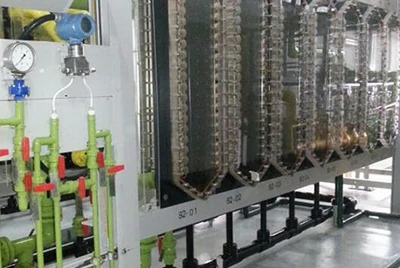
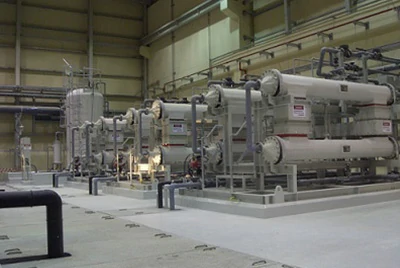
Monopolar
Each electrode is connected individually. Suited to smaller cells, with single plates that can be serviced and replaced independently.
Bipolar
Only the end electrodes are connected to the power supply; the plates in between act as bipolar plates. The connection structure is simpler, resistance across connectors is lower, cell voltage is reduced and electrolysis efficiency improved, which suits relatively large cells.
New electrode assembly and housing structure designs can also distribute the stray current generated during electrolysis, allowing the solution to react more completely.
One point worth flagging: a bipolar arrangement is a series structure and places higher demands on unit consistency and sealing; an anomaly in a single plate affects the performance of the whole stack, and servicing usually requires full disassembly. For equipment that is not large, a monopolar arrangement is the easier option.
Flow path, residence time and dead zones
The same electrode set installed in different cells can perform noticeably differently. Many customers find this out for themselves — selection cannot be based on electrode area alone.
Research on filter-press cell systems gives several conclusions you can apply directly:
Reactor feedback using CFD also indicates that reactor shape and mixing can be optimized through computational fluid dynamics; flaky sediment requires collection and discharge paths designed into the structure, such as hopper shape and drain outlet position.
When assessing a cell type we therefore confirm inlet and outlet positions, flow channel design, spacer configuration and sludge discharge path at the same time, not just electrode dimensions.
Hydrogen handling and cell safety
Hydrogen evolution at the cathode is unavoidable during electrolysis:
2H₂O + 2e⁻ → H₂ + 2OH⁻
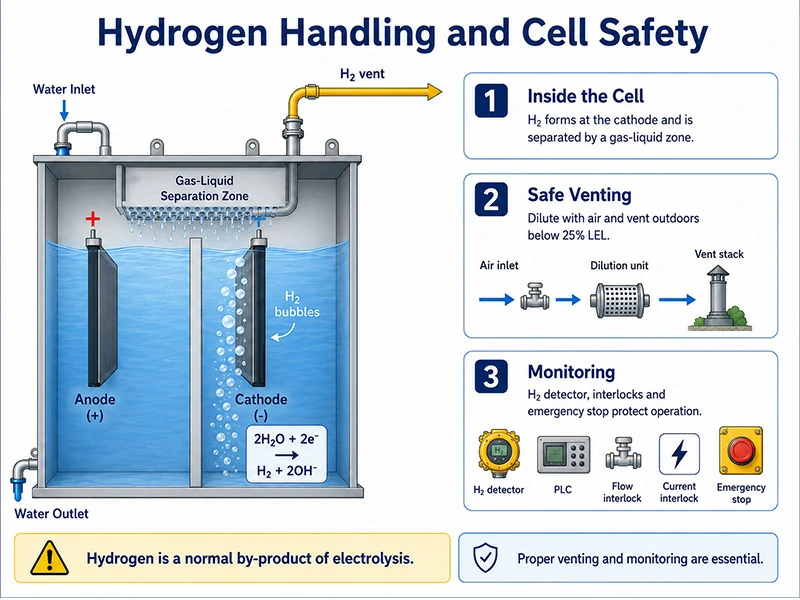
This is not a fault; it is an inherent by-product of every water treatment cell. It needs to be handled at three levels.
In the cell: gas-liquid separation structures and a dedicated hydrogen vent path. Our sodium hypochlorite cells come with DN32 hydrogen vent piping as standard; on electrocatalytic oxidation cells the vent position and bore can be set to your installation conditions.
Downstream: most systems dilute hydrogen to below 25% of the LEL before venting to a safe outdoor area; a single pool electrolysis unit can generate over 7,000 L of hydrogen per day — a quantity that cannot be ignored.
Monitoring: we recommend hydrogen monitoring interlocked with the electrolysis equipment, together with flow and current interlocks and abnormal shutdown protection.
We supply the cells and electrode assemblies, and can provide hydrogen vent connections and mounting positions as required; equipment room ventilation, gas monitoring and system-level compliance remain the responsibility of the equipment integrator or engineering contractor.
Hydrogen embrittlement is a recognized concern for titanium in long-term hydrogen-bearing environments; cathode-side material selection and operating conditions should be assessed project by project.
Fouling, scaling and polarity reversal
Calcium and magnesium deposits on the cathode side raise cell voltage and reduce effective reaction area, and are the most common cause of performance decline in hard water regions.
Our cells can be designed for polarity-reversal operation; with a transparent acrylic housing, the electrode surface condition can also be observed directly to judge when acid cleaning is due, rather than dismantling the cell on experience alone.
On cleaning, descaling of sodium hypochlorite cells generally uses 15–18% hydrochloric acid. The concentration and duration differ by equipment and by degree of scaling, so follow the equipment instructions; excessive acid cleaning accelerates coating loss.
One point has to be stated: a standard single-direction anode cannot be used directly for frequent polarity reversal. Reversal requires a purpose-designed bidirectional electrode assembly, matched to water hardness and reversal cycle. Connecting a standard anode to a reversing power supply usually shortens coating life significantly.
Clean, re-electrode, recoat or replace: a decision path
Rising cell voltage and falling output are the most common purchasing trigger. They do not always mean the equipment needs replacing. We suggest working through this order:
- Measure before replacing. Record cell voltage, current, water temperature, salinity or conductivity, and compare with the commissioning baseline. If there is no baseline, start building one now — it is the basis for every judgement that follows.
- Clean. If the deviation is mainly caused by scaling, acid clean per the equipment instructions and re-measure. In most cases it is resolved at this step.
- Replace the electrode assembly or recoat. If cell voltage is still high after acid cleaning and the coating looks abnormal, assess electrode assembly replacement, or return used anodes with a sound substrate to the factory for recoating.
- Replace the whole cell. If the housing has aged, seals have failed, connections have corroded or the structure has deformed, the cell needs full replacement or rebuilding to drawing.
We can assess replacement options from your original cell drawings, physical dimensions and operating parameters.
Recoating applies to anodes with a sound substrate and is not unlimited; the time and cost of cross-border return shipment should be assessed project by project; the assessment should draw on operating records, not appearance alone.
If you have operating records and photos of the used electrodes, send them straight to us — we will first tell you which of the levels above applies, then discuss supply.
Supply options, inspection documents and RFQ boundaries
Supply basis.Customization to drawing, sample or equipment parameters; supply of single cells, electrode assemblies, skids or complete units. OEM and white-label arrangements.
Surface treatment and packaging.
Inspection and documentation. Material certificates, dimensional and visual inspection records, coating process records and similar documents can be agreed project by project. The supply chain is certified to the ISO 9001:2015 quality management system, and related products have passed EU RoHS Directive testing; export experience covers more than 60 countries.
We would rather make the following points clear before quoting:
- We do not commit to a specific removal rate. Actual performance depends on water quality, conductivity, chloride content, pH, current density and residence time.
- In low-conductivity, low-chloride wastewater the indirect oxidation route is limited and process feasibility needs to be reassessed; simply increasing electrode area will not solve the problem.
- Responsibility for system-level certifications such as NSF/ANSI 61, 372 and CE rests with the equipment integrator; we can support with component-level documentation.
- For discontinued models we provide cross-references / equivalent quote to your specification, without a drop-in replacement commitment.
- Other electrode technology routes, such as BDD electrodes, can be assessed project by project.
Related products
Chalco Titanium also provides ruthenium-iridium coated titanium anodes, iridium-tantalum coated titanium anodes, titanium anode meshes, tubes, baskets and plates for one-stop procurement.

Ruthenium-iridium coated titanium anode

Iridium-tantalum coated titanium anode
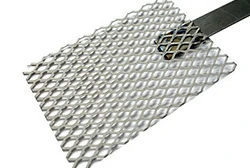
Titanium anode mesh

Titanium anode tube

Titanium anode basket

Titanium plate anode
Frequently asked questions
What is an electrochemical reactor in water treatment?
It is an equipment unit in which water passes through an electrode assembly under a DC field, with oxidation reactions taking place at the electrode surface and in the bulk solution. The core is how electrodes, housing and flow channel work together; a shortfall in any one of them reduces performance.
Can you build a cell to my existing drawing or replace a discontinued cell?
Yes. We assess against your original cell drawings, physical dimensions, terminal positions and operating parameters. For discontinued models we provide a cross-reference quote, without committing to a drop-in replacement.
Monopolar or bipolar — which configuration should I choose?
Smaller cells generally use a monopolar arrangement; larger cells more often use bipolar. Bipolar is simpler to connect and gives lower cell voltage, but places higher demands on unit consistency and servicing method.
How is hydrogen handled in the cell?
Hydrogen evolution at the cathode is an inherent by-product. Inside the cell it is carried out through gas-liquid separation and a dedicated vent path; downstream dilution, venting and monitoring interlocks are designed by the system provider, and we can provide the connections.
Why is my cell voltage rising and output falling?
Common causes are cathode scaling, ageing of the electrode coating, poor electrical connections or a change in feed water conditions. Compare with the commissioning baseline first, then decide between cleaning and replacement.
Can a standard anode run in polarity-reversal mode?
Not directly. Reversal requires a purpose-designed bidirectional electrode assembly matched to water hardness and reversal cycle; otherwise coating life is noticeably shortened.
Can electrodes be recoated instead of replaced?
Titanium anodes with a sound substrate can usually be returned to the factory for recoating. But recoating is not unlimited, and the time and cost of cross-border return shipment should be assessed project by project.
Is this the same as a hydrogen electrolyzer or a lab flow reactor?
No. The products on this page are for industrial water treatment, and differ in both purpose and construction from a water treatment electrolyzer used for hydrogen production or a laboratory electrochemical flow reactor.
Send your parameters for a cell configuration and quote
Send us the following and we can suggest a cell type, electrode configuration and structural design:
Water quality — source type, COD, ammonia nitrogen, total nitrogen, chloride, conductivity, pH, SS, hardness, water temperature.
Process — throughput in m³/h, target effluent values, continuous or intermittent operation, expected residence time.
Equipment — housing dimensions and material, electrode count and size, electrode spacing, terminal positions, inlet and outlet bore, operating current and voltage, whether polarity reversal is used.
Current status — existing cell drawings, photos of used electrodes, current cell voltage and output, problems encountered in operation.
Incomplete information is fine — send what you have and we will tell you which items are still missing.
Chalco can provide you the most comprehensive inventory of titanium products and can also supply you customized products. Precise quotation will be provided within 24 hours.
Get a quote

