

Grade 5 Titanium (Ti-6Al-4V)
Updated : Aug. 21, 2026Ti-6Al-4V, also known as Grade 5 titanium, is the most widely used titanium alloy in the world — an alpha-beta alloy combining high specific strength with excellent corrosion resistance.
Henan Chalco supplies the full range of Grade 5 mill products: bar, plate and sheet, tube, wire, forgings and AM feedstock, in two supply tiers — industrial to ASTM and aerospace to AMS, with an EN 10204 3.1 mill certificate issued for every lot.
Available forms, popular sizes and processing
We supply every Grade 5 form from one source: bar, plate, tube, wire, forgings, fasteners and AM powder.
Cut-to-length, TGP, machining and surface finishing can all be arranged. Every form is quoted in two tiers: industrial to ASTM and aerospace to AMS.
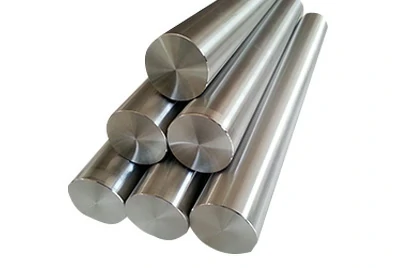
Round bar
Supplied to ASTM B348 or AMS 4928, annealed as the standard condition and STA to project specification. Diameters 5–300 mm (0.2–11.8 in).
- 5–20 mm — precision machined parts, fasteners and spring stock, often supplied with a TGP surface and tighter straightness
- 20–100 mm — the general machining workhorse range; most frequently requested diameters: 6, 8, 10, 12, 16, 20, 25, 30, 40, 50, 60, 80, 100 mm
- 100–300 mm — large machined components and forging stock; where STA is ordered in heavy sections we will flag hardenability limits up front
Lengths 1000–6000 mm, with cut-to-length cutting that saves downstream sawing. Surface options include black, pickled, turned and TGP.
Square, flat and hexagon bar
Thickness 2–100 mm × width 10–500 mm; square and hexagon bar are quoted across flats. Flat bar suits connection plates, rails and fastener blanking; hexagon bar suits nut and fitting turning.
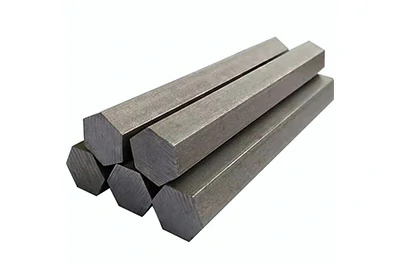
Plate and sheet
Supplied to ASTM B265 or AMS 4911, annealed, pickled or machined surface.
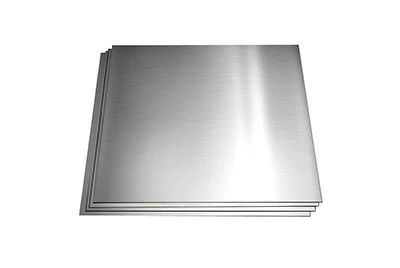
Plate suits structural parts, flanges and machining blanks, and can be profile-cut to drawing;
sheet suits hot-formed parts — one word of caution: Grade 5 has limited cold formability, so sheet forming normally requires a hot-forming process. Thickness ranges, levelling and slitting capability are available.
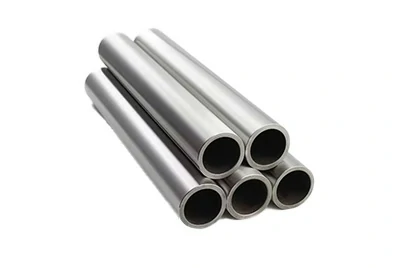
Tube and pipe
ASTM B338 (heat exchanger tube, sized to the tubesheet hole diameter, cut-to-length available), ASTM B861 (seamless pipe) and ASTM B862 (welded pipe); structural and fluid tube is quoted by OD × wall thickness.
Wire and welding wire
Two packaging formats: straight lengths for TIG and layer-wound spools for MIG. Filler surface cleanliness directly affects weld oxygen pickup, which is why we control welding wire packaging separately.
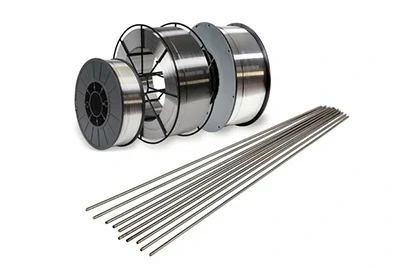
Instrument and spring wire is supplied to ASTM B863, straightened and cut to length or in coil; ERTi-5 welding wire is supplied to AWS A5.16 in common sizes of 1.2 / 1.6 / 2.0 / 2.4 / 3.2 mm.
Forgings, rings, billets and blocks
Die and open-die forgings supplied to ASTM B381: discs, rings (flange rings, bearing ring blanks), shafts and block stock.
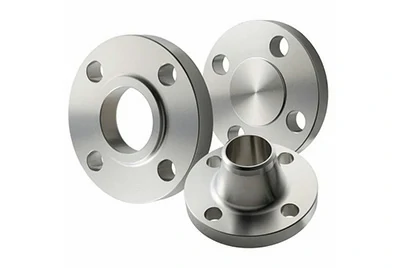
A cost-saving note for large parts: send the drawing and ask for a forging rather than machining from heavy bar — the machining loss saved by near-net-shape forging usually outweighs the forging premium.
Profiles, fasteners, springs and other forms
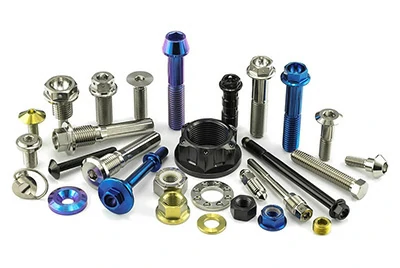
Angle, channel and custom sections are quoted to drawing; titanium bolts and nuts to ASTM F467 / F468; custom titanium springs are designed to wire diameter and coil diameter;
Tolerances, processing and how to order
Tolerances follow the referenced standard, and tighter tolerances can be machined to drawing.
Optional processing and finishing: turning, milling and drilling; sawing and waterjet cutting to length; TGP; heat treatment; pickling; shot blasting; polishing; and anodised colouring.
Three things that speed up your quote:
- Estimate the weight first with a titanium weight calculator;
- State the condition (annealed / STA) and the standard (ASTM / AMS);
- Note any cut-to-length and surface requirements.
- Send these together with your sizes and quantities and we will quote to specification.
Specifications by product form
Different product forms follow different standards.
Stating both the form and the standard in your enquiry gives you the fastest and most accurate quote:
| Product form | Common specifications |
| Bar, billet, forging stock | ASTM B348 Gr5; AMS 4928, AMS 6931 (annealed); AMS 4965 (STA); AMS-T-9047 |
| Plate, sheet, strip | ASTM B265 Gr5; AMS 4911; AMS-T-9046 |
| Forgings | ASTM B381 Gr5 |
| Tube (seamless and welded, heat exchanger service) | ASTM B338 Gr5 |
| Seamless pipe | ASTM B861 Gr5 |
| Welded pipe | ASTM B862 Gr5 |
| Wire | ASTM B863 Gr5 |
| Welding filler metal | AWS A5.16 ERTi-5 |
| Castings | ASTM B367 Gr5 |
| Fasteners | ASTM F467 (nuts), ASTM F468 (bolts) |
| Surgical implant applications | ASTM F1472; ISO 5832-3 |
| AM powder | ASTM F2924 (Grade 5), ASTM F3001 (ELI); AMS 4998 |
We organise Grade 5 supply in two tiers — simply match your drawing to the right one:
Industrial / ASTM tier — supplied to ASTM B348, B265, B861, B381 and related standards, with an EN 10204 3.1 mill certificate for every lot; ultrasonic testing and dimensional reports can be quoted on request. Chemical processing, marine, energy, sporting goods and general machined parts sit in this tier, where lead time and cost are most favourable.
Aerospace / AMS tier — supplied to AMS 4928, AMS 4911, AMS 4965 and related specifications, with additional inspection and traceability requirements; supply under AS9100D quality systems is available for qualifying programs, and EN 10204 3.2 third-party certification can be arranged on request.
If you are unsure which tier applies, send us the drawing and we will help you decide.
Chemical composition
We supply to the limits below and issue the actual measured chemical analysis with every lot:
| Element | Limit, wt% (ASTM B348 Grade 5) |
| Aluminum (Al) | 5.50–6.75 |
| Vanadium (V) | 3.50–4.50 |
| Iron (Fe) | ≤0.40 |
| Oxygen (O) | ≤0.20 |
| Carbon (C) | ≤0.08 |
| Nitrogen (N) | ≤0.05 |
| Hydrogen (H) | ≤0.015 |
| Yttrium (Y) | ≤0.005 |
| Other, each / total | ≤0.10 / ≤0.40 |
| Titanium (Ti) | Balance |
The table above gives the ASTM B348 limits.
Aerospace specifications are usually tighter: AMS 4928 restricts Fe to 0.30 and H to 0.0125. We quote and inspect to whichever specification your drawing calls out — one of the reasons quotes for the same size can differ.
Useful for material selection: aluminium stabilises the alpha phase and vanadium the beta phase, which is why Grade 5 has a two-phase structure — it can be strengthened by heat treatment, but it cold-forms less readily than commercially pure titanium.
Tighten the oxygen and iron limits further and you arrive at Grade 23 ELI.
Ti-6Al-4V property data
Physical and thermal properties
| Property | Metric | Imperial |
| Density | 4.43 g/cm³ | 0.160 lb/in³ |
| Melting range | 1604–1660 °C | 2920–3020 °F |
| Beta transus | ~980 °C | ~1800 °F |
| Thermal conductivity, room temperature | 6.7–7.5 W/m·K | 46.5–52 BTU·in/hr·ft²·°F |
| Specific heat capacity | ~0.53 J/g·K | ~0.13 BTU/lb·°F |
| CTE, 20–100 °C | 8.6 µm/m·K | 4.78 µin/in·°F |
| CTE, 20–315 °C | 9.2 µm/m·K | 5.11 µin/in·°F |
| CTE, 20–650 °C | 9.7 µm/m·K | 5.39 µin/in·°F |
| Electrical resistivity | ~1.71 µΩ·m | ~171 µΩ·cm |
| Magnetic permeability | ~1.00005 | essentially non-magnetic |
Thermal conductivity is only about 6.7–7.5 W/m·K, roughly a tenth that of carbon steel.
This figure recurs throughout the sections below — it is the root cause of the machining difficulty of Grade 5, and also the reason it is deliberately selected in certain thermal management applications.
Tensile properties: minimum, typical and STA side by side
| Property | Min per ASTM B348, annealed | Typical annealed | Typical STA |
| Ultimate tensile strength | ≥895 MPa (130 ksi) | ~950 MPa (138 ksi) | 965–1170 MPa (140–170 ksi) |
| Yield strength, 0.2% offset | ≥828 MPa (120 ksi) | ~880 MPa (128 ksi) | 895–1035 MPa (130–150 ksi) |
| Elongation | ≥10% | ~14% | Below annealed |
| Reduction of area | ≥25% | ~36% | - |
| Hardness | - | ~36 HRC | Above 40 HRC |
AMS aerospace specifications
| Specification and section | UTS min | Yield min |
| AMS 4928 bar, ≤50.8 mm (2 in) | 931 MPa (135 ksi) | 862 MPa (125 ksi) |
| AMS 4928 bar, 50.8–152.4 mm (2–6 in) | 896 MPa (130 ksi) | 827 MPa (120 ksi) |
| AMS 4911 sheet, <4.76 mm (0.1875 in) | 920 MPa (134 ksi) | 866 MPa (126 ksi) |
| AMS 4911 plate, 4.76–101.6 mm | 893 MPa (130 ksi) | 823 MPa (120 ksi) |
Elongation and reduction of area are banded in the same way (minimum 8% for thin sheet, RA down to 20% for heavy-section bar); always refer to the current revision of the specification.
Engineering reference values, annealed
| Property | Typical value |
| Modulus of elasticity | ~113.8 GPa (16.5 Msi) |
| Shear modulus | ~44 GPa (6.4 Msi) |
| Ultimate shear strength | ~550 MPa (80 ksi) |
| Fatigue strength, unnotched, 10⁷ cycles | ~510 MPa (74 ksi) |
| Fatigue strength, notched Kt = 3.3, 10⁷ cycles | ~240 MPa (35 ksi) |
| Fracture toughness K_IC | ~75 MPa·m½ (68 ksi·in½) |
| Poisson's ratio | ~0.34 |
More detailed design data such as bearing strength, notched tensile strength and impact energy falls within the design allowable category and should be taken from the applicable design handbook for the specific condition and section — where required, we can supply test reports for the matching condition together with the quotation.
Equivalent designations
| Category | Designation |
| Common designations | Grade 5 titanium, Gr5, G5 titanium |
| Alloy designation | Ti-6Al-4V, Ti6Al4V, Ti 6Al-4V |
| Trade and short names | Ti 6-4, Ti64, 6Al-4V, 6-4 titanium, alpha-beta titanium |
| UNS | R56400 |
| German W.Nr. / DIN | 3.7165 |
| Chinese GB/T 3620.1 | TC4 |
| SAE aerospace | AMS 4928 (bar, forgings), AMS 4911 (sheet, plate) |
| Welding filler | ERTi-5 per AWS A5.16 |
| ELI variant | Grade 23, Ti-6Al-4V ELI, UNS R56407, ASTM F136 |
Grade 5 and Grade 23 are two different grades with different composition limits and different prices; they are not interchangeable at quotation stage.
How to choose between them is covered in the comparison section below — we supply both grades.
At a glance:
- Alloy type: alpha-beta titanium alloy, nominally around 6% Al and 4% V
- Typical condition: mainly annealed, with solution treated and aged (STA) available to project specification
- Density: 4.43 g/cm³ (0.160 lb/in³)
- Minimum annealed strength: 895 MPa (130 ksi) UTS per ASTM B348
- Service temperature: normally specified below approximately 350–400 °C
- Magnetic response: essentially non-magnetic
- Forms: bar, plate, sheet, tube, profile, wire, forgings, fasteners, powder
Service temperature: why sources say 315, 350 or 400 °C
Short-term strength — under short exposure the alloy retains usable strength at around 400 °C.
Long-term creep — under sustained load creep becomes the controlling factor, and the long-term service limit usually falls between 315 and 350 °C.
Oxidation and surface stability — prolonged exposure to hot air accelerates growth of an oxygen-enriched brittle surface layer, which affects fatigue performance.
Grade 5 is normally specified for continuous service below approximately 350–400 °C (660–750 °F), with the exact limit depending on stress, duration, cycling and environment.
Where service temperatures are sustained higher or a defined creep requirement applies, Grade 5 is not the right material — high-temperature grades such as Ti-6Al-2Sn-4Zr-2Mo (Ti-6242) or Ti-6Al-2Sn-4Zr-6Mo (Ti-6246) should be evaluated, and we can quote these as well.
Send us the service temperature, stress and service duration and we will first help you judge whether Grade 5 is the right starting point, then talk price.
Where grade 5 titanium earns its keep
Aerospace
Airframe structural parts, fittings and brackets, fasteners, engine cold-section components and landing gear parts — within its design temperature range, the combination of specific strength and corrosion resistance is hard to replace.

Published sources indicate that titanium content in modern wide-body aircraft has reached the mid-teens as a percentage of structural weight.
Marine and offshore
Seawater piping, heat exchangers, fasteners and subsea components.
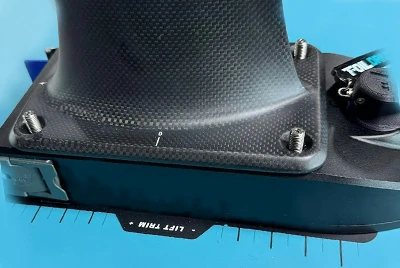
Performance in seawater is strong, but contact with dissimilar metals calls for galvanic isolation — send us the drawing and we will check this point for you.
Chemical processing and energy
Pressure vessel components, heat exchangers, pumps and valves, and agitator parts.
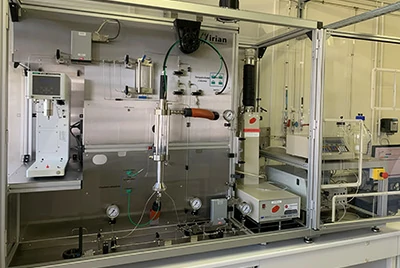
To be straight about it: where corrosion resistance is the main requirement and strength demands are modest, Grade 2 is more economical and we will simply recommend changing grade.
Medical and dental
Surgical instruments and non-implant device components.
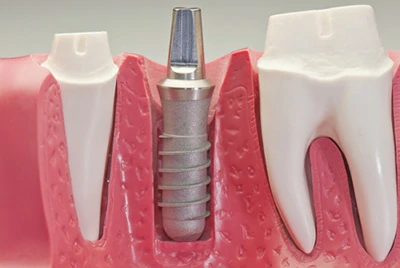
For implants, specify Grade 23 ELI, with certification issued to ASTM F136 or ISO 5832-3 — Grade 23 ordered to B348 cannot be used for body-contact parts.
The surgical material standard for Grade 5 is ASTM F1472.
Motorsport and high-performance automotive
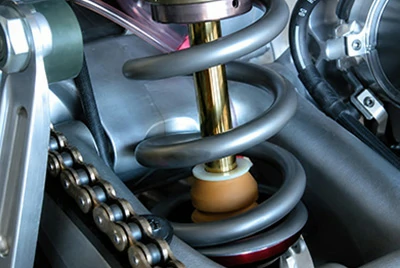
Connecting rods, exhaust components, fasteners, wheel nuts and springs.
Sports and consumer equipment
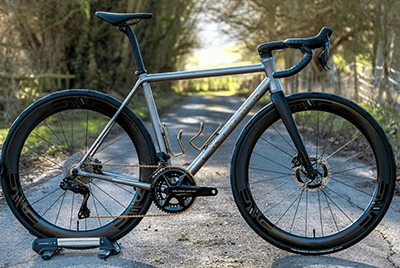
Frame tubing, club heads and equipment components.
Industrial and power generation
Turbine components, heat transfer parts and highly loaded machined components.
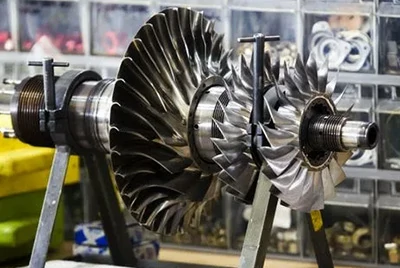
Condenser tubing in seawater service is still normally commercially pure titanium — another place where we will point you to the more economical option.
Grade 5 or grade 23 ELI — and when neither is right
Grade 5 vs grade 23 (ELI)
We supply both grades; which one you choose depends on the application.
ELI = extra-low interstitial: the same alloy family with tighter upper limits on oxygen, iron and similar elements, designated Grade 23 / UNS R56401.
The differences are concentrated in four elements (the V, C and N limits are identical):
| Element | Grade 5 (ASTM B348) | Grade 23 ELI (ASTM F136) |
| Aluminum | 5.50–6.75 | 5.50–6.50 |
| Iron | ≤0.40 | ≤0.25 |
| Oxygen | ≤0.20 | ≤0.13 |
| Hydrogen | ≤0.015 | ≤0.012 |
Choose Grade 5 for strength (annealed minimum 895/828 MPa, against roughly 860/795 MPa for ELI);
Choose ELI for toughness, cryogenic service and implants (better fracture toughness and fatigue crack growth behaviour, clearly better cryogenic performance, with implants supplied to F136 / ISO 5832-3);
The modulus comparison that matters to medical customers (published third-party data):
| Material | Elastic modulus |
| Human bone | 10–20 GPa |
| Ti-6Al-4V / Ti-6Al-4V ELI | ~105–116 GPa |
| Stainless steels, Co-Cr-Mo alloys | ~190–215 GPa |
The modulus of titanium is far below that of stainless steels and Co-Cr-Mo alloys and much closer to bone — one of the main reasons it is so widely adopted in implant devices.
A reminder: Grade 23 and ASTM F136 describe the same ELI alloy but belong to two different standard systems. Grade 23 ordered to ASTM B348 / B265 is an industrial specification and cannot be used directly for body-contact parts; material certification for implant use must be issued to ASTM F136 (or the applicable F67 / F1295).
State on the purchase order which standard the certificate must reference, not just the grade. We can quote ELI to F136 / ISO 5832-3; for available forms, see 6Al-4V ELI round bar and 6Al-4V ELI square bar.
Grade 5 vs grade 2
Grade 2 is commercially pure titanium, with roughly one third to one half the strength of Grade 5, but better cold formability and broader corrosion resistance across media.
Where corrosion resistance and formability dominate and strength requirements are modest, Grade 2 is more economical — we supply it as well, and the full comparison is in our Grade 2 vs Grade 5 article.
Grade 5 vs steel and aluminum
Its specific strength is roughly twice that of common structural steels at about 60% of the density of steel; stiffness is higher than aluminium and lower than steel. Choose it when you need strength close to steel, weight close to aluminium and corrosion resistance better than either;
where stiffness or cost alone is the driver, it is usually not the answer — and in that case we will say so directly.
Working with Ti-6Al-4V: what your shop needs to know
We supply customers with TGP bar, cut-to-length service and matching welding wire.
Machining
The root cause of the machining difficulty of Grade 5 is not hardness but thermal conductivity: at about 6.7–7.5 W/m·K, cutting heat is not carried away and concentrates at the cutting edge.
Key points:
- Rigid clamping with short overhang; sharp positive-rake tooling, indexed promptly as wear develops;
- Low speed with heavy feed — high speed and light feed simply generate frictional heat;
- High-volume coolant flooding the cutting zone;
- Avoid chlorinated cutting fluids (hot chlorides carry an SCC risk with titanium);
- Tapping is the hardest operation — consider form taps or a larger tapping drill.
- A conservative published starting point: carbide turning of annealed material at about 45–70 m/min (145–225 SFPM), reduced a further 10–20% in the aged condition.
Safety: titanium chips and fines are combustible above about 250 °C (480 °F) and burn as a Class D metal fire — use dry sand or a Class D extinguishing agent, never water. Store chips in covered metal containers and clear them promptly.
Two ordering options that reduce work at your end: specify TGP bar (removing a surface preparation step) and specify cut-to-length (removing sawing loss). Full parameters are in our titanium CNC machining article.
Welding
It is weldable, but the shielding requirements are far more demanding than for ordinary metals.GTAW (TIG) is the most common process, with GMAW for heavy sections; high-purity argon, a trailing shield and a back purge are all essential, and the joint must be thoroughly degreased and de-oxidised before welding.
Source the filler directly from us: ERTi-5 per AWS A5.16, with specified minimum deposited weld metal properties of 896 MPa (130 ksi) UTS, 827 MPa (120 ksi) YS and 10% elongation; where a tougher joint is required, ELI filler can be specified on the drawing — we supply both, see ERTi-5 titanium welding wire.
To judge on the shop floor whether shielding is adequate, look at the weld colour:
| Colour | Interpretation |
| Silver, bright | Good shielding |
| Light straw | Normally acceptable |
| Dark straw to blue | Inadequate shielding, check gas coverage |
| Grey or white powder | Severe contamination, rework required |
Welding titanium to aluminium is a dissimilar joint customers often ask about. Published research reports pulsed MIG braze-welded joints of roughly 196–230 MPa with Al-Si or Al-Mg filler wires, against only about 92–94 MPa with pure aluminium filler, with fracture generally at the Ti/Al interface — select the filler correctly and re-check the joint against its actual loading rather than designing to base metal strength.
For more, see our laser welding titanium, titanium tube welding guide and welding titanium to stainless steel articles.
Forming
Cold formability is limited and an insufficient bend radius will crack the material. Complex shapes are hot formed (sheet at around 650 °C) or machined to shape; superplastic forming is feasible at approximately 870–925 °C.
Alpha case also has to be removed after hot working — which is why we recommend asking us to quote formed parts delivered after forming.
Corrosion
Seawater and marine atmospheres, wet chlorine, most neutral and oxidising media, and body fluid environments are all handled well. Take care with reducing acids such as HF, HCl, sulphuric and phosphoric acid, which attack the passive film; methanol and fuming nitric acid carry an SCC risk; hot halide environments need separate evaluation.
Wear resistance is the weak point — the galling tendency is pronounced, so sliding wear applications need nitriding, oxidising or a coating. In seawater, isolate galvanically from dissimilar metals. See our titanium corrosion resistance in water and seawater article for detail.
Ti6Al4V price per kg: what actually drives your quote
There is no single market price for Grade 5. Our quotations are built from six variables, and once you understand them you can compare offers fairly:
Raw material and melt route — titanium sponge and alloy ingot pricing sets the base, and the number of VAR remelts feeds straight into cost.
Form and size — yield loss and difficulty differ widely between thin sheet, fine wire, heavy bar and large forgings, and non-standard sizes cost more.
Condition and processing — annealed or STA, with or without TGP, cut-to-length and surface finishing.
Supply tier — ASTM and AMS carry different inspection and traceability requirements, and this is the most frequently overlooked reason quotes for the same size differ.
Certification level — 3.1 or 3.2, with or without UT, and with or without third-party witnessed re-testing.
Quantity, logistics and duties — volume, lead time, packing and freight; import duty depends on the destination country and can sometimes affect landed cost more than the material price difference.
There is only one correct way to compare prices: same standard, same condition, same size, same certification level, same delivery terms. A lower price bought with a lower certification level is not the same product — a point worth forwarding to your purchasing team.
This page addresses purchases of new material; scrap and recycling prices are outside its scope.
Send us your specification and we will return a current valid quotation.
Documents and inspection
- EN 10204 3.1 mill certificate issued with each lot
- EN 10204 3.2 third-party certification available on request
- Third-party inspection by recognised agencies can be arranged
- Ultrasonic testing per AMS 2631 can be quoted where required
- Dimensional inspection reports, chemical and mechanical re-testing can be quoted
- Heat and lot traceability from melt through to the delivered product
- Supply under AS9100D and ISO 9001 quality systems is available for qualifying programs
What to send for a quote
- Grade and condition — Grade 5 / Ti-6Al-4V, annealed or STA
- Product form — bar, plate, sheet, tube, wire, forging, powder
- Dimensions and tolerance — diameter or thickness, width, length, and whether cut-to-length is required
- Standard or drawing callout — ASTM B348, AMS 4928 or customer specification
- Quantity and expected annual volume
- Certificate level — EN 10204 3.1 or 3.2, plus any additional inspection
- Destination port or delivery terms
- Application and service conditions — if a better-suited grade exists, we will tell you directly
Send us this list and we will return a quotation matched to your specification.
Frequently asked questions
What is Ti-6Al-4V material?
Ti-6Al-4V is an alpha-beta titanium alloy containing nominally 6% aluminium and 4% vanadium, also called Grade 5 titanium — the most widely used titanium alloy. It offers high specific strength, good corrosion resistance and can be strengthened by heat treatment, and is used extensively in aerospace, industrial, marine and medical device applications. We supply every form.
What does 6Al-4V mean, and what is the V?
The numbers are the nominal alloy contents: 6% aluminium and 4% vanadium. The V is vanadium. Aluminium stabilises the alpha phase and vanadium the beta phase, and this two-phase structure is what allows the alloy to be strengthened by heat treatment.
Is Grade 5 the same as TC4, 3.7165 and R56400?
Yes, they are the same alloy: TC4 is the Chinese GB/T 3620.1 designation, 3.7165 the German W.Nr., R56400 the UNS number and Grade 5 the ASTM designation. Whichever form your drawing uses, we can quote against it. Some aerospace specifications reference 3.7164.
ASTM B348 or AMS 4928 — which do I need?
It depends on the drawing callout. B348 is the general material standard covering most industrial applications; AMS 4928 is an aerospace specification that raises the minimum for small-diameter bar to 931 MPa, with stricter inspection and traceability and a higher cost.
Why do Grade 5 datasheets show different strength values?
Four variables: standard minimum versus typical measured value, annealed versus STA, section size banding, and product form. Acceptance is based only on the measured values on the mill certificate — which we issue with every lot.
Grade 5 or Grade 23 (ELI)?
Choose Grade 5 for strength; choose Grade 23 ELI for fracture toughness, cryogenic performance and implant use (supplied to ASTM F136 / ISO 5832-3, with slightly lower strength). We supply both grades.
What is the melting point of Ti-6Al-4V?
The melting range is approximately 1604–1660 °C (2920–3020 °F). The more commonly used reference temperature for hot working is the beta transus at about 980 °C (1800 °F) — it defines the heat treatment and forging windows.
Is Grade 5 titanium magnetic?
Essentially non-magnetic, with a permeability of about 1.00005. It is not attracted by an ordinary magnet, which is why it is used in magnetically sensitive instruments, equipment and marine hardware.
Can Grade 5 titanium be welded, and which filler?
Yes. The standard filler metal is ERTi-5 per AWS A5.16 — which we supply alongside the material. High-purity argon, a trailing shield and a back purge are all essential. On the shop floor, judge by weld colour: bright silver is good, grey or white powder must be reworked.
How expensive is Ti-6Al-4V, and what drives the price?
There is no single market price. The drivers are raw material pricing, form and size, condition and processing, supply tier (ASTM or AMS), certification and inspection level, and quantity, logistics and duties. Always align the basis before comparing, and send us your specification for a current quotation.
Request a quote from Henan Chalco
Getting Grade 5 right often has less to do with the grade itself than with the condition, the standard and the certification level — which is exactly what we handle every day.
Send your specification, drawing or service conditions to Henan Chalco and we will return a quotation matched to your requirements;
and if a better-suited grade or a more economical form exists, we will tell you directly.
Chalco can provide you the most comprehensive inventory of titanium products and can also supply you customized products. Precise quotation will be provided within 24 hours.
Get a quote

