

Nitinol Tubing
Updated : Sep. 7, 2026Nitinol tubing is seamless nickel-titanium tube, supplied in the superelastic condition, in outside diameters from 0.18 to 16.0 mm (0.007-0.630 in).
It is a semi-finished metal product, not heat-shrink tubing and not a finished device. Buyers draw it down into catheter shafts, hypotubes, laser-cut components and couplings.
Henan Chalco supplies three grades: Standard, Precision and Premium. Sizes, tolerances and surface condition are reviewed against your drawing, and every lot can be supplied with an MTC.
Nitinol tubing at a glance
- Condition - superelastic, as-drawn
- OD — 0.18–16.0 mm (0.007–0.630 in)
- Wall — 0.05–2.0 mm (0.002–0.079 in)
- Active Af - 20 °C (68 °F) or lower as standard
- Grades — Standard / Precision / Premium
- Surface - bright OD, black oxide ID
- Documents - MTC, COC and dimensional report quoted on request
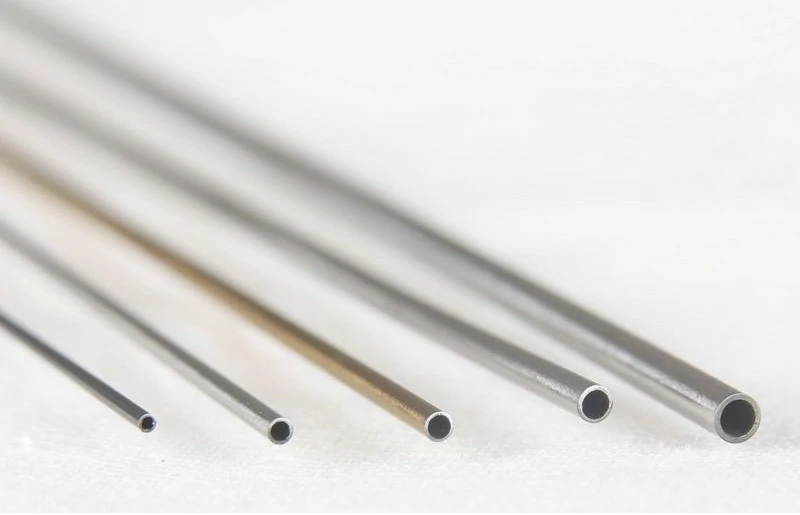
Nitinol tubing specifications
| Specification | Details |
| Product name | Nitinol tubing (NiTi tube, nickel-titanium alloy tube) |
| Alloy | Binary nickel-titanium, nominally 54.5-57.0 wt% Ni, per ASTM F2063 |
| Condition | Superelastic |
| Product standard | ASTM F2633-19 (finished seamless tube); raw material per ASTM F2063-18 |
| Grade | Standard (catheter / hypotube) · Precision (laser-cut / shape-set) · Premium (reviewed to drawing) |
| Size range | OD 0.18-16.0 mm (0.007-0.630 in); wall 0.05-2.0 mm (0.002-0.079 in) |
| Tolerance | OD to ±0.005 mm (±0.0002 in) at the tightest, banded by size and grade. See the tables below. |
| Concentricity | Specified through OD/ID, or to agreement for laser-cut grades |
| Active Af | 20 °C (68 °F) or lower as standard; approximately -15 to +40 °C available to specification |
| Test methods | Af by bend and free recovery per ASTM F2082; material by DSC per ASTM F2004; tensile per ASTM F2516 at 20-24 °C |
| Mechanical | UTS ≥1000 MPa; elongation ≥10%; residual elongation after 6% strain <0.5%. |
| Surface | Bright OD; black oxide ID |
| Length & straightness | Exact length or random length; straightness and surface imperfection criteria to agreement |
| Applications | Catheter support tubing, NiTi tube components, tube stock for laser cutting; couplings, memory rings, sensor fasteners, actuator elements |
Nitinol tubing grades: standard, precision, and premium
| Standard | Precision | Premium | |
| Typically used for | Catheter shafts, hypotubes, guidewire components, needles, sheaths, snares | Laser-cut and shape-set components, filters, delivery aides | Components needing the tightest dimensional control and surface quality |
| OD range | 0.18–1.65 mm (0.007–0.065 in) | 1.65–5.0 mm (0.065–0.197 in) and above | Reviewed against your drawing |
| Controlled to | OD and ID | OD, wall thickness, concentricity | OD, wall, concentricity, surface |
| OD tolerance | ±0.010–0.025 mm (±0.0004–0.001 in) | ±0.013–0.025 mm (±0.0005–0.001 in) | Tighter available, subject to review |
| Wall tolerance | Per OD/ID combination | ±0.010–0.025 mm (±0.0004–0.001 in) | Subject to review |
| Concentricity | Specified via OD/ID | To agreement | To agreement |
Table A - catheter and hypotube sizes (controlling OD and ID)
| OD | OD tolerance | ID tolerance |
| ≤0.3 mm (≤0.012 in) | ±0.005 mm (±0.0002 in) | ±0.010 mm (±0.0004 in) |
| 0.3–1.5 mm (0.012–0.059 in) | ±0.010 mm (±0.0004 in) | ±0.010 mm (±0.0004 in) |
| 1.5–2.5 mm (0.059–0.098 in) | ±0.010 mm (±0.0004 in) | ±0.020 mm (±0.0008 in) |
| 2.5–3.5 mm (0.098–0.138 in) | ±0.020 mm (±0.0008 in) | ±0.020 mm (±0.0008 in) |
| 3.5–10.0 mm (0.138–0.394 in) | ±0.020 mm (±0.0008 in) | ±0.020 mm (±0.0008 in) |
| >10.0 mm (>0.394 in) | ±0.030 mm (±0.0012 in) | ±0.030 mm (±0.0012 in) |
Table B - laser-cut and stent tube sizes (controlling OD and wall)
| OD | OD tolerance | Wall tolerance |
| 0.3–0.6 mm (0.012–0.024 in) | ±0.010 mm (±0.0004 in) | ±0.010 mm (±0.0004 in) |
| 0.6–1.5 mm (0.024–0.059 in) | ±0.013 mm (±0.0005 in) | ±0.013 mm (±0.0005 in) |
| 1.5–2.5 mm (0.059–0.098 in) | ±0.015 mm (±0.0006 in) | ±0.015 mm (±0.0006 in) |
| 2.5–3.5 mm (0.098–0.138 in) | ±0.015 mm (±0.0006 in) | ±0.015 mm (±0.0006 in) |
| 3.5–5.0 mm (0.138–0.197 in) | ±0.020 mm (±0.0008 in) | ±0.025 mm (±0.0010 in) |
| 5.0–8.0 mm (0.197–0.315 in) | ±0.020 mm (±0.0008 in) | ±0.025 mm (±0.0010 in) |
| >8.0 mm (>0.315 in) | ±0.030 mm (±0.0012 in) | ±0.030 mm (±0.0012 in) |
Other sizes and tighter tolerances are quoted against your drawing.
ASTM F2633 applies precisely to OD ≤10 mm and wall ≤2 mm. We can supply up to 16 mm, but above 10 mm the standard no longer covers the product, so acceptance criteria have to be agreed separately.
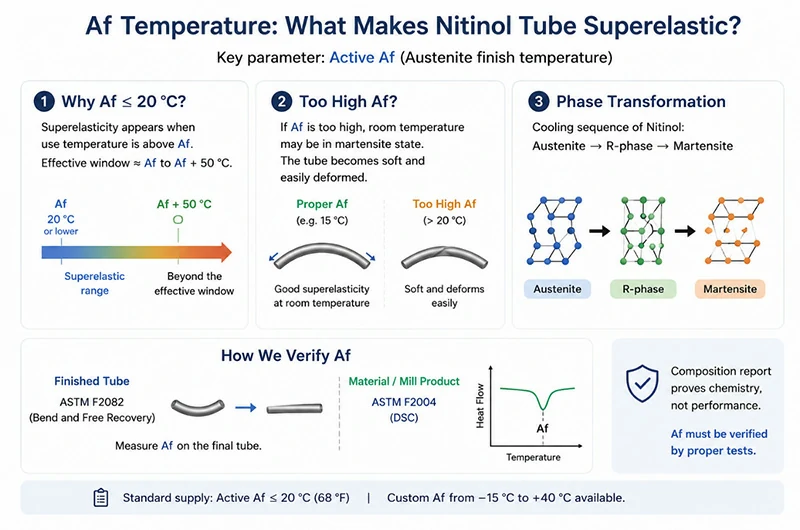
Af temperature: what actually makes a tube superelastic
Buyers usually watch the wrong number. Tensile strength matters, but what decides whether a tube behaves stiff or soft in your hands is the Active Af - the temperature at which transformation to austenite finishes.
Why Af of 20 °C or lower means superelastic at room temperature
Superelasticity only appears when the Active Af sits somewhat below the service temperature, and the useful window runs roughly 50 °C above Af.
A tube with an Active Af near 15 °C holds good superelastic behaviour to about 65 °C. Superelasticity is a temperature window, not a permanent property.
Order the Af too high and the material sits in martensite at room temperature: soft, easy to deform. That is a selection problem, not a quality problem.
On cooling, nitinol transforms from the parent phase (austenite) through the R-phase to martensite. The R-phase is rhombohedral and sits between the two, and in real service conditions you rarely get to ignore it.
Our standard supply is an Active Af of 20 °C (68 °F) or lower. A range of roughly -15 to +40 °C is available to specification, including body-activated material near 37 °C.
A chemistry report does not prove superelasticity
ASTM F2063 states this plainly: nickel and titanium content cannot be measured to the precision needed to guarantee shape memory or superelastic performance, so the alloy formulation must be confirmed by calorimetry or an equivalent thermomechanical test.
So a certificate reading Ni 55.8% proves composition, not performance. Plenty of buyers treat chemistry as proof of superelasticity. It does not line up, and the standard itself says so.
BFR for finished tube, DSC for material
Active Af on finished tube is measured by the bend and free recovery method per ASTM F2082, using a full round tube specimen (applicable to OD 0.25-7.0 mm). Material and hollows are measured by DSC per ASTM F2004.
The two are not interchangeable. Using a DSC curve from the material to accept finished tube is the mismatch we see most often. We verify Af per ASTM F2082 and report it on the MTC.
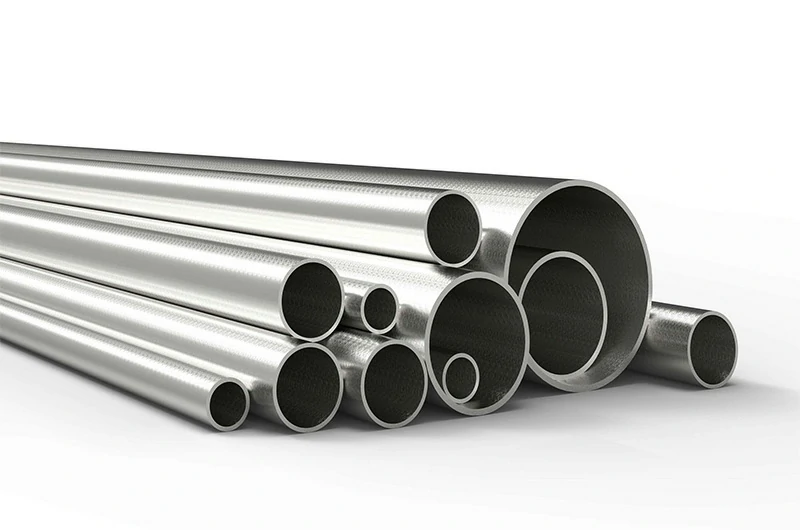
ASTM F2063 or ASTM F2633: ordering to the right standard
Order finished tube against F2633; order bar, flat product or tube hollow against F2063.
| ASTM F2063-18 | ASTM F2633-19 | |
| Covers | Mill product: bar, flat rolled, tube hollow | Finished seamless drawn tube |
| Size scope | 5.50–94.0 mm (0.218–3.70 in) dia or thickness | OD ≤10 mm (0.4 in), wall ≤2 mm (0.08 in) |
| Condition | Hot or cold finished, annealed or heat treated | Superelastic |
| Ni content | Nominally 54.5–57.0 wt% | Nominally 54.5–57.0 wt% |
| Key requirements | Chemistry, melting method, inclusions and porosity | UTS, uniform elongation, upper and lower plateau strength, residual elongation |
| Surface | Oxidized, descaled, pickled, blasted, machined, ground, polished, electropolished | Pickled, ground, or mechanically polished, or as agreed |
F2063 says it directly: finished cold-worked tube should be considered under F2633.
So listing F2063 as the product standard on a tubing page puts it at the wrong level. F2063 governs melting practice and metallurgical cleanliness, not the mechanical acceptance of finished tube.
F2063 requires vacuum or inert-atmosphere melting, with inclusions and porosity limited to ≤2.8% area fraction and ≤39 µm (0.0015 in) in size. Those are material-level acceptance criteria.
Mechanical acceptance of finished tube - UTS, uniform elongation, upper and lower plateau strength, residual elongation - runs under F2633. The two standards do different jobs.
Our tubing is supplied to ASTM F2633 requirements, with final verification per MTC.
Surface finish, hypotube, and secondary processing
Standard delivery surface: bright OD, black oxide ID.
An oxide inner surface is not a defect
It is one of the normal delivery conditions for drawn nitinol tube, and it goes straight into most laser-cutting and post-processing routes.
If your process has specific requirements on bore roughness or residue - for example electropolishing downstream, with a process window that is already narrow - raise it at the RFQ stage and we will review it.
The earlier that requirement lands, the less likely it is to send you back through a sample round.
What a hypotube actually is
Hypotube is the trade term for small-diameter thin-wall tube. There is no standardised definition. Some buyers call a 0.5 mm tube a hypotube; others use the word for 2 mm.
We review your combination of OD, wall, length and Af. We do not price against whether something carries the hypotube label.
For secondary work: cut to exact length is available, and straightness and surface imperfection criteria can be agreed.
More complex processing is reviewed against your drawing.
Where nitinol tubing is used
Medical device components
- Catheter support and shaft tubing - kink resistance is the requirement. Stainless tube takes a permanent set at the same bend radius where nitinol springs back once the strain is removed.
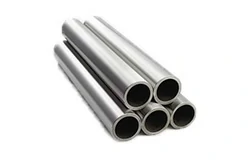
- NiTi tube components - tubular component stock supplied to your drawing.
- Tube stock for laser-cut components - the hollow that goes under the laser. Wall consistency and concentricity here decide whether strut widths come out even after cutting, which in turn drives mechanical consistency downstream.
We supply tube and component stock, not finished medical devices.
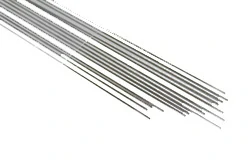
Catheter support and shaft tubing
NiTi tube components
Tube stock for laser-cut components
Industrial and mechanical
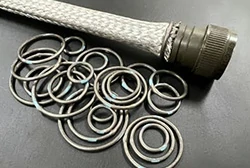
- Shape-memory couplings and rings - expanded cold, slipped into place, then recovered on warming to form an interference fit. It is a joining method that needs no weld, and it compensates for the loosening that vibration and thermal cycling cause.
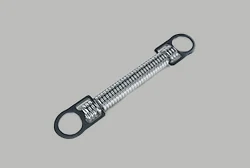
- Sensor fasteners - fastening elements for sensor assemblies.
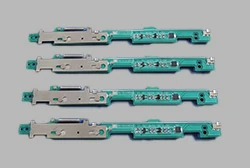
- Actuator elements - motion generated by the transformation between martensite and austenite.
Shape-memory couplings and rings
Sensor fasteners
Actuator elements
Nitinol tubing price: what actually drives your quote
Asking for a price without a specification will not get you a usable answer. That is not a brush-off. In this product category the quote genuinely depends on the seven variables below.
- Alloy grade and purity - standard and high-purity material sit in two different price bands
- Af requirement and tolerance on Af - the narrower the Af window, the higher the heat-treatment control cost
- OD-to-wall ratio - large diameter with thin wall is the hard case, and dimensional precision is limited by it (see the tolerance tables above)
- Tolerance band - tighter tolerance means a higher scrap rate, and scrap goes into the unit price
- Surface requirement - special inner or outer surfaces add process steps
- Quantity and cut length - material utilisation on cut-to-length work feeds straight into unit price
- Documentation - MTC, dimensional report and third-party inspection each carry a cost
What is really behind the recent price movement
Industry reporting attributes much of the recent price movement in nitinol tubing to capacity constraints in gun drilling - the step that turns solid bar into the hollow that then gets drawn down into tube.
According to industry press coverage, once that operation shifted from being priced by weight to being priced by length, unit rates rose several times over, and the cost of drawing the hollow rose noticeably with it.
This is worth remembering, because it changes the question you should be asking. When another supplier's quote sits a long way from ours, the first question is not "why are you expensive" but "where does your hollow come from". The answer is usually there.
How our supply is structured
We do not depend on a single source of drilling capacity. The same specification can be matched across several production lines on a capability review, and that is where our flexibility as a supplier sits.
Quotations carry a stated validity period and defined price-adjustment triggers, written on the quotation itself rather than agreed verbally. Shipping can go by air, sea or courier depending on how urgent the job is.
Nickel and titanium both trade on open markets, and nobody can lock in raw material. What we can do is open up the cost structure so you can judge whether a quote is reasonable, rather than promise a number we do not control.
For a quotation, please send the full set of details in one go.
What to send for a quote
- OD, ID and wall thickness, or a drawing
- Length and straightness requirement
- Af requirement, and how you intend to verify it
- Tolerance band needed
- Surface finish requirement
- Quantity and delivery destination
- Documents needed (MTC, COC, third-party inspection)
Quality, inspection, and documentation
In-house equipment across the whole chain
From melting and drawing through shape setting to surface treatment, every production stage runs on our own equipment, and quality is traceable throughout. Equipment includes vacuum melting furnaces, vacuum annealing furnaces, drawing machines, wire EDM and EDM hole drilling.
Because we do not buy in the hollow, every heat-treatment and cold-working step from melt to finished tube sits in one record system. Heat lot traceability does not break somewhere in the middle.
Inspection capability
We operate a dedicated inspection laboratory equipped for DSC, tensile testing, optical dimensional measurement and composition analysis.
Quality management system
Production is carried out under quality management systems certified to ISO 9001 and ISO 13485, with certificates issued by an IAF / CNAS accredited certification body.
This is system-level certification. It is not product certification, and it is not a compliance claim about any finished device.
Documentation
Documents that can be quoted with an order include a mill test certificate (MTC), certificate of conformity (COC), dimensional report and third-party inspection. The MTC is issued by heat lot and reports Af together with the mechanical values.
Where nitinol tubing is not the right choice
High-cycle fatigue grade tube for critical implantable components
We review this against your drawing and make no general commitment. Neurovascular stents and structural heart devices typically call for specific low-inclusion fatigue-grade material, very tight concentricity consistency, and a complete fatigue validation chain.
Applications highly sensitive to bore cleanliness need a separate discussion
The standard delivery inner surface is black oxide. If your downstream process sets strict limits on bore roughness or residue, say so at the RFQ stage and we will review whether it can be done.
When Af does not match the service temperature, the tube is not superelastic
Below Af the material sits in martensite: soft and easy to deform.
Confirming the service temperature before selection is a good deal easier than judging quality after the goods arrive.
We do not supply finished devices
We supply tube and component stock. We do not carry out device-level validation or registration.
Related nitinol and titanium products
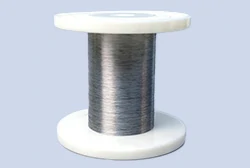
Nitinol Wire
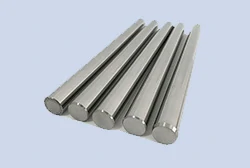
Nitinol Bar and Rod
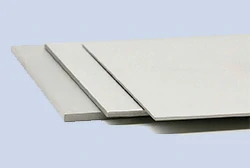
Nitinol Sheet
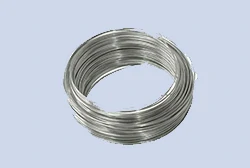
Nitinol Cable and Strand
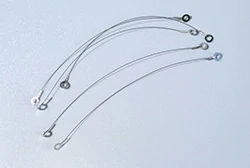
Nitinol Actuator Wire
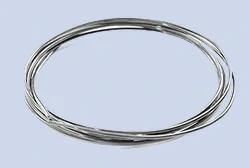
Ti-6Al-4V Fine Wire
All of these ship from the same supply chain — one order, one set of lot documents, one contact from quote through inspection.
Nitinol tubing FAQ
What is nitinol tubing?
Nitinol tubing is seamless nickel-titanium tube, usually supplied in the superelastic condition.
It is a semi-finished metal product - not heat-shrink tubing, which is a polymer, and not a finished device. Buyers turn it into catheter shafts, hypotubes, laser-cut components and couplings.
What is another name for nitinol?
Common names include NiTi, Ni-Ti, TiNi, nickel titanium, nickel-titanium alloy, shape memory alloy (SMA), superelastic alloy and 55-Nitinol. They all refer to the same family of binary nickel-titanium alloys.
Is nitinol stronger than steel?
On tensile strength it is comparable or higher - our tubing runs UTS ≥1000 MPa. Stiffness, however, is far below steel.
The real difference is recoverable strain: pulled to 6% strain and unloaded per ASTM F2516, residual elongation stays below 0.5%. Ordinary steel does not do that.
What is the cost of nitinol tubing?
There is no list price. The quote depends on alloy grade and purity, Af requirement, OD-to-wall ratio, tolerance band, surface requirement, quantity and cut length, and documentation. Send the specification and we can quote against it.
What Af temperature should I order?
Work back from the service temperature: the Active Af should sit somewhat below it. For superelastic behaviour at room temperature, Af of 20 °C or lower is the usual choice; body-activated applications take a higher Af.
Should I specify ASTM F2063 or ASTM F2633?
Order finished tube against F2633; order bar, flat product or tube hollow against F2063. F2063 governs material-level chemistry and metallurgical cleanliness, F2633 governs the dimensional and mechanical acceptance of finished tube.
Can the inner surface be supplied other than black oxide?
Black oxide is the standard delivery condition and goes straight into most laser-cutting and post-processing routes.
What is the difference between nitinol tubing and nitinol hypotube?
Hypotube is the trade term for small-diameter thin-wall tube, with no standardised definition. The same tube gets called tubing by one buyer and hypotube by another. We review against size and tolerance, not against the name.
Which tolerance should I specify — OD, ID, or wall?
It depends on what you are making. Catheters and hypotubes are controlled on OD and ID; laser-cut components are controlled on wall thickness and concentricity. Specifying OD tolerance alone is the most common omission.
Do you supply small quantities or samples?
Small quantities and sample tube can be reviewed against your specification. Tell us the quantity and the intended use at the RFQ stage and we will respond on availability.
Request a nitinol tubing quote
For a nitinol tubing quotation, please send OD, ID and wall thickness (or a drawing), length, Af requirement, tolerance band, surface finish requirement, quantity and destination, along with the documents you need.
We will then review availability and the process route against your specification, and come back with a quotation and the inspection documents that can go with it. If your specification falls in a range that needs review, we will tell you so directly rather than take the order and work it out afterwards.


