

Sodium Chloride Electrolyzer with Titanium Anode
Updated : May. 22, 2026On-site sodium hypochlorite generation via sodium chloride electrolysis provides a stable and reliable chlorine supply for water treatment and disinfection systems. Compared to traditional chlorine gas or chemical dosing, it reduces safety risks and operating costs, making it ideal for long-term continuous operation in municipal and industrial water systems.
Leveraging advanced titanium anode electrolysis, we offer a complete solution including anode components and system configurations. High-performance MMO-coated anodes and optimized designs deliver higher efficiency, longer service life, and stable chlorine output. Equipment and anode configurations can be tailored to project scale and operating conditions, ensuring reliable long-term performance while minimizing maintenance and overall operational expenses.
Principle and Advantages of Sodium Chloride Electrolysis for Chlorine Production
Sodium chloride electrolyzers prepare sodium hypochlorite solution on-site by electrolyzing low-concentration brine (approximately 2%–5%). During electrolysis, the electrochemical reaction occurs on the surface of the titanium anode, generating a sodium hypochlorite disinfectant with strong oxidizing properties, which is widely used in water treatment and industrial wastewater treatment systems.
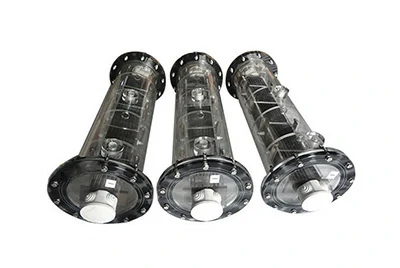
In practical applications, the equipment demonstrates significant advantages in terms of efficiency, stability, and operating costs:
- Multi-structure electrolyzer design to adapt to different production capacity requirements
- MMO titanium anodes improve electrolysis efficiency and extend service life.
- Low salt and low energy consumption operation reduces overall costs.
- The transparent electrolytic cell structure allows for clear visualization of its operating status.
- Optimize the conductive structure to improve current utilization and stability.
- Supports electrode refurbishment and maintenance, reducing long-term operating costs.
System Structure & Main Components of a Sodium Chloride Electrolyzer
The sodium chloride electrolytic cell system mainly consists of the electrolytic cell body, power supply system and titanium anode components. Through modular structural design, it achieves stable electrolysis operation and flexible configuration, and is suitable for different chlorine production scales and application scenarios.
- Electrolyzer body: As the core reaction unit, it is used to carry out the brine electrolysis process. Its structural design directly affects the electrolysis efficiency and system stability.
- Power supply system: Provides a stable DC power input to ensure continuous operation of the electrolysis process and optimize energy consumption.
- Titanium anode assembly: As a key reaction component, it adopts coating systems such as MMO to achieve efficient chlorine evolution and long-term stable operation.
We not only provide standardized electrolysis equipment, but also support flexible configuration according to capacity and operating conditions, providing a foundation for subsequent equipment selection and system matching.
Sodium chloride electrolyzer specifications and customization capabilities
Chalcotitanium offers a variety of sodium chloride electrolyzers with different chlorine production capacities, ranging from small units to engineered systems, to meet the application needs of projects of different sizes.
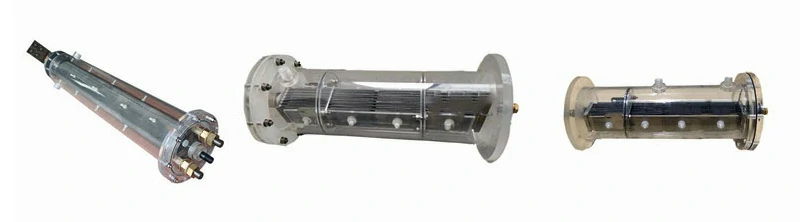
300g/h sodium hypochlorite electrolytic cell:
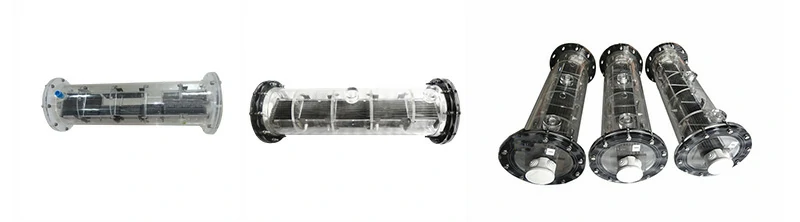
500g/h sodium hypochlorite electrolytic cell:
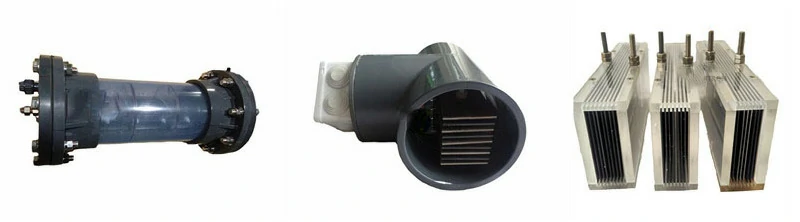
1000g/h sodium hypochlorite electrolytic cell:
Custom configuration and system design capabilities
We offer flexible equipment and anode system configuration capabilities to meet diverse electrolysis system needs, catering to different project scales and application conditions.
- We support customized equipment with varying chlorine production capacities (from small-scale to engineered systems).
- We offer customized titanium anode components and coating systems (MMO / Pt, etc.).
- Electrolytic cell structure and system configuration design based on operating conditions.
- Supports existing system upgrades and electrode replacement solutions.
We can provide customized electrolysis system configurations to meet your application needs, ensuring stable equipment operation and efficient matching of project requirements.
Specifications and technical parameters of sodium chloride electrolytic cell
| Effective chlorine output | 50g/h | 100g/h | 300g/h | 500g/h | 1000g/h |
| DC voltage | DC/V≤5V | DC/V≤5V | DC/V≤20V±5 | DC/V≤30V | DC/V≤40V |
| DC current | DC/A ≤ 60A ± 20% | DC/A ≤ 125A ± 20% | DC/A ≤ 84A ± 20% | DC/A ≤ 120A ± 20% | DC/A ≤ 156A ± 20% |
| Saline concentration | 2%–5% | 2%–5% | 2%–5% | 2%–5% | 2%–5% |
| Import/export interfaces | G1" | G1/2" | G1/2" | G1/2" | G3/4" |
| Terminal post | M8×40mm | M16×40mm | M12×30mm | M22×3mm | M27×50mm |
| Container pressure | ≤0.2Mpa | ≤0.2Mpa | ≤0.2Mpa | ≤0.2Mpa | ≤0.2Mpa |
| The above parameters are the standard configuration range. The specific specifications of the electrolytic cell can be adjusted and optimized according to project requirements. | |||||
- The current and voltage values in the table may change due to variations in solution concentration, temperature, and time, which is normal.
- Electrolytic cells can be designed in plate, tubular, and other custom specifications.
- For complete technical specifications and installation/usage instructions, please contact our sales department.
Application areas of sodium chloride electrolyzers
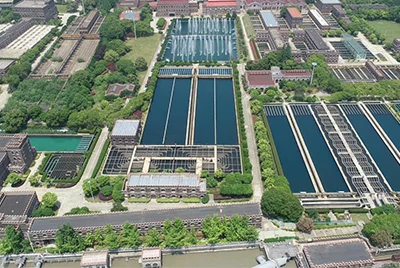
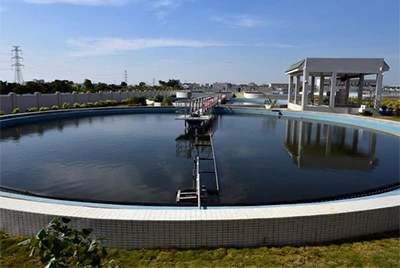
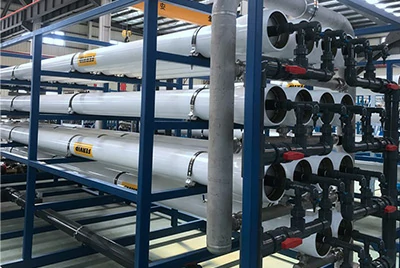
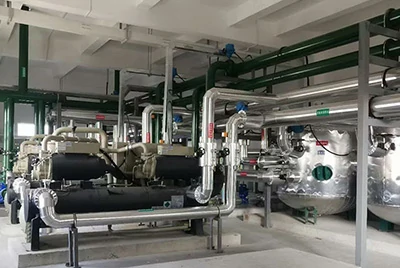
Sodium chloride electrolyzers generate sodium hypochlorite solution by electrolyzing brine, and are widely used in various water treatment and disinfection systems, suitable for applications requiring continuous operation and stable chlorine supply.
Drinking water disinfection: Used in municipal water supply and rural drinking water systems to achieve safe and stable disinfection treatment.
Wastewater treatment: Used in industrial and municipal wastewater treatment systems to effectively control organic matter and microbial pollution.
Swimming pool water treatment: Achieving continuous disinfection of circulating water and maintaining stable water quality.
Industrial circulating water systems: used for sterilization and algae prevention in cooling water and circulating water systems.
On-site preparation of sodium hypochlorite vs. traditional chlorine supply
Compared to traditional liquid chlorine procurement or chemical reagent addition methods, on-site electrolytic preparation of sodium hypochlorite has significant advantages in terms of safety, economy, and operational stability, making it more suitable for water treatment systems that operate for long periods.
- No need for chlorine transportation and storage, reducing safety risks.
- On-site preparation avoids drug degradation and improves usage efficiency.
- Reduce long-term operating costs and decrease reliance on external purchases.
- Produced and ready to use, adaptable to different working conditions.
- Supports automated operation, reducing manual intervention.
Obtain sodium chloride electrolyzer solutions and quotes
We provide end-to-end solutions, from single sodium chloride electrolyzers to complete electrolysis systems, covering equipment supply, titanium anode component configuration, and engineered system integration, to meet the needs of water treatment and chlorine production projects of different scales.
Customized designs are available based on chlorine production capacity, installation conditions, and operating conditions to ensure efficient and stable equipment operation.
- Provides sodium chloride electrolytic cell equipment in various specifications
- Supports the matching of titanium anode components and electrode systems.
- Customized design and system integration can be provided according to project requirements.
- Provide technical support and after-sales maintenance consultation
Chalco can provide you the most comprehensive inventory of titanium products and can also supply you customized products. Precise quotation will be provided within 24 hours.
Get a quote

