

TC18 Titanium Alloy
Updated : Aug. 21, 2026TC18 is an aerospace titanium alloy that combines high strength with high toughness. Based on the Ti-5Al-5Mo-5V-1Cr-1Fe composition, it offers good hardenability, formability, and weldability, with a maximum service temperature of 400°C.
Chalco Titanium can supply TC18 titanium alloy bars, forged billets, and die forgings for aircraft landing gear and other highly loaded aerospace structures. Supply options can be evaluated based on product dimensions, sampling orientation, mechanical property requirements, NDT acceptance level, and machining drawings.
Send your specifications, technical standard, or forging drawing for a TC18 titanium alloy quotation.
TC18 titanium alloy specifications
TC18 is available as bars, forged billets, and die forgings, covering different requirements from raw material procurement to large aerospace load-bearing components.
| Grade | TC18; Russian equivalent grade: BT22 |
| Main alloy composition | Ti-5Al-5Mo-5V-1Cr-1Fe |
| Product forms | Bars, forged billets, and die forgings |
| Bar dimensions | φ16–500 mm |
| Large-section product | 650 × 305 × 260 mm |
| Isothermal forging capability | Projected area: no more than 2 m² |
| Maximum service temperature | 400℃ |
| Main applications | Aircraft landing gear and large aerospace load-bearing components |
| Optional processing | Saw cutting, turned finish, rough machining, and machining allowance based on drawings |
| Inspection items | Tensile, impact, fracture toughness, macrostructure, microstructure, UT, PT, etc. |
TC18 titanium alloy product forms
Chalco Titanium can supply TC18 titanium alloy bars, forged billets, and die forgings for different stages, from raw material procurement and subsequent forging to aerospace structural component machining. Product dimensions, delivery condition, sampling orientation, and inspection requirements should be confirmed against the customer's standard or drawing.
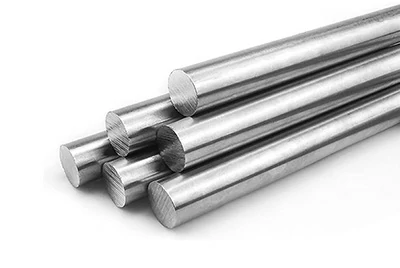
TC18 titanium alloy bar
Process:Forging
Diameter:φ16–500 mm
Tensile strength:1120–1139 MPa
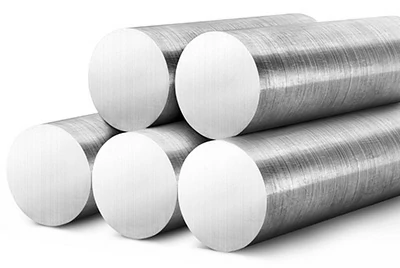
Product form: Large-section forged billet
Dimensions:To be confirmed based on the component drawing and subsequent machining requirements
Applications:Die forging or machining of aircraft landing gear forgings, variable-section load-bearing components, and large aerospace structural components.
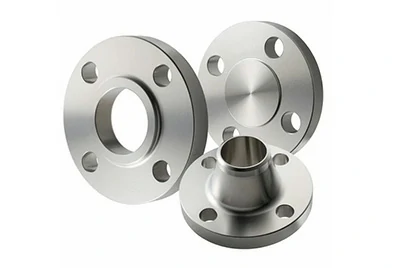
TC18 titanium alloy die forging
Process:Isothermal die forging
Manufacturing capability:Projected area no more than 2 m²
Applications:Aircraft landing gear, elongated load-bearing components, variable-section forgings, and other large aerospace load-bearing components.
Key features of TC18 titanium alloy
High strength
TC18 provides the high strength needed for aircraft landing gear and large aerospace load-bearing components while supporting structural weight reduction.
High toughness
While retaining high strength, the alloy also offers good impact toughness and fracture toughness, making it suitable for impact loads, cyclic loads, and complex stress states.
Good hardenability
TC18 is suitable for large-diameter bars and large-section forgings, helping maintain more consistent microstructure and properties across the section after heat treatment.
Good formability
The alloy is suitable for forging, isothermal die forging, and variable-section forming, and can be used to produce elongated and structurally complex aerospace load-bearing forgings.
Good weldability
TC18 offers good welding compatibility and can be used for aerospace structural components that require welded joints.
Maximum service temperature up to 400°C
TC18 can be used in load-bearing applications at temperatures up to 400°C, including aircraft landing gear and related aerospace structures.
TC18 titanium alloy chemical composition
TC18 uses the Ti-5Al-5Mo-5V-1Cr-1Fe alloy system. Its chemical composition range according to GB/T 3620.1 is shown below:
| Elements | Composition |
| Al | 4.4%–5.7% |
| Mo | 4.0%–5.5% |
| V | 4.0%–5.5% |
| Cr | 0.5%–1.5% |
| Fe | 0.5%–1.5% |
| C | ≤0.08% |
| Si | ≤0.15% |
| N | ≤0.05% |
| Zr | ≤0.30% |
| Ti | Balance |
Typical mechanical properties of TC18 titanium alloy
TC18 titanium alloy maintains high tensile and yield strength across different sizes and sampling orientations, together with good ductility, impact toughness, and fracture toughness. This combination is suitable for aircraft landing gear and large aerospace load-bearing components.
| Bar size | Direction | Tensile strengthRm / MPa | Yield strengthRp0.2 / MPa | ElongationA / % | Area reductionZ / % | Impact toughnessakU / J·cm⁻² | Fracture toughnessMPa·m¹ᐟ² |
| φ20 mm | Long. | 1120–1140 | 1080–1100 | 18–19 | 60 | 51–57 | — |
| φ150 mm | Trans. | 1124–1127 | 1094–1096 | 13–17 | 37–60 | 40–51 | 48.6–51.4 |
| φ200 mm | Trans. | 1123–1139 | 1098–1113 | 11–13 | 39–50 | 28 | 56.6–60.5 |
| φ450 mm | Trans. | 1120–1135 | 1073–1082 | 12.5–13.5 | 27–33 | 38–39 | 73.0–76.2 |
Strength and toughness of large-section TC18 titanium alloy
TC18 titanium alloy is suitable for large-section forged billets and large aerospace load-bearing components. The 650 × 305 × 260 mm product maintains high strength, ductility, and fracture toughness in both the longitudinal and short-transverse directions.
| Productdimensions | Samplingorientation | Tensile strengthRm / MPa | Yield strengthRp0.2 / MPa | ElongationA / % | Area reductionZ / % | Impact toughnessakU / J·cm⁻² | Fracture toughnessMPa·m¹ᐟ² |
| 650 × 305 × 260 mm | L - Longitudinal | 1121 | 1075 | 14.5 | 40 | 46 | 85.5 |
| 650 × 305 × 260 mm | ST - Short transverse | 1097 | 1045 | 13 | 39 | 51.5 | 83.4 |
In the ST short-transverse direction, the large-section product retains a tensile strength of 1097 MPa and fracture toughness of 83.4 MPa·m¹ᐟ². It is suitable for aircraft landing gear and large aerospace forgings that require performance in multiple loading directions.
Microstructure control for large-diameter TC18 bars
Macrostructure inspection
A full-section macrostructure inspection can be performed on φ400 mm TC18 titanium alloy bars to evaluate macrostructural uniformity, segregation, cracks, shrinkage cavities, and other internal defects.
Microstructure inspection at multiple positions
High-magnification microstructure examination is conducted at the bar edge, 0.5R, and center to assess grain and microstructural conditions across the section and support property consistency in large-diameter bars.
Large-section uniformity control
Melting, forging, and heat treatment controls are used to reduce microstructural differences between the center and edge of large-diameter bars and support transverse and short-transverse property requirements for aircraft landing gear and large aerospace load-bearing components.
Why TC18 is suitable for aircraft landing gear
- High strength with weight savings: TC18 titanium alloy offers high tensile and yield strength, helping reduce structural weight while carrying landing gear loads.
- Good impact and fracture toughness: Aircraft landing gear is subjected to impact loads and complex stresses during takeoff and landing. TC18 retains good impact and fracture toughness at high strength levels, supporting the safety of load-bearing structures.
- Suitable for large-section components: TC18 has good hardenability and is suitable for large-diameter bars, large-section forged billets, and large die forgings, helping maintain consistent properties across landing gear component sections.
- Good transverse properties: Large TC18 bars and forgings retain high strength and toughness in the transverse and short-transverse directions, making them suitable for landing gear load-bearing components with complex loading directions.
- Good forgeability: TC18 can be processed by open-die forging, radial forging, and isothermal die forging, and is suitable for elongated, variable-section, and structurally complex aircraft landing gear forgings.
Chalco Titanium equipment capabilities
Vacuum arc remelting
Chalco Titanium operates 8 t and 10 t vacuum arc remelting furnaces for melting TC18 titanium alloy ingots and controlling purity, providing a stable material basis for large bars, forged billets, and die forgings.
Contact us now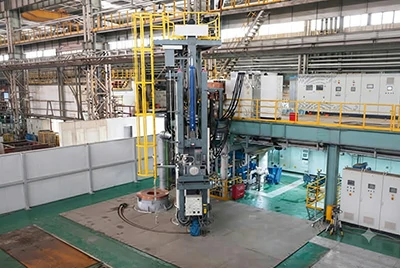

Large open-die forging
With 20 MN, 40 MN, and 60 MN open-die forging presses, Chalco Titanium can break down ingots and produce large-section forged billets and large forgings while improving internal microstructure for subsequent forming.
Contact us nowRadial forging
A 13 MN radial forging machine can be used to form TC18 round bars, improving dimensional stability and cross-sectional microstructural uniformity for large-diameter aerospace titanium alloy bars.
Contact us now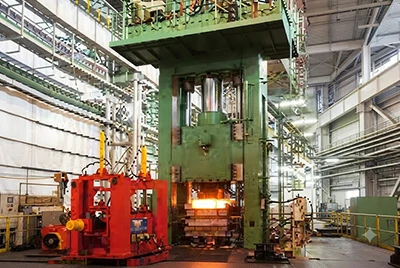
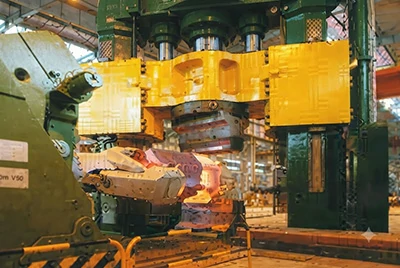
Isothermal die forging
Chalco Titanium operates a 3,000 t isothermal die forging press for elongated, variable-section, and large aerospace load-bearing forgings, with a projected forging area of up to 2 m².
Contact us nowTC18 quality assurance at Chalco Titanium
Chalco Titanium applies quality control to TC18 titanium alloy bars, forged billets, and die forgings from incoming material inspection and in-process melting checks through final inspection and product validation. The focus is on verifying chemical composition, mechanical properties, internal structure, and NDT results against the order's technical requirements.

Aerospace quality management systems
The supporting production and inspection systems are certified to ISO 9001 and AS9100 aerospace quality management standards, with Nadcap-accredited capabilities in nondestructive testing, materials testing, and heat treatment.
Chemical composition analysis
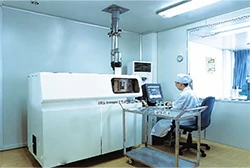
ICP-AES, ICP-MS, optical emission spectrometers, carbon/sulfur analyzers, hydrogen analyzers, and oxygen/nitrogen analyzers are available to test the principal alloying elements, impurities, and interstitial elements in TC18.
Mechanical property testing
Depending on product size and sampling orientation, testing can cover tensile strength, yield strength, elongation, reduction of area, impact toughness, and fracture toughness. The available equipment also covers hardness, low-cycle fatigue, and high-cycle fatigue testing.
Macrostructure and microstructure inspection
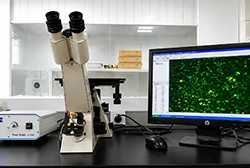
Macro-etching equipment, metallographic microscopes, and scanning electron microscopes are used to examine macrostructure, grains, and microstructure. For large bars, the edge, 0.5R, and center can be examined to verify the microstructural condition across the section.
Nondestructive testing
Capabilities include ultrasonic testing (UT), penetrant testing (PT), eddy current testing (ET), magnetic particle testing (MT), radiographic testing (RT), and visual testing (VT). Large bars can be inspected for internal defects using a zoned ultrasonic C-scan system, while die forgings can be assigned an NDT plan based on component geometry.
Recognized testing capabilities
The testing center holds CNAS laboratory accreditation and Nadcap MTL and NDT accreditation, and its testing capabilities have been recognized by GE, Rolls-Royce, and AECC. Specific inspection items, acceptance criteria, and sampling orientations for TC18 products are determined by the applicable standard or mutually agreed technical specification.
TC18 titanium alloy ordering information
To evaluate a supply plan for TC18 bars, forged billets, or die forgings, please provide the following information with your inquiry:
- Product form: Bar, forged billet, or die forging
- Dimensions: Diameter, length, cross-sectional dimensions, or forging envelope dimensions
- Applicable standard: Customer standard, industry standard, or technical agreement
- Delivery condition: To be confirmed from the drawing or technical requirements
- Property requirements: Tensile strength, yield strength, elongation, impact toughness, and fracture toughness
- Sampling orientation: Longitudinal, transverse, L, LT, or ST
- NDT requirements: UT, PT, and the required acceptance level
- Machining requirements: Saw cutting, turned finish, rough machining, or specified machining allowance
- Purchase quantity: Unit weight, quantity, and estimated annual demand
- Documentation requirements: Material test certificate, inspection report, dimensional report, and third-party inspection requirements
For aircraft landing gear and large aerospace load-bearing component projects, provide the component drawing, technical specification, and loading direction requirements. Chalco Titanium can then evaluate a suitable TC18 product form, dimensions, and inspection plan.
TC18 titanium alloy FAQ
What is the main composition of TC18 titanium alloy?
TC18 uses the Ti-5Al-5Mo-5V-1Cr-1Fe alloy system. Titanium is the base metal, alloyed with Al, Mo, V, Cr, and Fe.
Are TC18 and BT22 the same material?
BT22 is the Russian equivalent grade of TC18. For procurement, the chemical composition, heat treatment condition, and mechanical properties should be confirmed against the applicable standard or technical agreement.
What TC18 titanium alloy products can Chalco Titanium supply?
Chalco Titanium can supply TC18 titanium alloy bars, forged billets, and die forgings for machining, subsequent die forging, and the production of large aerospace load-bearing components.
What is the maximum diameter available for TC18 bars?
TC18 titanium alloy bars are available in diameters from φ16 to 500 mm. The specific diameter, length, delivery condition, and machining allowance can be confirmed for the order.
What is the maximum service temperature of TC18 titanium alloy?
TC18 has a maximum service temperature of 400°C and is suitable for aerospace load-bearing structures operating at intermediate temperatures.
Why is TC18 suitable for aircraft landing gear?
TC18 combines high strength, high toughness, good hardenability, and good formability, making it suitable for large-section, variable-section, and complex-load aircraft landing gear components.
What inspections are available for large TC18 products?
Depending on the order requirements, inspections can cover chemical composition, tensile properties, impact toughness, fracture toughness, macrostructure, microstructure, and nondestructive testing.
What information is needed for a TC18 quotation?
Provide the product form, dimensions, applicable standard, delivery condition, property requirements, sampling orientation, NDT acceptance level, purchase quantity, and component drawing.


