

Titanium Inner Grooved Tube
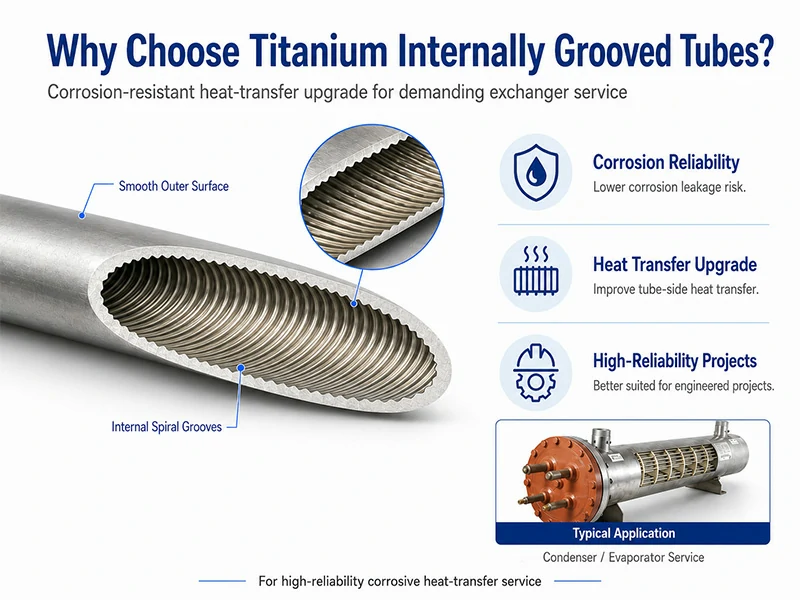
Updated : Aug. 24, 2026A Titanium Inner Grooved Tube is designed for heat exchanger projects requiring corrosion resistance, long service life, and improved thermal performance. Its internal helical ribs/grooves enhance tube-side heat transfer, helping overcome the heat-transfer limitations of a conventional smooth titanium tube.
Rather than serving as a low-cost substitute for copper or aluminum tubing, this corrosion-resistant heat exchanger tube is intended for seawater, brine, chloride-bearing cooling water, and other corrosive services. It helps reduce corrosion-related leakage and improve long-term equipment reliability.
- For evaporators, shell-and-tube heat exchangers, and industrial refrigeration systems
- For seawater cooling systems, brine cooling systems, chloride-bearing cooling water, and other corrosive media
- Internal grooves enhance tube-side heat transfer and improve the effectiveness of titanium tubing
- Outside diameter, wall thickness, groove height, groove pitch, and helix angle can be confirmed against drawings
Why Choose a Titanium Inner Grooved Tube?
A titanium inner grooved tube is not a low-cost replacement for copper or aluminum tubing. It is designed for heat-transfer projects with higher requirements for corrosion resistance, service life, leakage control, and thermal performance. It is particularly suitable where copper corrodes rapidly, conventional stainless steel provides an insufficient corrosion margin, or smooth titanium tubing cannot meet the required heat duty.
Long-Term Reliability in Corrosive Service
In seawater, brine, chloride-bearing cooling water, or corrosive recirculating water, titanium helps reduce corrosion-related leakage and extend heat exchanger operating cycles.
When Copper Tube Life Is Insufficient, Titanium Is Better Suited to High-Risk Environments
Copper tubing is suitable for conventional heat-transfer service. However, where water quality is complex, salt-laden air is severe, or the process medium is corrosive, a titanium inner grooved tube provides a more reliable corrosion-resistant upgrade.
When Smooth Titanium Tubes Are Thermally Limited, Internal Grooves Enhance Tube-Side Heat Transfer
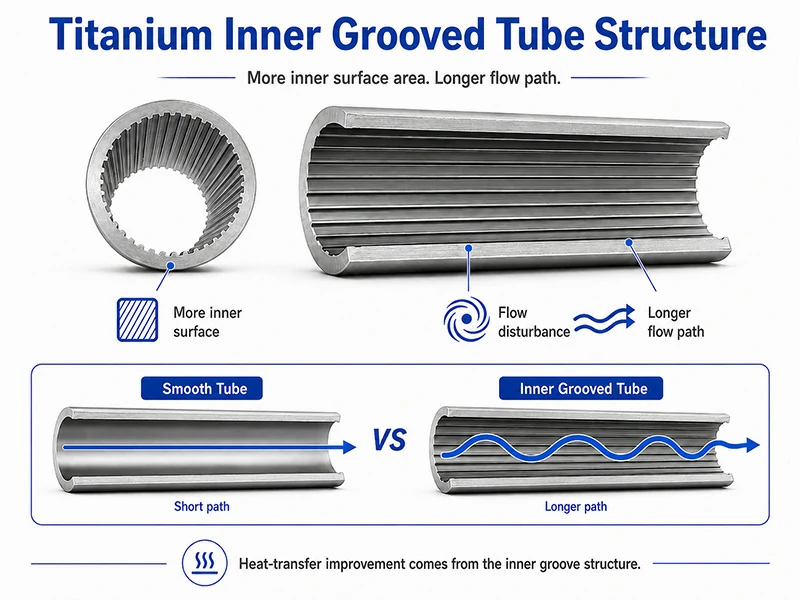
The internal helical ribs/grooves increase the contact area and disturb the tube-side flow, improving heat-transfer performance while retaining the corrosion resistance of titanium.
Best Suited to Engineering-Validated Projects, Not Commodity Low-Cost Applications
Titanium inner grooved tubes are better suited to high-reliability applications such as industrial refrigeration systems, commercial chillers, seawater cooling systems, brine cooling systems, chemical-process cooling, and water-treatment heat exchangers.
Custom Evaluation Based on Drawings and Operating Conditions
Outside diameter, wall thickness, minimum bottom wall thickness, groove height, groove pitch, helix angle, groove count, and supply form should be confirmed against the drawing, reference sample, and actual operating conditions.
Titanium Inner Grooved Tube Specifications
Titanium inner grooved tube specifications normally need to be confirmed against heat exchanger drawings, reference samples, and operating conditions. The ranges below are compiled from current product data; final supply capability remains subject to drawing review and production confirmation.
| Item | Specification Range |
| Available Material | Grade 1 / Grade 2; other grades subject to project review |
| Outside Diameter | 6.35–19.05 mm |
| Wall Thickness | 0.3–1.5 mm |
| Minimum Bottom Wall Thickness | ≥0.35 mm |
| Groove Pattern | Straight grooves / angled grooves |
| Groove Pitch | 0.4 / 0.5 / 0.6 mm |
| Groove Height | 0.10–0.12 / 0.14–0.16 / 0.16–0.18 mm |
| Groove Apex Angle | 90° |
| Helix Angle | 45° is commonly used; other angles are subject to drawing review |
| Supply Form | Straight tube, coil, or U-bend; other formed configurations subject to drawing review |
| Tube-End Requirements | Smooth sections, tube-expansion sections, welding sections, etc., as required by the heat exchanger design |
For quotation, provide the outside diameter, wall thickness, minimum bottom wall thickness, groove height, groove pitch, helix angle, tube length, supply form, and operating conditions. Existing copper inner-grooved tubes, smooth titanium tubes, or other reference samples and drawings can also be submitted to assess groove-profile replication, manufacturing feasibility, and replacement limits.
How Do Internal Grooves Improve Tube-Side Heat Transfer?
The heat-transfer enhancement of a Titanium Inner Grooved Tube comes primarily from its internal helical ribs/grooves, not from the thermal conductivity of titanium itself. Compared with a smooth titanium tube, this Enhanced Heat Transfer Tube increases the internal surface area and alters the flow regime to improve Tube-Side Heat Transfer.
- Greater heat-transfer area: The internal groove profile enlarges the contact area between the fluid and the tube wall, increasing the effective heat-transfer surface.
- Stronger flow disturbance: The internal grooves alter the flow path and reduce the heat-transfer limitations associated with stable flow.
- Improved performance over smooth titanium tubing: In corrosive service, the grooved structure helps compensate for the thermal limitations of a conventional smooth titanium tube.
- Heat-transfer and pressure-drop balance: Enhancement and flow resistance must be evaluated together for the actual operating conditions.
Key Groove Parameters
| Parameter | Function |
| Groove Height | Controls heat-transfer enhancement and flow resistance |
| Groove Pitch | Affects flow disturbance and heat-transfer uniformity |
| Helix Angle | Influences the flow path and pressure drop |
| Minimum Bottom Wall Thickness | Determines tube-expansion safety and mechanical strength |
Applications & Selection Logic
Titanium inner grooved tubes are primarily used in industrial heat-transfer systems that require both thermal efficiency and reliable operation.
Seawater Cooling & Brine Cooling Systems
For seawater cooling, brine circulation, and coastal industrial heat-transfer equipment.
Evaporator Systems
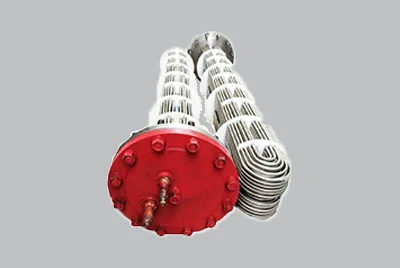
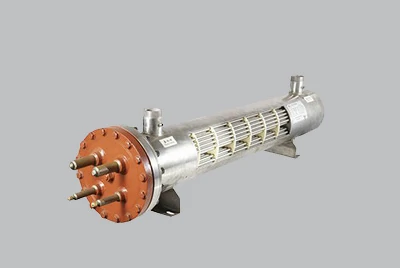
For shell-and-tube evaporators in industrial refrigeration and HVAC systems.
Condenser & Refrigeration Systems
For commercial and industrial condensing heat-transfer equipment.
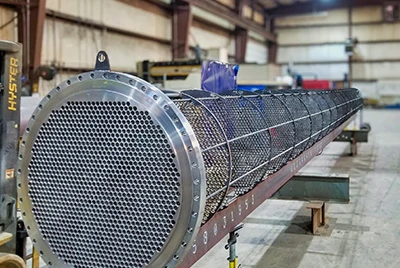
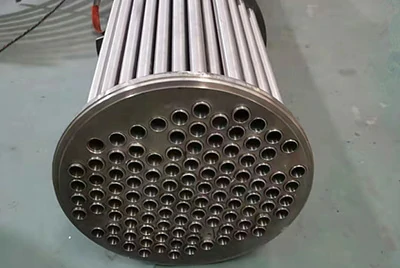
Shell-and-Tube Heat Exchanger Systems
For industrial energy systems, process cooling, and custom heat-transfer equipment.
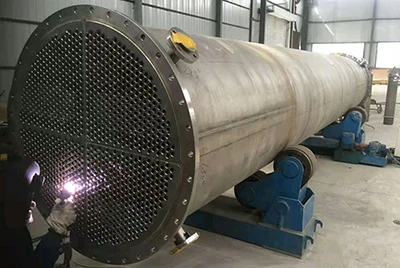
Industrial Cooling & Water Treatment Systems
For general industrial recirculating cooling and process heat-transfer systems.
Manufacturing Capability & Quality Assurance
Chalco Titanium supplies titanium inner grooved tubes for batch-engineered applications in industrial heat-transfer systems, supported by stable titanium processing capabilities and Titanium Heat Exchanger Tube manufacturing experience. In addition to groove-geometry accuracy, production focuses on dimensional consistency and long-term supply stability to support continuous heat exchanger operation.
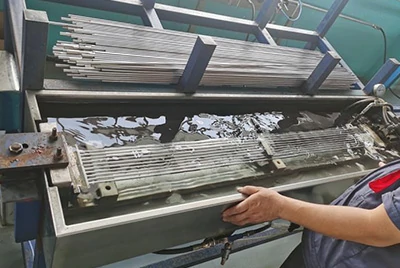
Manufacturing Process
The manufacturing process is centered on groove-profile forming and dimensional stability control to ensure consistent structural performance across production batches.
- Base material selection (Grade 1 / Grade 2): Select the titanium grade according to corrosion-resistance and mechanical-property requirements
- Internal groove forming: Produce a straight-groove or angled-groove internal profile
- Groove-parameter control: Maintain consistent groove height, groove pitch, and helix angle
- Sizing and straightening: Ensure compatibility with assembly and heat exchanger geometry
Quality Control
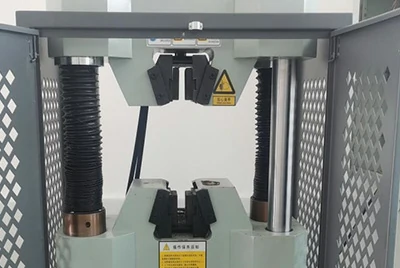
Quality control is applied throughout production to verify structural consistency and service reliability.
- Dimensional inspection: Control outside diameter, wall thickness, and minimum bottom wall thickness
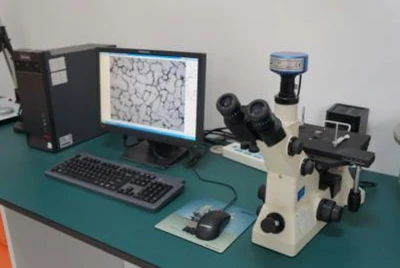
- Profile inspection: Verify consistency of the internal groove geometry
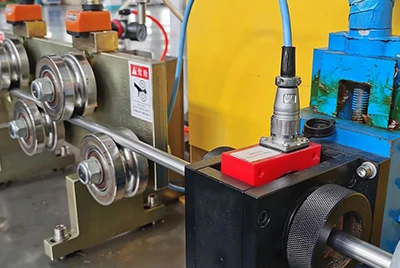
- Non-destructive testing: Use eddy-current testing to verify tube integrity
- Pressure testing: Perform hydrostatic or pneumatic leak testing as required by the project
Supply Stability
Chalco Titanium supports stable batch supply for engineering projects and maintains consistent groove parameters across production lots. Repeat development and reproduction based on drawings or samples are available for long-term procurement programs.
RFQ / Engineering Checklist
Please provide as much of the following information as possible with your inquiry:
- Heat exchanger type (evaporator / condenser / shell-and-tube heat exchanger, etc.)
- Working medium (refrigerant / water / seawater / brine, etc.)
- Operating temperature and pressure range
- Outside diameter, wall thickness, and tube length
- Groove height, groove pitch, and helix angle
- Straight tube / coil / U-bend
- Tube-end requirements (smooth section / tube-expansion section, etc.)
- Testing and standard requirements, if applicable
Please submit a drawing or sample for groove-profile evaluation and quotation confirmation.
FAQ: Qualification Filter
1. Are titanium inner grooved tubes suitable for cost-driven projects?
When the primary objective is the lowest purchase price, titanium inner grooved tubes are generally not the first choice. They are better suited to heat exchanger systems with high corrosion risk or stringent long-term operating reliability requirements.
2. Can this product be used in seawater or high-chloride environments?
Yes. Seawater, brine, and chloride-bearing cooling circuits are typical applications. Titanium is commonly selected in these services to reduce the risk of corrosion-related leakage.
3. Do I need inner grooved tubes or smooth titanium tubes?
It depends on the required heat duty. If the system already meets the design requirement, a smooth titanium tube may be more appropriate. If additional tube-side heat transfer is needed while retaining titanium, an inner grooved structure should be considered.
4. Will higher heat transfer always mean better performance?
Not necessarily. Internal grooves affect both heat transfer and pressure drop. Flow rate, fouling risk, and allowable pressure drop must be evaluated together rather than maximizing enhancement alone.
5. Can titanium inner grooved tubes be customized?
Yes. Groove height, groove pitch, helix angle, wall thickness, and tube configuration can be engineered to drawings or reference samples.
6. Is this product suitable for standard HVAC systems?
Not generally for standard, cost-driven HVAC equipment. It is better suited to industrial-grade, high-reliability heat exchangers in corrosive service, including seawater cooling systems, industrial refrigeration systems, and custom shell-and-tube heat exchangers.
7. How does Chalco Titanium ensure manufacturing consistency?
Chalco Titanium uses controlled groove-forming processes and dimensional inspection systems to maintain batch consistency. Repeat production and engineering validation based on drawings or samples are also supported.


