

Titanium Anode Strip
Updated : Jul. 23, 2026Titanium anode strip is a ribbon-shaped electrochemical anode made from commercially pure titanium strip as the substrate, with active coatings such as MMO, iridium-tantalum, or platinum applied to its surface. Unlike standard titanium strip, the titanium substrate primarily provides structural support and corrosion resistance, while the surface coating facilitates electrochemical reactions and current output.
Chalco Titanium offers Grade 1, Grade 2, TA1, and TA2 titanium anode strips, with substrates compliant with standards such as ASTM B265, ASME SB-265, and GB/T 3621. Customization of dimensions, coil length, and coating systems is available based on service medium, operating current, and design life requirements.
If you are selecting a titanium anode strip, please provide your dimensional specifications, coating requirements, service medium, operating current, or project drawings. Chalco Titanium will assist in confirming the appropriate titanium substrate, coating, and supply solution.
Titanium anode strip product overview
Chalco Titanium provides titanium anode strips in various substrate, coating, and dimensional combinations tailored to the service medium, current demands, and design life of different electrochemical systems.
| Project | Supply Scope |
| Product Type | Flat titanium anode strip, MMO-coated titanium strip anode, Ru-Ir titanium anode strip, Ir-Ta titanium anode strip, IrO₂ titanium anode strip, Pt-coated titanium anode strip |
| Titanium Substrate | Grade 1, Grade 2, TA1, TA2 commercially pure titanium |
| Substrate Standards | ASTM B265, ASME SB-265, GB/T 3621 |
| Coating Systems | Ir-Ta MMO, Ru-Ir MMO, IrO₂, Pt; selection based on service medium and requirements for chlorine evolution, oxygen evolution, or cathodic protection |
| Width | Common range: 6.35–12.7 mm; other widths available via drawing-based customization |
| Thickness | Common specifications: 0.60–0.635 mm; customizable based on installation structure and strength requirements |
| Coil Length | Available in 76–155 m; common coil lengths include 100 m, 152 m, and 152.4 m |
| Surface Area per Unit Length | Approximately 0.014–0.028 m²/m, depending on strip width, thickness, and effective coated area |
| Linear Resistance | Approximately 0.069–0.138 Ω/m; actual value depends on cross-sectional area, substrate grade, and operating temperature |
| Current Output | Up to 17–84 mA/m in fine sand cathodic protection environments; for concrete and other media, output must be determined based on anode structure, coating loading, and design current |
| Design Life | Typical design range: 20–50 years; actual service life depends on coating system, coating loading, current density, and operating environment |
| Applicable Media | Fine sand, soil, freshwater, seawater, reinforced concrete, and various electrolytes; final suitability must be confirmed in conjunction with the coating system |
| Supply Forms | Coils, straight strips, cut-to-length strips, or anode assemblies fabricated per drawings |
| Customization Options | Width, thickness, coil length, coating system, coating loading, effective coated area, current output, conductive ends, welding locations, and connection structures |
| Complementary Products | Titanium conductor strips, titanium busbars, power connectors, anode cables, and mesh anode assemblies |
| Available Documentation | Material certificates, dimensional inspection reports, coating inspection records, factory inspection documents, and project technical data |
Structure and working principle of titanium anode strip
The titanium anode strip consists of a commercially pure titanium substrate and an active surface coating. The titanium substrate provides mechanical strength, electrical conduction pathways, and corrosion-resistant support, while the active coating reduces electrode reaction overpotential and delivers actual chlorine evolution, oxygen evolution, or cathodic protection current output.
Untreated titanium readily forms a dense oxide film under anodic conditions. Although this film offers good corrosion resistance, it limits electrochemical activity and sustained conductivity. Therefore, the titanium strip surface typically undergoes cleaning, acid etching, coating application, and high-temperature sintering to ensure stable bonding between the catalytic coating and the substrate.
Role of the titanium substrate
Common substrates include Grade 1, Grade 2, TA1, and TA2 commercially pure titanium. Grade 1 offers superior ductility, facilitating coiling, laying, and field installation; Grade 2 provides higher strength, making it suitable for anode assemblies requiring greater structural stability.
Role of the active coating
The coating system must be selected based on electrolyte composition and target reaction. Ru-Ir coatings are better suited for chlorine evolution in chloride-containing media; Ir-Ta and IrO₂ coatings are primarily used in oxygen-evolving environments; Pt coatings are ideal for electrochemical systems demanding high chemical stability and current density.
Difference between titanium anode strip and titanium conductor strip
Titanium anode strip features an active coating on its surface, directly participating in electrochemical reactions and delivering current to the medium; titanium conductor strip typically lacks a coating and is used mainly for current transmission and distribution or for interconnecting multiple anode units.
In mesh cathodic protection systems, titanium anode strips and titanium conductor strips can be used together, but their functions differ and they are not interchangeable.
Structural types of titanium anode strip
Titanium anode strips can be fabricated into flat, mesh, or serrated configurations based on installation space, current distribution needs, and service medium. These structural variations affect effective surface area, installation methods, and current output-selection should not rely solely on width and thickness comparisons.
Flat Titanium Anode Strip
Flat titanium anode strip uses continuous solid titanium strip as the substrate and is typically supplied in coil form. Its simple structure and dimensional stability make it easy to lay, cut, and spot-weld, commonly used for tank bottom plates, fine sand layers, and other mesh cathodic protection systems.
Contact us now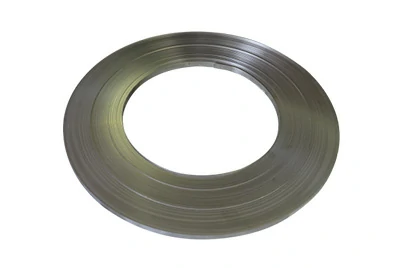
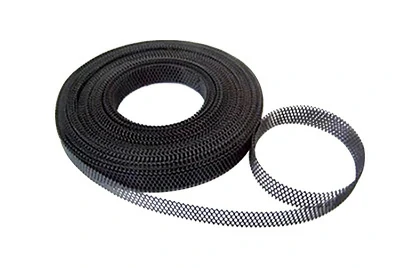
Mesh Titanium Anode Strip
Mesh titanium anode strip is formed by expanding or processing titanium strip into a continuous perforated structure, offering greater effective surface area per unit length and improved contact between the coating and surrounding medium.
Contact us nowSerrated Titanium Anode Strip
Serrated titanium anode strip features continuous tooth-like edges along the strip, increasing effective surface area and enhancing anchoring performance in grooves or mortar.
Contact us now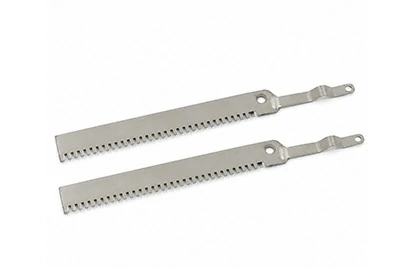
How to Select the Right Structure?
Flat titanium anode strips are typically preferred for tank bottom plates and large-area mesh systems; mesh strips are suitable for reinforced concrete surfaces or overlay installations; serrated structures are better for groove-cutting and localized protection projects.
Selection of substrate and coating for titanium anode strip
Titanium substrate selection
Grade 1, Grade 2, TA1, and TA2 are common commercially pure titanium substrates for titanium anode strips, compliant with standards such as ASTM B265, ASME SB-265, and GB/T 3621.
Grade 1 and TA1 offer better ductility, suitable for coils, mesh layouts, and structures requiring bending; Grade 2 and TA2 provide higher strength, ideal for anode assemblies demanding greater strip rigidity and structural stability.
Available coatings
-
Ru-Ir MMO Coating
Electrochemical Reaction: Chlorine Evolution
Service Environment: Seawater, brine, chloride-containing electrolytes
Selection Characteristics: Low chlorine evolution potential, suitable for chloride-containing media
-
Ir-Ta MMO Coating
Electrochemical Reaction: Oxygen Evolution, Cathodic Protection
Service Environment: Soil, fine sand, freshwater, concrete
Selection Characteristics: Good stability, suitable for long-life anode systems
-
IrO₂ Coating
Electrochemical Reaction: Oxygen Evolution
Service Environment: Acidic electrolytes, low-chloride or chloride-free media
Selection Characteristics: Good oxygen evolution activity, suitable for oxygen-evolution-dominated conditions
-
Platinum Coating
Electrochemical Reaction: Chlorine Evolution, Oxygen Evolution, Electrochemical Oxidation
Service Environment: Seawater, acidic media, specialty electrolytes
Selection Characteristics: Excellent chemical stability, suitable for high-demand electrochemical systems
-
PbO₂ Coating
Electrochemical Reaction: Oxygen Evolution, Electrochemical Oxidation
Service Environment: Acidic electrolytes, electrowinning, and industrial wastewater
Selection Characteristics: Strong oxidation capability, suitable for highly oxidative conditions
-
SnO₂-Sb₂O₅ Coating
Electrochemical Reaction: Oxygen Evolution, Electrochemical Oxidation
Service Environment: Organic wastewater, dye wastewater, and treatment of recalcitrant pollutants
Selection Characteristics: High oxygen evolution potential, suitable for organic pollutant oxidation
Popular Titanium Strip Anode Dimensions from Chalco
| Structure Type | Width | Substrate Thickness / Formed Height | Common Coil Length | Surface Area per Unit Length | Typical Applications |
| Flat MMO Titanium Anode Strip | 6.35 mm | 0.60 mm | 100 m | Approx. 0.014 m²/m | Tank bottom plates, fine sand cathodic protection |
| Flat MMO Titanium Anode Strip | 6.35 mm | 0.635 mm | 76.22 m | Approx. 0.014 m²/m | Tank bottom plates, concrete cathodic protection |
| Flat MMO Titanium Anode Strip | 6.35 mm | 0.635 mm | 100 m | Approx. 0.014 m²/m | Tank bottom mesh anode systems |
| Flat MMO Titanium Anode Strip | 6.35 mm | 0.635 mm | 150 m | Approx. 0.014 m²/m | Large-area cathodic protection systems |
| Flat MMO Titanium Anode Strip | 6.35 mm | 0.635 mm | 152–152.4 m | Approx. 0.014 m²/m | Tank bottom plates and continuous mesh installations |
| Flat MMO Titanium Anode Strip | 12.7 mm | 0.635 mm | 150–152 m | Approx. 0.028 m²/m | Higher current output or larger coverage area |
| Flat MMO Titanium Anode Strip | 12.7 mm | 0.90 mm | 100 m | Calculated based on actual coated area | High-strength or custom cathodic protection structures |
| Serrated MMO Titanium Anode Strip | 6.35 mm | Titanium thickness: 0.30 mm; formed height approx. 3 mm | 152.4–170 m | Approx. 0.0287 m²/m | Concrete grooving and localized cathodic protection |
| Serrated MMO titanium anode rod | 12.7 mm | Titanium thickness: 0.30 mm; formed height approx. 3 mm | 120–240 m | Approx. 0.0573 m²/m | Concrete structures and areas requiring higher output |
| Mesh-type MMO titanium anode rod | 10 mm | Expanded thickness approx. 1.3 mm | 76 m | Approx. 0.027 m²/m | Reinforced concrete cathodic protection |
| Mesh-type MMO titanium anode rod | 12.7 mm | Expanded thickness approx. 1.3 mm | 76 m | Confirm based on mesh structure | Surface mounting or installation in concrete grooves |
| Mesh-type MMO titanium anode rod | 19 mm | Expanded thickness approx. 1.3 mm | 76 m | Confirm based on mesh structure | Concrete structures with moderate current demand |
| Mesh-type MMO titanium anode rod | 25–25.4 mm | Expanded thickness approx. 1.3 mm | 76 m | Confirm based on mesh structure | Larger protection area or higher current demand |
Can't find the right size? Contact us now for custom solutions.
Current output and design life of titanium anode rods
The current output of titanium anode rods is not fixed. Even with identical width and thickness, differences in coating system, coating loading, effective coated area, operating medium, and working current density will affect the final output capacity.
What factors influence current output?
Higher coating activity and larger effective coated area generally enable higher current per unit length. Medium resistivity, temperature, pH, and chloride ion concentration also impact the anode's actual performance.
Cathodic protection projects typically specify current output in mA/m (per unit length), while electrolytic applications more commonly use A/m² to denote anode current density. Clarify which calculation method to use when requesting a quote.
Relationship between current output and service life
With constant coating loading, increasing the operating current typically accelerates consumption of the active coating, thereby shortening anode life; reducing current output per unit length helps extend service life.
| Usage requirements | Design considerations |
| Need higher current output | Increase coating loading, effective area, or number of anodes |
| Need longer design life | Reduce operating current density or increase coating loading |
| Limited installation space | Select higher-loading coating or double-sided active coating |
| High medium resistivity | Optimize anode spacing, conductive structure, and power supply configuration |
What should be noted during parameter confirmation?
Current output and design life must be confirmed based on specific operating conditions. We recommend clients provide details on the operating medium, working temperature, target current, total anode length, design life, and installation method to determine the appropriate coating system and loading.
For MMO planar titanium anode rods in fine-sand cathodic protection environments, typical current output ranges from 17–84 mA/m, with a standard design life of 20–50 years.
To confirm current output, coating loading, or design life for titanium anode rods, please provide details on the operating medium, working temperature, target current, installation length, and required service life. Chalco Titanium will assist in selecting the appropriate rod dimensions and coating solution based on your project conditions.
Primary applications of titanium anode rods
Titanium anode rods can be tailored with different coatings based on the operating medium, electrode reaction, and current requirements, making them widely suitable for electrochemical systems such as cathodic protection, water treatment, electrolysis, electroplating, and metal extraction.
-
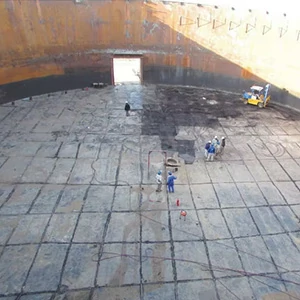 Cathodic protection
Used for impressed-current cathodic protection of tank bottoms, buried pipelines, reinforced concrete, and marine steel structures. Ir-Ta MMO coatings are commonly employed and can be integrated with titanium conductor strips to form mesh anode systems.
-
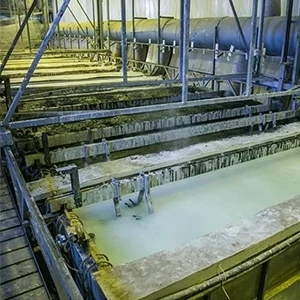 Water treatment
Used for sodium hypochlorite generation, electrolytic disinfection, recirculating water treatment, and industrial wastewater oxidation. Ru-Ir coatings are typically selected for chloride-containing media, while Ir-Ta, IrO₂, or functional oxide coatings are preferred for oxygen evolution or organic oxidation applications.
-
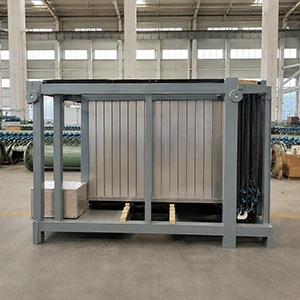 Electrolysis and electrochemical equipment
Used in brine electrolysis, acid/alkali electrolysis, electrolytic cells, and other continuously operating electrochemical equipment. The coating system can be selected according to electrolyte composition, operating temperature, and target reaction.
-
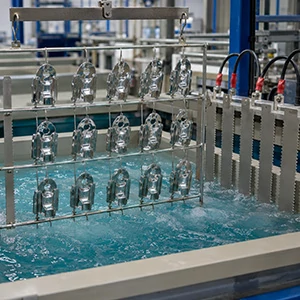 Electroplating and metal surface treatment
Used as insoluble anodes to provide stable current for depositing coatings, suitable for certain electroplating, anodizing, and metal surface treatment systems. The actual coating must be determined based on bath composition and anode reactions.
-
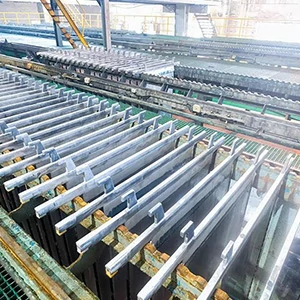 Electrowinning and metal recovery
Used in electrowinning, recovery, and electrolytic purification systems for copper, nickel, and other metals. Titanium anode rods can be fabricated into straight rods, coils, or custom anode assemblies based on cell geometry.
Differences between titanium plate anodes and titanium rod anodes
Titanium plate anodes and titanium rod anodes both use commercially pure titanium substrates and can be coated with MMO, Ru-Ir, Ir-Ta, IrO₂, platinum, or other coatings depending on the application medium. Their primary differences lie not in coating names but in structural dimensions, effective area, installation methods, and applicable equipment.
| Comparison item | Titanium plate anode | Titanium rod anode |
| Structural form | Wide flat plates or custom-shaped plates | Narrow continuous rods |
| Supply form | Cut-to-length plates, perforated plates, or welded assemblies | Coils, straight rods, or cut-to-length rods |
| Effective coated area | Larger single-piece area, suitable for concentrated current output | Effective area can be expanded by increasing installation length |
| Current distribution | Suitable for fixed positions or relatively concentrated areas | Suitable for long-distance, linear, or grid-based layouts |
| Installation space | Requires substantial flat mounting space | Compact footprint; can be bent and installed continuously |
| Connection method | Commonly connected via conductive terminals, bolts, or welding | Can be spot-welded to conductor strips or connected with cables |
| Typical applications | Electroplating, electrolysis, water treatment, electrowinning, and electrolytic cells | Cathodic protection, tank bottoms, concrete structures, and narrow electrolytic equipment |
| Customization focus | Plate thickness, shape, hole pattern, coated area, and conductive terminals | Width, thickness, coil length, coating loading, and welding locations |
Titanium plate anodes are better suited for electrochemical systems with fixed installation positions, large single-piece effective areas, or custom fabrication requirements; titanium rod anodes are ideal for continuous installation, grid layouts, confined spaces, or projects requiring uniform current distribution.
How to select the right titanium anode rod?
Selection of titanium anode rods requires comprehensive consideration of electrochemical reactions, operating medium, current density, design life, and installation structure-not just rod dimensions or price.
Select coating based on electrochemical reaction
Ru-Ir MMO coatings are typically chosen for chlorine evolution in chloride-containing media; Ir-Ta or IrO₂ coatings are suitable for oxygen evolution and cathodic protection; platinum or specialized functional coatings may be considered for unique electrolytic applications requiring high stability.
Confirm suitability based on operating medium
Seawater, freshwater, soil, concrete, and acidic electrolytes impose different demands on coatings. Selection should account for electrolyte composition, chloride concentration, pH, operating temperature, and corrosive impurities.
Determine coating loading based on current and service life
Higher operating current density typically accelerates active coating consumption. For continuous operation or long-life projects, coating loading should be determined by integrating target current, effective coated area, and design life.
Determine dimensions based on installation structure
Rod width, thickness, length, and supply format must match electrolytic cells, tank foundations, or groove dimensions, while also confirming requirements for bending, welding, conductive terminals, and connection structures.
If coating or specifications cannot yet be determined, provide equipment drawings, operating parameters, or existing anode samples. Chalco Titanium will assist in matching an appropriate titanium anode rod solution.
What information is needed to request a quote for titanium anode rods?
To accurately confirm the coating system, dimensions, current output, and design life, we recommend providing the following information when requesting a quote:
- Operating medium and main components
- Target electrochemical reaction
- Operating temperature and current density
- Rod width, thickness, and length
- Coating type or performance requirements
- Effective coated area
- Target design life
- Installation method and connection structure
- Project drawings or technical specifications
- Order quantity and delivery region
If documentation is incomplete, you may still send available parameters or application descriptions. Chalco Titanium will help supplement the details and confirm a suitable supply solution.
Frequently asked questions about titanium anode rods
What is a titanium anode rod?
A titanium anode rod is a strip-shaped anode made from commercially pure titanium substrate, coated with active layers such as MMO, Ru-Ir, Ir-Ta, IrO₂, or platinum.
What titanium grades are commonly used for titanium anode rods?
Commonly used grades include Grade 1, Grade 2, TA1, and TA2 commercially pure titanium, compliant with ASTM B265, ASME SB-265, or GB/T 3621.
How to select the coating for a titanium anode rod?
Coating selection depends on the operating medium and electrode reaction. Ru-Ir MMO is common for chloride-containing media; Ir-Ta or IrO₂ is suitable for oxygen evolution and cathodic protection; platinum or functional oxide coatings may be used in specialized electrolytic systems.
What are common dimensions for titanium anode rods?
Flat MMO titanium anode rods are commonly available in widths of 6.35–12.7 mm and thicknesses of 0.60–0.635 mm, with coil lengths ranging from 76 to 155 m, or can be provided via drawing-based customization.
What is the current output of titanium anode rods?
Current output depends on the coating system, coating loading, effective surface area, and the operating environment. In fine-sand cathodic protection environments, flat MMO titanium anode rods typically deliver 17–84 mA/m.
How long can titanium anode rods last?
MMO titanium anode rods typically have a design life of 20–50 years; actual service life depends on operating current density, coating loading, the surrounding medium, and operating conditions.
What is the difference between titanium anode rods and titanium current-carrying rods?
Titanium anode rods feature an active coating for current output and participation in electrochemical reactions, whereas titanium current-carrying rods are generally uncoated and primarily used for current transmission and distribution.
How do I choose between titanium anode rods and titanium plate anodes?
Titanium plate anodes are suitable for large-area fixed installations or applications requiring concentrated current output, while titanium anode rods are typically preferred for continuous laying, grid arrangements, or space-constrained installations.
Can titanium anode rods be customized?
Yes. Chalco Titanium supports customization of width, thickness, coil length, coating system, coating loading, active coated area, and connection structure.


