

Titanium Anode Plate
Updated : Jul. 23, 2026A titanium anode plate is an electrochemical anode fabricated from commercially pure titanium sheet as the substrate, coated on its surface with MMO, ruthenium-iridium, iridium-tantalum, iridium oxide, or platinum coatings. It is primarily used in electroplating, water treatment, sodium hypochlorite generation, chlor-alkali processes, electrowinning, copper foil production, and other electrolytic systems.
Chalco Titanium offers Grade 1, Grade 2, TA1, and TA2 commercially pure titanium sheets compliant with standards such as ASTM B265, ASME SB-265, and GB/T 3621 as substrates for titanium anode plates. Based on customer drawings and specific electrolytic operating conditions, we can customize substrate dimensions, thickness, tolerances, coating systems, active coating area, mounting holes, conductive terminals, and welding connection structures to provide tailored titanium anode plate solutions for various electrolytic equipment.
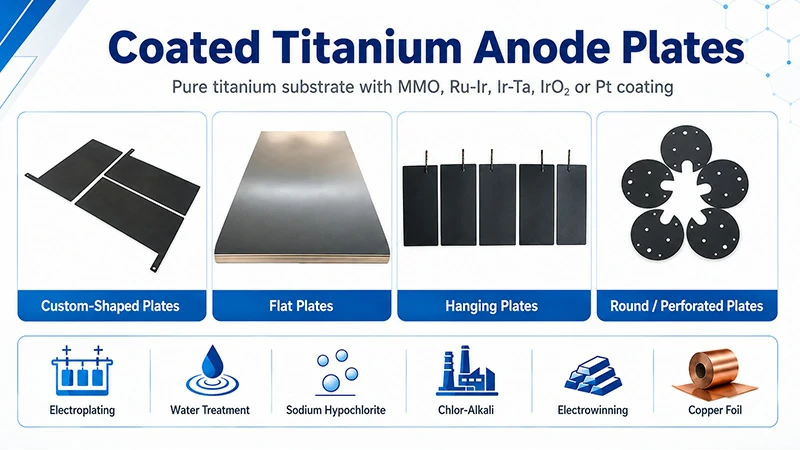
Titanium anode plate specifications and customization range
Chalco Titanium can supply titanium anode plates with different substrates, coatings, dimensions, and connection structures based on electrolyzer design, installation method, and operational requirements, and supports fabrication from customer drawings or samples.
| Titanium Substrate | Grade 1, Grade 2, TA1, TA2 |
| Applicable Standards | ASTM B265, ASME SB-265, GB/T 3621 |
| Titanium Sheet Thickness | 0.5–5.0 mm |
| Coating Types | ruthenium-iridium coating, iridium-tantalum coating, iridium oxide coating, platinum coating. |
| Coated Area | Single-sided, double-sided, localized, or zoned coating |
| Product Forms | Flat plates, curved plates, perforated plates, and custom-shaped anode plates |
| Fabrication Methods | Cutting, drilling, punching, bending, welding |
| Connection Structures | Titanium conductive rods, threaded ends, mounting holes, and welded connectors |
| Delivery Forms | Individual anode plates or anode assemblies with integrated connection structures |
| Customization Options | Length, width, hole positions, active coating area, and conductive terminal structure |
| Quality Documentation | Titanium substrate material certificates, dimensional inspection reports, coating inspection records; third-party SGS inspection available upon project request |
Titanium anode plates can be customized according to customer drawings, samples, or equipment installation requirements to meet assembly and operational needs for different electrolyzers and electrochemical devices.
Titanium anode plates with different coating types
The electrochemical performance of titanium anode plates primarily depends on the surface coating. Different coatings exhibit significant differences in chlorine evolution activity, oxygen evolution activity, corrosion resistance, and suitability for specific electrolytes. Selection should therefore consider the target reaction, electrolyte composition, temperature, pH, current density, and design service life.
Ruthenium-iridium coated titanium anode plate
The ruthenium-iridium coated titanium anode plate features a mixed metal oxide coating of RuO₂-IrO₂ applied onto commercially pure titanium sheet. RuO₂ provides high chlorine evolution activity, while IrO₂ enhances coating stability, making it suitable for chlorine evolution reactions in chloride-containing electrolytes.
Contact us now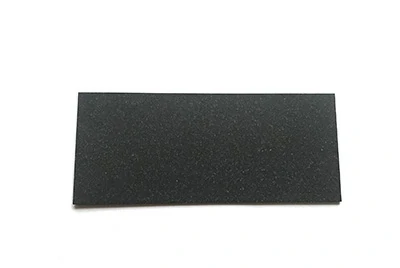
Product specifications
- Titanium substrate: Grade 1, Grade 2, TA1, TA2
- Coating composition: RuO₂ + IrO₂
- Coating thickness: 5–15 μm
- Titanium sheet thickness: 0.5–5.0 mm
- Maximum current density: 5000 A/m²
- Maximum operating voltage: 24 V
- Maximum operating temperature: 80°C
- Coated area: Single-sided, double-sided, or localized coating
Primary applications
Ruthenium-iridium coated titanium anode plates are primarily used in sodium hypochlorite generators, brine electrolysis, seawater electrolysis, swimming pool disinfection, chlor-alkali production, industrial recirculating water treatment, and chloride-containing wastewater treatment.
This coating is better suited for chlorine evolution-dominated electrolytic conditions. If the system primarily involves oxygen evolution, iridium-tantalum or other oxygen-evolution-type coatings are typically preferred.
Iridium-tantalum coated titanium anode plate
The iridium-tantalum coated titanium anode plate uses an IrO₂-Ta₂O₅ mixed oxide coating. IrO₂ provides oxygen evolution catalytic activity, while Ta₂O₅ improves coating stability in acidic media and under continuous oxygen evolution conditions, making it suitable for long-term industrial electrolytic systems.
Contact us now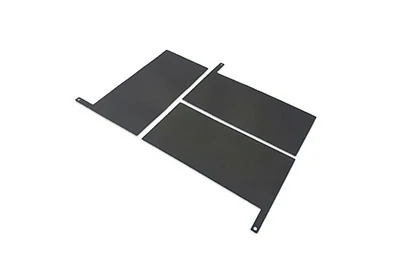
Product specifications
- Titanium substrate: Grade 1, Grade 2, TA1, TA2
- Coating composition: IrO₂ + Ta₂O₅
- Coating thickness: 6–12 μm
- Coated area: Single-sided, double-sided, or localized coating
- Customizable structures: Flat plates, curved plates, perforated plates, and welded anode assemblies
Primary applications
Iridium-tantalum coated titanium anode plates are primarily used in electrolytic copper foil production, copper electrowinning, zinc electrowinning, nickel-cobalt electrowinning, electro-galvanizing, tin plating, precious metal recovery, acidic wastewater treatment, industrial electro-oxidation, and cathodic protection systems.
Sulfuric acid concentration, current density, operating temperature, and chloride and fluoride ion content in the electrolyte all affect coating lifespan. Full electrolyte composition and operating conditions must be confirmed before selection.
Iridium oxide coated titanium anode plate
The iridium oxide coated titanium anode plate uses IrO₂ as the primary active component and is suitable for electrolytic systems requiring high oxygen evolution activity, uniform current distribution, and operational stability. Industrial products typically employ IrO₂-based composite oxide coatings to balance electrocatalytic performance, durability, and cost.
Contact us now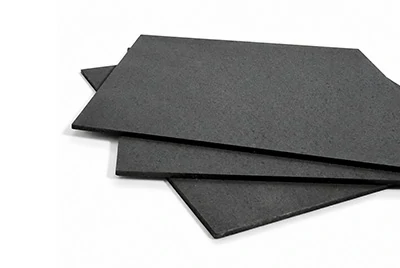
Product specifications
- Titanium substrate: Grade 1, Grade 2, TA1, TA2
- Active component: IrO₂ or IrO₂-based composite oxides
- Coating thickness: 4–10 μm
- Coated area: Single-sided, double-sided, localized, or zoned coating
- Customizable structures: Flat plates, curved plates, perforated plates, and custom-shaped electrode assemblies
Primary applications
Iridium oxide coated titanium anode plates are used in acidic oxygen evolution, precision electroplating, PCB plating, metal electrowinning, electrochemical water treatment, laboratory electrolytic equipment, and other demanding electrochemical systems.
For specialized applications such as PEM water electrolysis, dedicated design considerations-including porous structures, catalytic layers, current distribution, and interfacial contact-are required. Standard flat iridium oxide titanium anodes cannot directly replace PEM-specific electrode assemblies.
Platinum coated titanium anode plate
The platinum coated titanium anode plate is an insoluble anode fabricated by depositing a high-purity platinum layer onto commercially pure titanium sheet, also known as a platinized titanium anode plate. The titanium substrate provides mechanical support and electrical conduction, while the platinum layer serves as the actual electrocatalytic surface for anodic reactions.
Contact us now
Product specifications
- Titanium substrate: Grade 1, Grade 2, TA1, TA2
- Coating material: High-purity platinum
- Platinum layer thickness: 0.5–10 μm
- Coated area: Single-sided, double-sided, or localized plating
- Customizable structures: Flat plates, perforated plates, mesh plates, and custom-shaped anode assemblies
Primary applications
Platinum coated titanium anode plates are primarily used in hard chrome plating, gold plating, silver plating, rhodium plating, nickel plating, precious metal electroplating, PCB electrolytic etching, electrodialysis, cathodic protection, and precision electrochemical equipment.
Platinum layer thickness must be determined based on electrolyte composition, operating current, and design service life. Fluoride-containing electrolytes may compromise the protective oxide film on the titanium substrate; in such cases, platinum-niobium anodes or other more suitable substrate options should be evaluated.
Ruthenium-iridium coatings are typically used for chlorine evolution applications, while iridium-tantalum and iridium oxide coatings are better suited for oxygen evolution environments. Platinum coatings are ideal for electroplating and various precision electrochemical processes. If you are selecting a titanium anode plate, Chalco Titanium can recommend the appropriate coating and structural solution based on your specific application and operating conditions.
How to choose between titanium anode plates and mesh titanium anodes?
Chalco Titanium offers titanium anode plates, expanded mesh titanium anodes, and custom anode assemblies fabricated to customer drawings. These different structures vary in effective working area, electrolyte flow, bubble release, structural strength, and installation methods, so selection should be based on electrolyzer design and operational requirements.
| Anode Structure | Key Features | Suitable Operating Conditions | Selection Considerations |
| Titanium Anode Plate | Flat working surface and stable structure, facilitating precise control of electrode spacing and coated areas | Electroplating, electrowinning, electrolytic copper foil production, and flat-cell electrolyzers | Attention should be paid to plate flatness, active coating area, bubble release, and deformation of large-size plates |
| Expanded Mesh Titanium Anode | High open area ratio, promoting electrolyte circulation and bubble detachment while maintaining good structural strength | Water treatment, brine electrolysis, sodium hypochlorite generation, and equipment requiring media flow through the anode | Mesh opening size, strand width, strand thickness, expanded dimensions, and actual working area must be verified |
| Custom Titanium Anode Assembly | Integrates coated anode plates, support frames, conductive rods, and mounting components into a complete structure | Non-standard electrolyzers, automated production lines, and retrofit projects for existing equipment | Design must incorporate equipment drawings, electrode spacing, busbar connections, installation space, and maintenance access |
When selecting an anode structure, the following factors should be prioritized:
- Current distribution: Flat anode plates enable uniform working surfaces; complex cell geometries can benefit from perforations, zoned coatings, or multiple anode units to improve current coverage.
- Electrolyte flow: Expanded mesh and perforated plates enhance media circulation and mass transfer.
- Bubble release: In chlorine or oxygen evolution applications, open structures help minimize bubble accumulation on the anode surface.
- Installation space: Regular cells typically suit flat plates, while limited or complex spaces may require mesh plates or custom assemblies.
- Structural strength: Large anode plates require deformation control; mesh anodes often need additional support frames.
- Cleaning and maintenance: Flat plates are easier to inspect and clean, while mesh structures require consideration of deposit clogging and disassembly clearance.
For tubular, rod-shaped, or strip titanium anodes, Chalco Titanium can also provide customized solutions based on cathodic protection or specific electrolytic equipment requirements.
Other titanium anode products offered by Chalco Titanium

Titanium Anode Tube
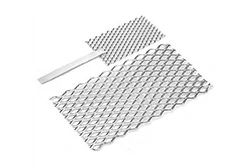
Titanium Mesh Anode
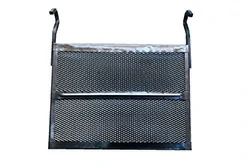
Titanium Anode Basket

Lead Dioxide Coated Titanium Anode
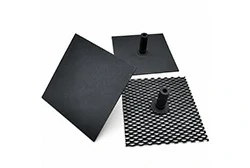
Ruthenium Iridium Titanium Anode

Platinized Titanium Anode
Public application cases of coated titanium anodes
Coated titanium anodes have been successfully applied in industrial projects such as cathodic protection, copper electrowinning, and hard chrome electroplating. The following public cases demonstrate the actual performance of different coatings and anode structures in long-term corrosion resistance, stable operation, and energy savings, providing reliable engineering references for the selection and customization of Chalco Titanium anode plates.
-
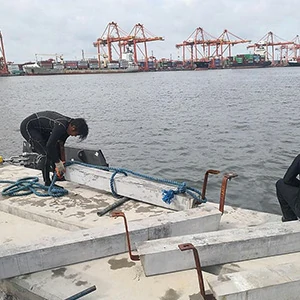 Cathodic Protection System at Surabaya Wharf, Indonesia
A newly constructed wharf in Surabaya employed an impressed-current cathodic protection system using MMO-coated titanium anodes to protect steel piles. Designed for a 30-year anode service life, the project installed six marine anode sleds, with on-site construction completed in less than one week.
-
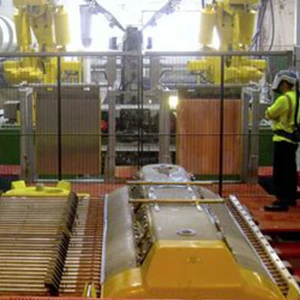 Copper Electrowinning Trial at Glencore Nikkelverk, Norway
Permascand has conducted three-phase trials of coated titanium anodes at Glencore Nikkelverk since 2012. Results showed that, under approximately 200 A/m² conditions, box-type expanded mesh anodes offered better current distribution, lower energy consumption, and reduced coating wear compared to rod-shaped anodes.
-
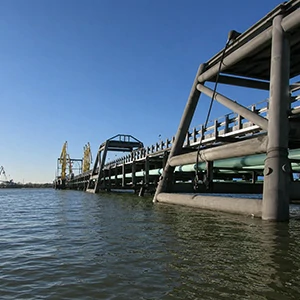 Cathodic Protection Project at Houston Ship Terminal, USA
This project required protection for 27 steel piles, each 60 inches in diameter and driven 100 feet into the ground. The design specified two MMO-coated titanium anode sleds on the water side, combined with shallow-buried anodes on the land side, to fully protect the terminal structure.
-
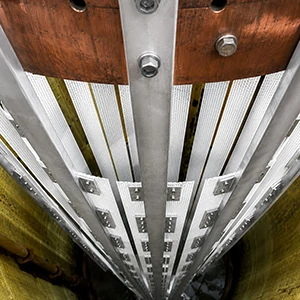 Replacement of Lead Anodes in Hard Chrome Plating
Umicore tested the replacement of lead anodes in hard chrome plating. PLATINODE HC platinum-coated titanium anodes can replace lead anodes without altering the original number or installation positions of anodes, achieving at least 2.7% energy savings.
These public cases demonstrate that coated titanium anodes have already been practically applied in various industrial electrolysis and corrosion protection projects. Chalco Titanium can provide suitable titanium anode plates, coating solutions, and custom components based on your equipment, operating conditions, and drawings. Please contact us for technical advice and quotations.
How to determine the technical specifications of titanium anode plates?
The technical specifications of titanium anode plates should be determined jointly based on the electrolytic process, equipment structure, and operating conditions. Providing only external dimensions is usually insufficient for proper selection; the anode reaction, electrolyte environment, operating current, and effective coated area must also be clearly defined.
1. Confirm the target anode reaction
First, determine whether the primary function of the equipment involves chlorine evolution, oxygen evolution, electroplating, electrowinning, or electrochemical oxidation. The target reaction directly determines the choice of coating-ruthenium-iridium, iridium-tantalum, iridium oxide, or platinum.
2. Provide electrolyte composition
Specify the main medium, its concentration, and any potential impurities such as chloride ions, fluoride ions, or others. Electrolyte conditions affect coating compatibility, titanium substrate stability, and anode service life.
3. Confirm operating temperature and pH
Operating temperature and pH influence anode reaction rates and coating consumption. Sustained high temperatures, strong acidity, or complex media typically require individual evaluation of the coating system.
4. Confirm total current
Total current determines the overall load the anode must carry and is a critical basis for calculating working area and designing conductive connections.
5. Calculate effective coated area
The effective area should be calculated based on the actual surface area participating in the electrolytic reaction. Single-sided, double-sided, partial coating, perforated structures, and uncoated edges all affect the final working area.
6. Calculate actual current density
Actual current density is determined by both total current and effective coated area. Excessively high current density may cause localized overloading, increased voltage, and premature coating failure.
7. Determine titanium plate dimensions and quantity
Determine the length, width, thickness, and number of titanium plates based on electrolytic cell dimensions, electrode spacing, installation positions, and equipment layout, while reserving adequate space for assembly and maintenance.
8. Specify coated regions
Confirm whether coating is applied to one side, both sides, partially, or in designated zones, and indicate whether mounting holes, welding areas, conductive ends, and non-working edges should remain uncoated.
9. Determine installation and electrical connection
Select mounting holes, threaded ends, titanium conductive rods, busbar connections, or welded components based on equipment structure to ensure stable current transmission and ease of on-site installation.
10. Confirm design life and testing requirements
Design life should be determined in conjunction with operating cycles, current density, electrolyte conditions, and maintenance plans. If the project requires accelerated life testing, coating inspection, or third-party inspection, these must be clearly specified in the technical specifications in advance.
When existing electrolytic cell drawings, original anode samples, or equipment installation dimensions are available, Chalco Titanium can use them to confirm the coating type, dimensions, effective working area, and connection structure of the titanium anode plates.
Manufacturing and quality control of titanium anode plates
Manufacturing of titanium anode plates includes titanium substrate inspection, dimensional fabrication, surface pretreatment, coating preparation, heat treatment, and final inspection. Although different coating systems employ varying formulations and processes, all require strict control over substrate surface condition, coating uniformity, and quality of electrical connections.
Titanium substrate inspection
Prior to production, the titanium plate grade, applicable standards, thickness, dimensions, and surface condition are verified against material certification documents. The substrate surface must be free of oil, scale, deep scratches, folds, or other visible defects that could impair coating adhesion.
Cutting, drilling, bending, forming, and welding of conductive ends on titanium plates are typically completed before coating processing to avoid damaging the working surface during subsequent operations.
Surface pretreatment
The titanium substrate undergoes degreasing, mechanical roughening, acid treatment, and surface activation to remove oil, oxide layers, and machining residues, creating a uniform surface suitable for coating adhesion.
The specific pretreatment method must be determined based on the titanium substrate condition, coating type, and product structure; fixed parameters such as acid concentration, treatment temperature, or duration cannot be universally applied to all titanium anode plates.
Coating preparation and heat treatment
MMO, ruthenium-iridium, iridium-tantalum, and iridium oxide coatings are typically formed through multiple thin-layer applications followed by heat treatment. Each coating layer is dried and heat-treated sequentially until the specified coating thickness or noble metal loading is achieved, enhancing coating uniformity and stability.
Platinum-coated titanium anodes use a platinum deposition process to form the active layer. Platinum layer thickness and coated area must be determined based on electrolyte composition, operating current, and design life. Coating formulation, number of layers, and heat treatment schedules must follow specific product technical specifications.
Final inspection
Finished titanium anode plates may undergo the following inspections according to order and project requirements:
- Verification of substrate grade and material documentation
- Inspection of length, width, thickness, hole positions, and connection dimensions
- Flatness and visual inspection of plate surfaces
- Inspection of coated areas, surface uniformity, and visible defects
- Confirmation of coating thickness or noble metal loading
- Electrical continuity and connection resistance checks
- Inspection of welds, conductive rods, and connectors
- Verification of product serial numbers, batch records, and inspection documentation
Chalco Titanium can manufacture products according to drawings and technical specifications and provide titanium substrate material certificates, dimensional inspection reports, coating inspection records, and third-party inspection support as required by the project.
Service life and failure factors of titanium anode plates
The service life of titanium anode plates is not a fixed number of years. Even with identical coatings and dimensions, actual lifespan can vary significantly depending on electrolyte composition, current density, temperature, and operating mode. Therefore, lifespan data must always include test conditions or actual operating parameters-not just a standalone time value.
| Influencing Factors | Potential Impacts | Preventive Measures |
| Mismatched coating selection | Unstable chlorine or oxygen evolution performance, increased cell voltage, accelerated coating consumption | Select ruthenium-iridium, iridium-tantalum, iridium oxide, or platinum coatings based on target reaction and electrolyte |
| Excessively high current density | Localized anode overloading and heating, accelerated coating consumption, shortened service life | Calculate actual current density based on total current and effective coated area; avoid prolonged overload operation |
| Non-uniform current distribution | Premature failure at anode edges, connection points, or localized areas | Optimize anode dimensions, electrode spacing, busbar connections, and coated regions |
| Changes in electrolyte composition | Impurities or corrosive ions compromising coating and titanium substrate stability | Regularly test the composition, concentration, and impurities of the electrolyte, and maintain them within the design operating range. |
| Fluoride ions and highly corrosive media | may damage the passive layer on the titanium substrate, leading to substrate corrosion and coating delamination. | Clarify the medium composition before selection, and evaluate niobium-based substrates or alternative electrode solutions if necessary. |
| Excessively high operating temperature | accelerates electrochemical reactions and coating consumption, and affects connection structures. | Maintain operating temperature within the product's design range to avoid localized overheating. |
| Reverse polarity | may damage the catalytic coating, causing rapid passivation or failure of the anode. | After installation or maintenance, verify positive and negative terminal connections and implement anti-reverse measures. |
| Short circuits or transient high currents | can cause localized ablation, coating damage, or overheating at the conductive end. | Maintain appropriate electrode spacing to prevent foreign objects, deposits, or workpieces from contacting the anode. |
| Coating scratches or impacts | may lead to passivation or localized corrosion in exposed areas, progressively expanding the failure zone. | Protect the active surface during handling, installation, and cleaning; avoid direct scraping with metal tools. |
| Poor electrical connection | increases contact resistance, resulting in heating, voltage drop, and uneven current distribution. | Periodically inspect the tightness and cleanliness of conductive rods, busbars, bolts, welds, and contact surfaces. |
| Improper cleaning methods | such as strong acids, strong alkalis, abrasive tools, or high-pressure impact, may damage the coating. | Select a cleaning method compatible with the coating based on deposit type; avoid mechanical abrasion. |
| Prolonged shutdown with immersion | may allow the electrolyte to continuously affect the coating and connection points. | Follow equipment maintenance procedures; for extended shutdowns, remove the anode, clean and dry it, and store properly. |
Common Failure Modes of Titanium Anode Plates
- Cell voltage continuously rises under identical operating conditions.
- Current output decreases or becomes significantly uneven.
- Localized discoloration, flaking, or exposure appears on the anode surface.
- Abnormal heating occurs at the conductive end or connection points.
- Electrolysis efficiency drops, reducing target product concentration or treatment capacity.
- Localized passivation of the anode prevents normal operation upon energization.
When the above issues occur, first inspect the power supply, electrode spacing, electrolyte, and connection structure before determining whether the coating has reached its service life. For titanium anode plates with intact substrate structure and no severe corrosion or deformation, further assess whether conditions allow for removal of the old coating and re-coating.
RFQ parameter checklist for titanium anode plates
To accurately confirm coating, dimensions, structure, production lead time, and quotation, please provide the following information when requesting a quote. If documentation is incomplete, you may initially send drawings, photos, or specifications of existing anodes, and Chalco Titanium will assist in verification.
- Application field: electroplating, water treatment, chlor-alkali, electrowinning, cathodic protection, or other electrochemical processes.
- Electrolyte conditions: main components, concentration, and any potential special impurities.
- Target reaction: chlorine evolution, oxygen evolution, electroplating, electrowinning, or other anodic reactions.
- Operating parameters: working temperature, pH, total current, or current density.
- Titanium plate dimensions: length, width, thickness, hole positions, and allowable tolerances.
- Coating requirements: MMO, ruthenium-iridium, iridium-tantalum, iridium oxide, or platinum coating.
- Coated area: single-sided, double-sided, localized, or zoned coating.
- Connection method: mounting holes, conductive rods, threaded ends, busbars, or welded assemblies.
- Service life: expected operational duration or project design life.
- Drawings or samples: CAD drawings, dimension sketches, photos of used anodes, or physical samples.
- Order quantity: samples, trial batches, or bulk purchase volume.
- Documentation requirements: material certificates, dimensional reports, coating inspection records, or third-party inspection.
- Delivery information: destination country, packaging requirements, and expected delivery date.
If complete parameters are not yet available, please initially send an application description and existing equipment documentation. Chalco Titanium can assist in confirming the required coating, dimensions, connection structure, and inspection criteria for the titanium anode plate, and provide a corresponding quotation.
Quality documentation and export delivery
Chalco Titanium can provide quality documentation related to the titanium anode plate's substrate, dimensions, coating, and final inspection according to order technical requirements and project acceptance standards, and support third-party inspection and export packaging.
Available quality documentation
- Titanium substrate material certificate: including grade, applicable standard, chemical composition, and batch information.
- Dimensional inspection report: recording length, width, thickness, hole positions, flatness, and connection dimensions.
- Coating inspection records: including coating type, coated area, appearance, and coating parameters specified in the order.
- Electrical and connection inspection: verifying integrity of conductive rods, welds, threaded ends, and connection points.
- Batch traceability information: product serial number, raw material batch, production records, and inspection records are linked to each order.
- Third-party inspection: coordination with SGS or other designated agencies per project requirements.
Export packaging and delivery
The coated surface of titanium anode plates must be protected against scratching, impact, and direct contact during packaging. Products are typically wrapped with protective film, isolated with soft materials, individually secured, and packed in wooden crates, with special protection for conductive ends, welded components, and irregular structures.
Packaging method, labeling, accompanying documents, and shipping requirements are determined based on product dimensions, quantity, destination country, and sea or air freight conditions to facilitate customer acceptance, installation, and batch management upon arrival.
FAQs about titanium anode plates
What is a titanium anode plate?
A titanium anode plate is a functional electrode made from commercially pure titanium substrate with an MMO, ruthenium-iridium, iridium-tantalum, iridium oxide, or platinum coating applied to its surface, primarily used in electroplating, water treatment, electrowinning, chlor-alkali, and other electrolytic systems.
Can bare titanium plates be used directly as anodes?
Generally not recommended. Bare titanium tends to form a passive film under anodic conditions, increasing resistance and reducing current output. Industrial electrolytic systems typically require catalytic coatings selected according to the target reaction.
How to choose between ruthenium-iridium and iridium-tantalum coatings?
Ruthenium-iridium coatings are typically suitable for chlorine evolution in chloride-containing electrolytes, while iridium-tantalum coatings are better suited for oxygen evolution in acidic or sulfate-based systems. Final selection should also consider electrolyte composition, temperature, current density, and design life.
What current density can titanium anode plates withstand?
Allowable current density depends on the coating system, effective area, electrolyte, and operating temperature-it cannot be determined solely by titanium plate dimensions. Chalco Titanium can calculate an appropriate operating range based on total current and effective coated area.
How long is the service life of a titanium anode plate?
Service life is influenced by coating composition, coating thickness, current density, electrolyte, temperature, and operating mode. Lifetime data must be confirmed based on specific test conditions or actual operating environments-no universal timeframe applies.
Can used titanium anode plates be recoated?
If the titanium substrate shows no severe corrosion, deformation, or structural damage, it may be possible to remove the old coating and apply a new one. Suitability for recoating requires inspection of the substrate surface, weld structure, and electrical connections.
Can titanium anode plates be customized to drawings?
Yes. Chalco Titanium supports customization of titanium plate dimensions, hole positions, coated areas, conductive ends, and welded connection structures based on drawings, samples, or equipment installation dimensions.
What is the minimum order quantity (MOQ) for custom titanium anode plates?
MOQ depends on titanium plate dimensions, coating type, fabrication complexity, and inspection requirements. Samples, prototypes, and bulk orders can be confirmed based on specific specifications.
How are coated titanium anodes packaged and shipped?
Coated surfaces are typically isolated with soft materials and individually secured to prevent scratching and impact. Conductive ends, welded components, and irregular structures receive focused protection, and external packaging uses wooden crates tailored to size and shipping method.


