

Water Treatment & Disinfection Solutions
Updated : Jul. 23, 2026Chalco offers water treatment and disinfection solutions centered on electrochemical chlorine generation. By electrolyzing brine, seawater, or chloride-containing water, these systems produce on-site sodium hypochlorite, hypochlorous acid, and other chlorine-based disinfectants to meet disinfection needs in municipal water supply, secondary water supply, swimming pools, seawater systems, industrial cooling water, food processing, agriculture, and aquaculture.
Our solutions cover membrane-free sodium hypochlorite generation, membrane-based hypochlorous acid production, saltwater electrolysis for swimming pools, and seawater electrochlorination. We also supply compatibility components including ruthenium-iridium mixed metal oxide (Ru-Ir MMO) coated titanium anodes, titanium plate electrodes, titanium mesh electrodes, tubular electrodes, electrode assemblies, titanium frames, and internal electrolyzer components.
Based on your source water quality, salt concentration, flow rate, target available chlorine concentration, hourly chlorine production capacity, operating mode, and equipment interfaces, Chalco helps determine the optimal electrolysis process, electrode coating, effective reaction area, structural configuration, and operating parameters-balancing chlorine production efficiency, scale control, hydrogen venting safety, and ease of maintenance.
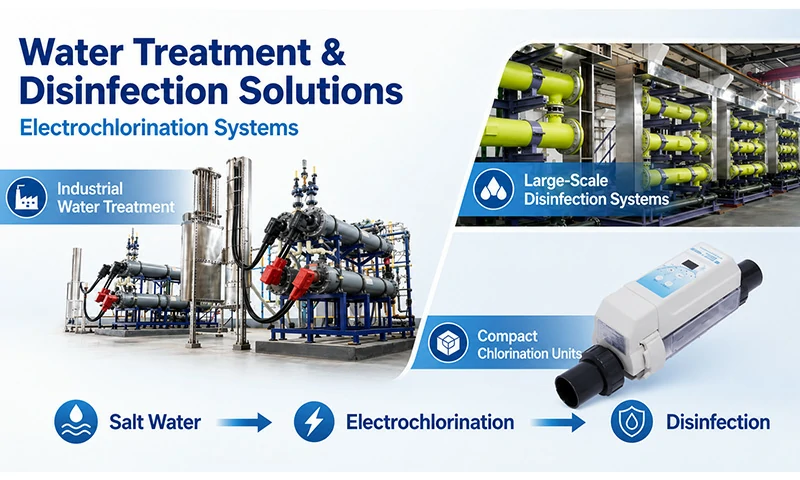
The right water treatment and disinfection solution for you
Requirements for electrolysis equipment and electrode configurations vary significantly depending on water source, flow rate, and disinfection objectives. Chalco can match the appropriate electrolysis process, electrode structure, and component solution based on your water quality, target available chlorine concentration, chlorine production capacity, and operating mode.
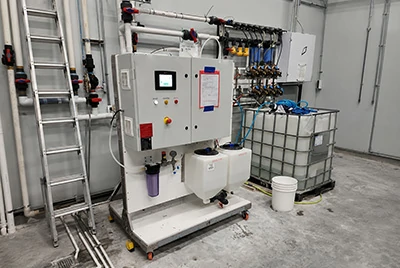
On-site sodium hypochlorite generation
Electrolyzing dilute brine on-site to produce sodium hypochlorite solution, suitable for municipal water supply, secondary water supply, industrial water systems, and other applications requiring continuous chlorination disinfection.
Contact us now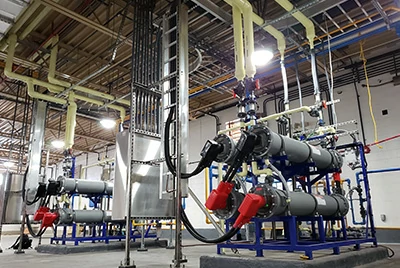
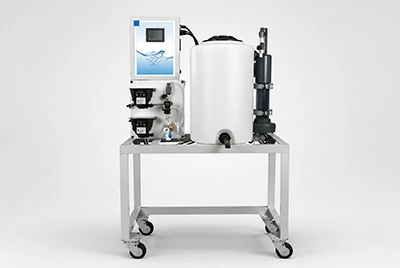
On-site hypochlorous acid generation
Producing disinfectant water with hypochlorous acid as the primary active ingredient via membrane-type or specialized electrolyzers, ideal for food processing, fruit and vegetable washing, utensil disinfection, agriculture, and aquaculture.
Contact us nowSwimming pool saltwater electrolysis disinfection
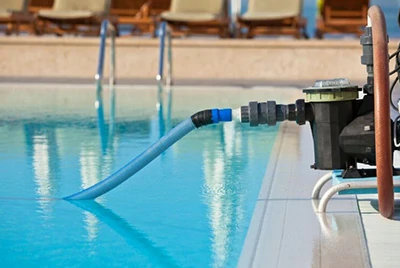
Continuously generating available chlorine from low-concentration salt already present in pool water to provide daily bactericidal and algaecidal support for swimming pools, spas, and recirculating water systems.
Contact us now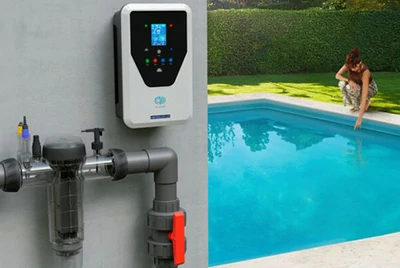
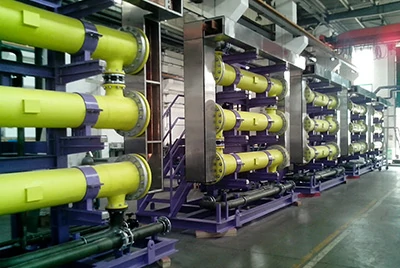
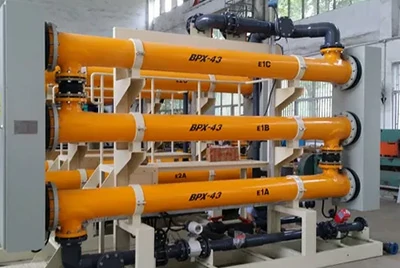
Seawater electrochlorination
Directly utilizing chloride ions in seawater to generate sodium hypochlorite or available chlorine on-site, suitable for coastal power plants, seawater intakes, ships, marine engineering projects, and seawater cooling systems.
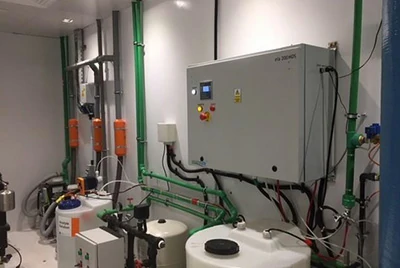
Contact us nowDrinking water and secondary water supply disinfection
Providing on-site chlorine generation solutions for municipal water treatment plants, storage tanks, reservoirs, booster pump stations, and building secondary water supply systems-reducing the need for transporting, storing, and frequently replenishing pre-manufactured chlorine-based disinfectants.
Contact us now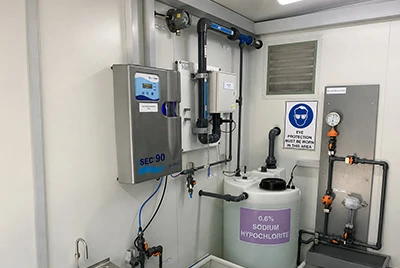
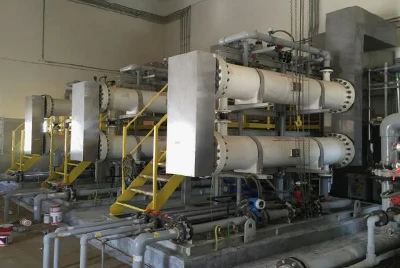
Industrial cooling water biocidal treatment and biofouling prevention
Generating available chlorine on-site to control bacteria, algae, biofilms, and marine organism attachment in cooling water systems, thereby reducing the risk of clogging in pipelines, heat exchangers, and intake systems.
Contact us nowHow to choose the right disinfection solution for your project?
Selecting a water treatment and disinfection solution requires more than just looking at equipment names or electrode dimensions. You must also consider source water type, target disinfectant, flow rate, chlorine production capacity, and operating mode.
Different solutions differ significantly in electrolyzer structure, electrode configuration, salt concentration requirements, hydrogen venting methods, and maintenance demands. The following information will help you quickly identify the most suitable technical approach.
| Your project requirements | Recommended solution | Key points to confirm |
| On-site sodium hypochlorite generation for municipal or industrial water disinfection | Membrane-free sodium hypochlorite generation system | Salt concentration, chlorine production capacity, flow rate, power consumption, and hydrogen venting |
| Low-concentration hypochlorous acid generation for food, produce, or utensil disinfection | Membrane-based hypochlorous acid generation system | Target available chlorine concentration, effluent pH, membrane structure, and feed method |
| Continuous available chlorine supply for swimming pools | Swimming pool saltwater electrolysis disinfection system | Pool volume, salt concentration, water hardness, circulation flow rate, and polarity reversal cycle |
| On-site chlorine generation using seawater | Seawater electrochlorination system | Seawater salinity, temperature, suspended solids, flow velocity, and continuous operation duration |
| Chlorine disinfection for drinking water or secondary water supply systems | On-site sodium hypochlorite generation with metered dosing system | Daily treatment capacity, target residual chlorine, dosing point, storage volume, and online monitoring |
| Controlling bacteria, algae, and biofouling in cooling water | Continuous or intermittent electrochlorination system | Cooling water flow rate, dosing method, target available chlorine concentration, and equipment operating cycle |
First, confirm which disinfectant you need to generate
If your project requires stable production of low-concentration sodium hypochlorite, a membrane-free electrolysis approach is typically used. If you need to control the hypochlorous acid ratio and effluent pH, consider membrane-based or dedicated hypochlorous acid generators.
Swimming pool and seawater systems usually generate available chlorine continuously by directly utilizing chloride ions already present in the water. Their electrode structures, operating currents, and cleaning methods differ significantly from standard brine electrolyzers.
Next, confirm how much water your equipment needs to treat
Flow rate and target available chlorine concentration determine the required chlorine production capacity. Insufficient capacity compromises disinfection effectiveness, while oversized systems increase capital investment and operating costs.
During selection, clearly specify:
- Hourly or daily water treatment volume
- Target available chlorine concentration
- Required hourly chlorine production capacity
- Continuous or intermittent operation
- Whether storage and metered dosing are needed
Assess scaling and maintenance risks based on water quality
Water hardness, salt concentration, suspended solids, and temperature all affect electrolyzer performance. Higher hardness promotes scaling on the cathode surface, leading to increased cell voltage, reduced chlorine output, and more frequent cleaning.
Swimming pool salt-chlorine generators and some hard-water systems use polarity reversal operation, but this requires specially designed bidirectional electrode assemblies-standard unidirectional anodes should never be used in frequent polarity reversal applications.
Finally, verify existing equipment interface conditions
For new installations, component selection must account for electrolyzer space, number of electrodes, plate spacing, connection methods, and hydrogen venting structure.
For replacement projects, please provide photos, dimensions, quantity, wiring positions, and operating parameters of your original electrodes. Chalco can evaluate whether to replace individual electrodes or entire electrode assemblies based on your existing electrolyzer structure.
How does electrochemical chlorine generation disinfect water?
Electrochemical chlorine generation doesn't involve adding pre-manufactured disinfectants directly to water. Instead, it uses chloride ions from brine, seawater, or chloride-containing water to produce hypochlorous acid and hypochlorite ions (available chlorine) on-site within the electrolyzer, which then disinfect water by killing bacteria, inhibiting algae, and preventing biofouling.
The process primarily involves three stages: chlorine evolution at the anode, chlorine hydrolysis in water, and hydrogen evolution at the cathode. Electrode coating, electrolyzer design, flow distribution, and operating parameters collectively influence chlorine output, available chlorine concentration, and system stability.
Chlorine gas generation at the anode
When direct current is applied, chloride ions migrate to the anode surface and lose electrons to form chlorine gas:
Anode reaction: 2Cl⁻ → Cl₂ + 2e⁻
Water treatment and disinfection systems typically use ruthenium-iridium mixed metal oxide (Ru-Ir MMO) coated titanium anodes to lower the potential required for chlorine evolution and enhance electrocatalytic activity and operational stability in chlorine-containing environments.
If salt concentration is too low, current density too high, or the electrode coating mismatched to operating conditions, excessive oxygen evolution may occur at the anode, reducing chlorine production efficiency and accelerating coating degradation.
Chlorine gas forms available chlorine in water
Chlorine gas produced at the anode reacts with water to form hypochlorous acid:
Cl₂ + H₂O ⇌ HOCl + H⁺ + Cl⁻
Hypochlorous acid further dissociates into hypochlorite ions depending on water pH:
HOCl ⇌ H⁺ + OCl⁻
Hypochlorous acid and hypochlorite ions together constitute the available chlorine system in water, but their disinfection efficacies differ. At higher pH levels, hypochlorite ions dominate; within an optimal pH range, hypochlorous acid prevails, delivering more effective disinfection.
Therefore, although hypochlorous acid generators, sodium hypochlorite generators, and swimming pool salt-chlorine systems all rely on electrochemical chlorine generation, they differ in feedwater conditions, electrolyzer design, effluent pH, and target available chlorine concentration.
Hydrogen gas is simultaneously generated at the cathode
During electrolysis, water molecules at the cathode gain electrons to produce hydrogen gas and hydroxide ions:
Cathode reaction: 2H₂O + 2e⁻ → H₂ + 2OH⁻
Hydrogen gas must be promptly vented from the electrolyzer and surrounding equipment area. Prolonged bubble accumulation on electrode surfaces reduces effective reaction area and can disrupt flow distribution and electrolysis efficiency.
Industrial electrochlorination systems typically require:
- Dedicated hydrogen venting channels
- Gas-liquid separation structures
- Adequate room ventilation
- Flow and current interlock controls
- Abnormal shutdown protection
Why electrolyzer design affects disinfection performance
Identical electrode materials installed in different electrolyzer designs can exhibit significant differences in actual chlorine output and operational behavior. Plate spacing, flow direction, liquid residence time, and bubble removal all influence current distribution and effective reaction area.
A well-designed electrolyzer should ensure:
- Uniform water flow across the effective electrode area
- Prompt removal of chlorine and hydrogen gases
- Consistent anode-cathode spacing
- No excessive localized current density
- Ease of cleaning and maintenance
- Available chlorine can be stably delivered.
Therefore, water treatment and disinfection solutions cannot be determined solely based on the dimensions of a single electrode; simultaneous evaluation of the electrode assembly, electrolyzer flow channels, power supply parameters, hydrogen venting method, and control system is also required.
Matching electrolysis systems and components to different water treatment equipment
Different water treatment and disinfection devices vary in salt concentration, chlorine production capacity, operating mode, and electrolyzer structure. Electrode selection must align with the equipment's intended use, source water conditions, and existing interfaces-not just physical dimensions.
Membrane-free sodium hypochlorite generation system
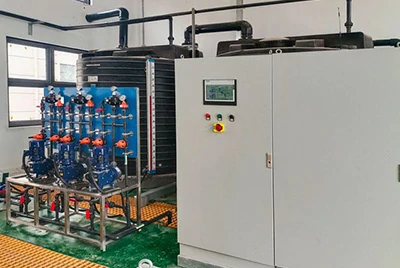
Produces low-concentration sodium hypochlorite on-site by electrolyzing dilute brine, suitable for municipal water supply, secondary water supply, industrial water, and other continuous chlorination disinfection applications.
Key parameters to confirm during selection include salt concentration, target chlorine output, treatment flow rate, operating current, continuous runtime, and hydrogen venting method.
Membrane-type hypochlorous acid generation system
Uses a membrane to separate the cathode and anode compartments, controlling electrolysis products and effluent pH to produce disinfectant water primarily composed of hypochlorous acid.
Electrodes must be matched in coordination with membrane placement, plate spacing, feed method, effluent flow rate, and sealing structure.
Swimming pool saltwater electrolysis disinfection equipment
Pool salt-chlorinators continuously generate available chlorine from low-concentration salt in circulating water for daily disinfection and algae inhibition in swimming pools and hot spring water.
Electrode design must account for low-salt chlorine evolution, water hardness, cathode scaling, polarity reversal cycles, and periodic cleaning requirements.
Seawater electrolysis chlorine generation equipment
Seawater electrolysis systems directly utilize chloride ions in seawater to generate available chlorine, suitable for seawater intakes, coastal power plants, ships, and seawater cooling systems.
Selection requires confirmation of seawater salinity, temperature, flow rate, suspended solids content, runtime, and electrolyzer structure.
Industrial cooling water electrolysis disinfection system
Industrial cooling water systems can control bacteria, algae, biofilm, and marine organism attachment through continuous or intermittent chlorination, reducing the risk of clogging in pipes and heat exchangers.
The solution must be determined based on cooling water source, circulation flow rate, dosing method, target available chlorine level, and operating cycle.
Replacement of electrodes in existing equipment
For operational sodium hypochlorite generators, pool salt-chlorinators, or seawater electrolysis systems, replacement options can be evaluated based on original electrode drawings, physical dimensions, and operating parameters.
During replacement, confirm the number of electrodes, active coating area, plate spacing, terminal positions, operating current, salt concentration, and whether polarity reversal is used.
Available products and components
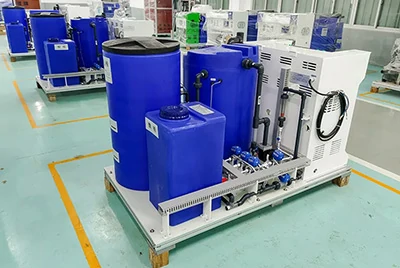
Chalco can supply ruthenium-iridium coated titanium anodes, titanium plate electrodes, titanium mesh electrodes, tubular electrodes, multi-cell electrode assemblies, titanium frames, and custom replacement electrodes manufactured to drawing specifications, based on project requirements.
Titanium plate anode
Titanium strip anode
Titanium mesh anode
Ruthenium Iridium Titanium Anode
Titanium Anode Tube
Titanium Anode Basket
For projects requiring complete assemblies or special connection structures, the scope of supply can be further confirmed based on equipment drawings.
Selecting the appropriate titanium anode coating for different disinfection conditions
Chalco Titanium matches suitable titanium anode coatings to water treatment and disinfection equipment based on electrolyte composition, target reaction, salt concentration, operating current, and mode of operation. Coating selection affects not only chlorine production efficiency but also cell voltage, operational stability, and electrode service life.
-
Ruthenium-iridium mixed metal oxide coating
Primary reaction: Chlorine evolution
Applicable equipment: Sodium hypochlorite generators, hypochlorous acid generators, pool salt-chlorinators, seawater chlorine generation systems
Product features: Suitable for chloride-containing water and capable of stable available chlorine generation.
-
Iridium-tantalum mixed metal oxide coating
Primary reaction: Oxygen evolution
Applicable equipment: Specialized electrolytic water systems and oxygen-evolution-dominant electrolysis systems
Product features: Suitable for acidic or oxygen-evolving environments; not intended as a standard coating for brine chlorination.
-
Polarity-reversing electrodes
Operating mode: Periodic reversal of electrode polarity
Applicable equipment: Pool salt-chlorinators and hard-water electrolysis systems prone to scaling
Product features: Periodic polarity reversal mitigates scaling, with bidirectional coatings tailored to water hardness and reversal cycle.
Matching the right electrode structure to your equipment
Electrolyzers differ in flow rate, installation space, active area, and gas venting methods. Chalco Titanium can match appropriate electrode structures based on equipment drawings and operating parameters.
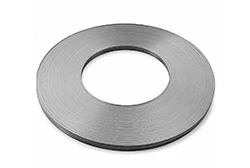
Titanium plate electrodes
Structurally stable with easily controlled plate spacing, suitable for sodium hypochlorite generators, pool salt-chlorinators, and multi-plate electrolyzers.
Contact us now
Titanium mesh electrodes
Excellent water permeability and efficient bubble release, ideal for seawater chlorination, brine disinfection, and equipment requiring large reaction areas.
Contact us nowTubular and rod-shaped electrodes
Compact design, suitable for inline electrolyzers, on-demand chlorination systems, and projects with limited installation space.
Contact us now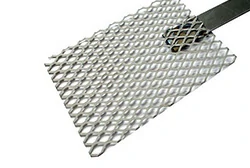
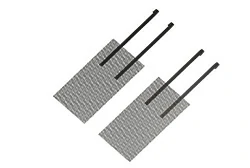
Multi-cell electrode assemblies
Integrated units combining anodes, cathodes, and connection structures, ideal for new equipment integration, electrode replacements, and custom manufacturing to drawings.
Contact us nowKey factors affecting chlorine production efficiency and electrode lifespan
Chlorine production efficiency and electrode lifespan depend not only on the coating but also closely on water quality, operating parameters, and electrolyzer design.
- Salt concentration: Insufficient salt concentration reduces chlorine evolution efficiency and increases energy consumption per unit of chlorine produced.
- Chloride ion content: Directly influences available chlorine generation capacity.
- pH and temperature: Water pH and temperature affect the form of available chlorine and electrode operating conditions.
- Current density: Too low limits chlorine output; too high accelerates coating degradation.
- Flow distribution: Uniform flow ensures stable mass transfer and current distribution.
- Bubble venting: Trapped bubbles block the electrode surface, reducing effective reaction area.
- Water hardness: Calcium and magnesium ions readily form scale on the cathode surface.
- Polarity reversal cycle: Proper reversal mitigates scaling but cannot fully replace cleaning.
- Electrode spacing: Excessive spacing increases voltage; too narrow raises risks of short-circuiting and scaling.
- Power supply stability: Voltage fluctuations, transient overcurrent, and excessive ripple negatively impact electrode lifespan.
- Continuous runtime: Extended high-load operation requires sufficient coating loading and adequate heat dissipation.
- Impurities and suspended solids: Corrosive ions and particulates may damage the coating or cause inter-electrode blockage.
Chalco Titanium can tailor coating systems, electrode structures, and operating parameters to actual working conditions, reducing chlorine output decay and premature electrode failure.
Provide these parameters for rapid solution matching
Chalco Titanium can determine the appropriate electrode coating, active area, and assembly structure based on the following information:
- Water source type
- Salt concentration or chloride ion content
- Water pH
- Water temperature and hardness
- Treatment flow rate
- Target available chlorine concentration
- Hourly chlorine output
- Continuous or intermittent operation mode
- Operating current and voltage
- Requirement for periodic polarity reversal
- Electrode dimensions and quantity
- Plate spacing and terminal positions
- Electrolyzer drawings or equipment interfaces
- Photos of existing electrodes and current operational issues
Frequently asked questions
Which titanium anode coating is typically selected for water treatment and disinfection equipment?
Sodium hypochlorite generators, pool salt-chlorinators, and seawater chlorine generation systems typically use ruthenium-iridium mixed metal oxide coatings. The specific formulation depends on salt concentration, current density, and operating mode.
How should titanium plate and titanium mesh electrodes be selected?
Titanium plate electrodes offer structural stability and are suitable for fixed electrode spacing and multi-plate electrolyzers; titanium mesh electrodes provide better water flow and gas release, making them ideal for equipment requiring larger reaction areas.
Can standard titanium anodes be used in polarity-reversing operation?
No. Polarity-reversing systems require specially designed bidirectional-coated electrodes, matched according to water hardness, operating current, and reversal cycle.
Why does chlorine output decline after the equipment has been running for some time?
Common causes include insufficient salt concentration, cathode scaling, uneven flow, poor electrical connections, or anode coating aging-requiring inspection alongside cell voltage and operational records.
Does water hardness affect electrode operation?
Yes. Calcium and magnesium ions in hard water readily deposit on the cathode surface, leading to increased cell voltage, reduced chlorine output, and more frequent cleaning.
Can replacement electrodes be manufactured to match existing equipment drawings?
Yes. Chalco Titanium can evaluate replacement solutions based on original electrode drawings, physical dimensions, connection points, and operating parameters.
What is the service life of titanium anodes?
Service life depends on the coating system, precious metal loading, current density, water quality, polarity reversal method, and operating duration-it cannot be determined by electrode size alone.
Get the right solution for your water treatment and disinfection needs
Whether you are developing new electrolytic disinfection equipment or need to replace existing electrodes, Chalco Titanium can help match the appropriate titanium anodes, electrode structures, and component solutions based on water quality, chlorine output, operating parameters, and equipment drawings.
Send your project parameters, equipment drawings, or original electrode information to receive selection and quotation recommendations.


