

Titanium Anodes for Electrolytic Copper Foil
Updated : Aug. 21, 2026Chalco Titanium provides titanium anodes for lithium battery copper foil and PCB copper foil production equipment, available in monolithic, strip, back-pull, and segmented configurations. The anode working surface can be customized based on cathode drum diameter, effective width, anode cell structure, and mounting interfaces to match the required curvature and anode–cathode gap of the equipment.
Chalco Titanium can match Ir-Ta MMO coatings to your electrolyte, temperature, and current density, supporting new fabrication, replacement, and recoating services.
Send your anode drawings, cathode drum dimensions, electrolyte parameters, and operating current to receive a titanium anode solution tailored to your copper foil production equipment.
Titanium electrodes types for electrolytic copper foil
Chalco Titanium offers standard Ir-Ta MMO titanium electrodes and next-generation MOC composite-coated titanium electrodes, customizable according to copper foil equipment structure, electrolyte parameters, and operational requirements.
Ir-Ta MMO titanium electrode
Featuring a proven Ir-Ta MMO oxygen-evolving coating, this electrode is suitable for standard lithium battery and PCB copper foil production equipment. It can be customized based on cathode drum size, anode structure, and operating conditions, making it ideal for new line integration, old anode replacement, and recoating projects.
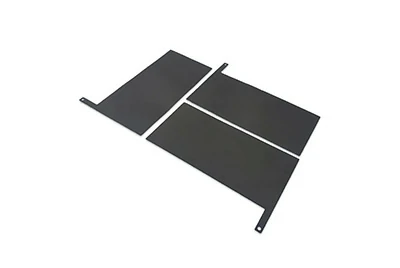
- Titanium substrate: TA1 commercial pure titanium
- Substrate thickness: Customized according to anode structure and equipment drawings
- Coating: Ir-Ta MMO oxygen-evolving coating
- Product forms: Monolithic, FIP strip, back-pull, and embedded structures
- Dimensions: Customized based on cathode drum diameter, effective width, and mounting interface
- Electrolyte: H2SO4 (30%) + CuSO4
- Current density: 3000 A/m²
- Operating temperature: 60°C
- Service life: ≥2 years
- pH: Strongly acidic
- Main components: IrO2 + X
- Applications: Lithium battery copper foil and PCB copper foil equipment
MOC titanium electrode – Chalco specialty product
The MOC titanium electrode features a noble metal–graphene composite coating and is a new specialty product from Chalco. It is especially suited for copper foil projects demanding high electrical stability, uniform current distribution, and reliable continuous operation.
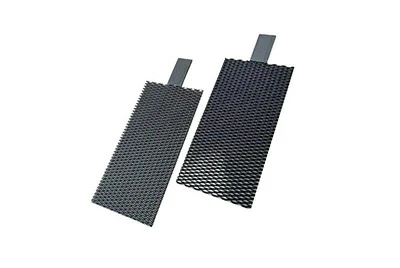
- Titanium substrate: TA1 commercial pure titanium
- Substrate thickness: 1 mm / 2 mm or customized
- Coating: MOC composite coating based on noble metals and graphene
- Product forms: Plate, mesh, and custom structures
- Dimensions: Manufactured according to customer drawings
- Application: Copper foil projects requiring enhanced conductivity and stable continuous operation
MOC titanium electrodes offer the following advantages over conventional titanium electrodes:
- Low resistance and low power consumption: Lower cell voltage; reference data indicates power consumption can be reduced by approximately 10%–20%.
- Long service life: The composite coating bonds stably with the titanium substrate, making it suitable for continuous operation.
- Reduced product contamination: As an insoluble anode, it minimizes dissolution of anode material into the electrolyte and copper foil.
- Supports higher current density: Delivers higher current output and efficiency, ideal for high-capacity copper foil production.
- Excellent corrosion resistance: Performs reliably in highly acidic and corrosive electrolytes.
Applications of titanium electrodes for electrolytic copper foil
Chalco Titanium's standard Ir-Ta MMO and MOC titanium electrodes are suitable for various types of electrolytic copper foil production equipment and can be customized based on copper foil application, equipment structure, and operating conditions.
-
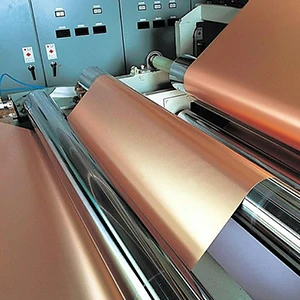 Lithium battery copper foil
Used in continuous production of copper foil for lithium-ion battery current collectors, ideal for production lines requiring thin gauges, wide widths, uniform thickness, and stable continuous operation.
-
 PCB and CCL copper foil
Used in PCB and copper-clad laminate (CCL) copper foil production, helping maintain stable electrolysis zones and current distribution to support precise control of foil thickness and surface quality.
-
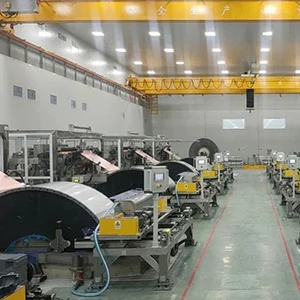 New copper foil production lines
Custom monolithic, strip, or other titanium anodes can be supplied for new production equipment based on cathode drum diameter, effective width, anode cell structure, and current conduction method.
-
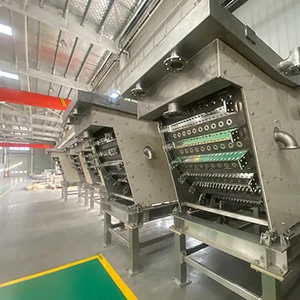 Existing anode replacement and recoating
Suitable for projects involving aged anodes with increased cell voltage, deactivated coatings, localized scaling, or equipment retrofits. Replacement, repair, or recoating solutions can be evaluated based on original anode drawings, measured dimensions, and operational records.
Application cases of titanium anodes for electrolytic copper foil
Chalco Titanium's Ir-Ta MMO titanium anodes are used in lithium battery copper foil, PCB copper foil, and other high-purity electrolytic copper foil projects, and can be customized according to foil machine structure, electrolyte parameters, and target foil specifications.
European ultra-high-purity copper foil project
In recent years, we supplied Ir-Ta MMO titanium anodes to a European copper foil manufacturer for ultra-high-purity electrolytic copper foil production. The project focused on controlling anode stability and minimizing contamination risks during electrolysis to reduce surface defects and impurities in the copper foil.
Long-term supply for overseas copper foil production lines
We continuously supply titanium anodes to overseas copper foil manufacturers, tailoring anode solutions to each production line's current density, electrolyte composition, and equipment structure to help customers maintain stable operations and extend anode replacement cycles.
PCB copper foil project
Ir-Ta MMO titanium anodes are suitable for electrolytic copper foil production for PCBs and copper-clad laminates. Stable working surfaces, consistent anode–cathode gaps, and uniform current distribution help control foil thickness and surface uniformity, providing a reliable base foil for subsequent roughening and surface treatments.
High-strength and high-precision copper foil project
For copper foil projects with stringent requirements on thickness, strength, and surface quality, titanium anodes can be customized based on cathode drum dimensions, operating current density, and electrolyte composition to support continuous, wide-width, high-precision copper foil production.
If your project also involves ultra-high-purity, lithium battery, or PCB copper foil production, please provide your existing anode drawings, cathode drum dimensions, and operating parameters. Chalco Titanium can leverage experience from similar projects to evaluate suitable anode structures, coating systems, and replacement solutions.
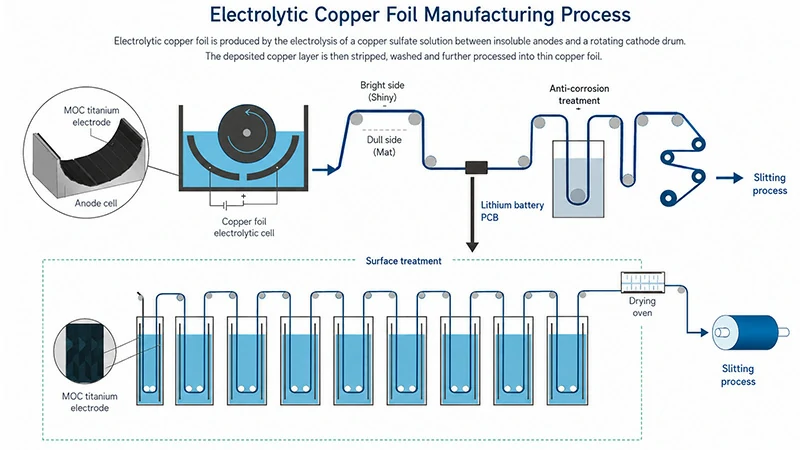
Production process of electrolytic copper foil
Electrolyte feeding
Copper sulfate electrolyte enters the electrolysis zone between the titanium anode and rotating cathode drum from the bottom of the cell and maintains stable flow under the circulation system.
Copper electrodeposition
Upon electrification, copper ions in the electrolyte continuously deposit onto the cathode drum surface, gradually forming a copper foil with controllable thickness.
Foil stripping
As the cathode drum rotates continuously, the formed copper foil is stripped off the drum surface and conveyed to downstream processing stages.
Surface treatment
The base foil undergoes cleaning, roughening, or other surface treatments according to performance requirements for lithium battery or PCB copper foil.
Anti-corrosion treatment
Anti-oxidation or anti-corrosion treatments enhance the surface stability of the copper foil, reducing oxidation risks during storage and subsequent processing.
Drying and slitting
The treated copper foil is dried, slit to the target width, inspected, and wound into rolls.
Electrolysis principle
During electrolysis, cations in the electrolyte migrate toward the cathode, where they gain electrons and are reduced. Anions move toward the anode and lose electrons, undergoing oxidation. When two electrodes are immersed in a copper sulfate solution and connected to a DC power source, copper and hydrogen gas deposit on the electrode connected to the negative terminal. If the anode is made of copper, copper dissolution and oxygen evolution occur simultaneously. The reactions are as follows:
Cathode: Cu²⁺ + 2e⁻ → Cu
2H⁺ + 2e⁻ → H₂↑
Anode: 4OH⁻ → 2H₂O + O₂↑ + 4e⁻
2SO₄²⁻ + 2H₂O → 2H₂SO₄ + O₂↑ + 4e⁻
Copper dissolved from the anode replenishes the copper ions consumed in the electrolyte. The cathode surface is specially treated so that the deposited copper layer can be peeled off, yielding a copper sheet of specific thickness. Such functionally engineered copper sheets are known as copper foil.
Curved working surface and anode–cathode drum gap control
After installation, titanium anodes for electrolytic copper foil must form a matching curved working surface with the rotating cathode drum. Chalco Titanium can customize monolithic, strip, or segmented anode assemblies based on cathode drum diameter, effective width, anode cell structure, and mounting interfaces.
Inner arc radius
The anode's inner arc radius is designed according to the cathode drum's outer diameter and anode cell dimensions to ensure stable alignment between the anode working surface and the cathode drum.
Anode–cathode drum gap
By controlling anode curvature, plate thickness, and mounting position, variations in inter-electrode distance across different zones are minimized, helping maintain uniform current distribution.
Working surface profile accuracy
Controlling the anode working surface's profile tolerance, flatness, and height differences between adjacent modules reduces localized overcurrent and transverse thickness variation in the copper foil.
Installation accuracy
Mounting holes, back-pull bolts, and support structures can be machined to match original equipment drawings, facilitating integration with new equipment or replacement of old anodes.
Custom dimensions
Customization is available based on cathode drum diameter, arc length, central angle, effective width, and individual anode segment size.
Coating selection for copper foil titanium electrodes
Electrolytic copper foil production typically operates in acidic copper sulfate electrolytes. Chalco Titanium offers proven Ir-Ta MMO coated titanium electrodes as well as MOC titanium electrodes featuring a noble metal–graphene composite system, with coating selection matched to your electrolyte, current density, and operational requirements.
Standard Ir-Ta MMO coating
Ir-Ta MMO is a mature oxygen-evolving coating for acidic environments, offering good electrocatalytic activity and corrosion resistance. It is suitable for standard lithium battery and PCB copper foil production equipment, as well as for replacing or recoating aged anodes.
MOC composite coating
MOC titanium anodes use a composite coating of precious metals and graphene, specifically engineered to improve resistance, current output, and continuous operation performance. They are better suited for projects with stringent requirements on energy consumption, current density, and copper foil quality stability.
Select based on operating conditions
Selection of either anode type must consider copper sulfate and sulfuric acid concentrations, operating temperature, current density, chloride and fluoride ion levels, and target service life-never rely solely on the coating name.
Designed for target service life
Anode lifespan is influenced by the coating system, coating loading, current density, electrolyte impurities, frequency of start-stop cycles, and maintenance practices. We can match a suitable solution to the customer's desired operational cycle.
Custom coating areas
Coating can be applied to the working surface, edges, or specified zones according to anode structure and actual electrolysis area, meeting requirements for monolithic, strip-type, or other custom anode configurations.
Why choose Chalco Titanium?
- Dual-path electrode technology: We offer both mature Ir-Ta MMO titanium anodes and MOC composite-coated titanium anodes, selecting the optimal solution based on copper foil type, electrolyte parameters, current density, and operational requirements.
- Complete manufacturing capability: Our production covers TA1 titanium substrate selection, machining, welding, annealing and leveling, surface treatment, coating preparation, multiple coating applications, and high-temperature sintering.
- Curved anode fabrication: We can machine curved working surfaces according to cathode roll diameter, anode tank structure, and equipment drawings, precisely controlling inner arc dimensions and anode-to-cathode roll spacing.
- Specialized coating equipment: Equipped with facilities for coating preparation, high-temperature sintering, and related production processes, ensuring controlled coating distribution across different zones and batch-to-batch consistency.
- Raw material inspection: Incoming checks are performed on titanium substrates, precious metal raw materials, and composite coating materials to minimize performance variations caused by raw material fluctuations.
- Quality inspection capability: We inspect anode dimensions, working surfaces, coating condition, and test coupons processed with the batch, and evaluate coating performance through accelerated lifetime testing.
- Multiple structural customizations: We support monolithic, strip-type, back-pull, embedded, and other custom structures to meet needs for new production lines or replacement in existing equipment.
- New manufacturing and recoating services: We provide assessments for new anode production, old anode replacement, and substrate recoating projects, helping customers maximize reuse of repairable titanium substrates.
- Selection based on actual operating conditions: Anode solutions are designed by comprehensively considering copper sulfate concentration, sulfuric acid concentration, temperature, current density, impurity levels, and target service life.
- Overseas project support: We can manufacture based on customer drawings, used anode samples, and equipment parameters, supporting copper foil production line integration, upgrades, and replacements.
Other titanium anode products from Chalco Titanium

Platinized Titanium Anode
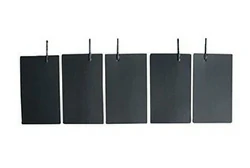
Ruthenium Iridium Titanium Anode
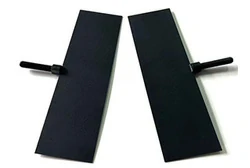
Lead Dioxide Coated Titanium Anode
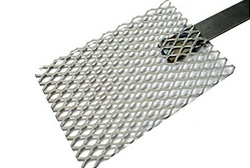
Titanium Mesh Anode

Titanium Anode Tube
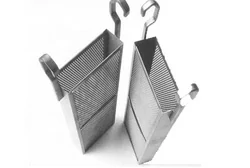
Titanium Anode Basket
Frequently asked questions
Why are titanium anodes used in electrolytic copper foil production?
Titanium anodes use corrosion-resistant titanium as the substrate, coated with an electrocatalytically active layer, enabling long-term operation as insoluble anodes in acidic copper sulfate electrolytes-minimizing anode dissolution effects on electrolyte purity and copper foil quality.
What is the difference between Ir-Ta MMO titanium anodes and MOC titanium electrodes?
Ir-Ta MMO is a mature oxygen-evolving coating solution suitable for most standard copper foil production lines. MOC titanium electrodes use a composite coating of precious metals and graphene, making them ideal for projects demanding higher performance in resistance, current density, and continuous operational stability.
Can you customize based on existing equipment drawings?
Yes. Chalco Titanium can customize monolithic, strip-type, back-pull, or other configurations according to cathode roll diameter, effective width, anode tank structure, inner arc dimensions, mounting hole positions, and electrical connection interfaces.
How long is the service life of titanium anodes?
Service life depends on the coating system, coating loading, current density, electrolyte temperature, impurity content, and maintenance practices. Evaluation must be based on actual operating conditions-not fixed timeframes.
Which electrolyte parameters affect anode selection?
Key parameters include copper sulfate concentration, sulfuric acid concentration, operating temperature, current density, and levels of chloride, fluoride, and other impurities. These factors directly influence coating selection and expected lifespan.
Can used titanium anodes be recoated?
Some used anodes can be reprocessed and recoated after inspecting the titanium substrate for thickness, deformation, corrosion, weld integrity, and electrical contact structure. If the substrate is severely damaged, new manufacturing is recommended.
How to determine when a titanium anode needs replacement or recoating?
Common indicators include persistently rising cell voltage, localized coating delamination, visible scaling on the anode surface, copper foil thickness fluctuations, or abnormal current distribution. We recommend combining operational records with physical anode inspection for accurate assessment.
What information is needed for a quotation?
Please provide anode drawings, cathode roll diameter, effective width, anode structure, electrolyte composition, operating temperature, current density, target service life, and photos of existing anodes to enable rapid solution evaluation.


