

Titanium Electrode for Salt Chlorinator
Updated : Aug. 21, 2026Chalco Titanium provides MMO-coated titanium electrodes for salt chlorinators, salt cells, and saltwater chlorine generators, used in electrolytic chlorine generation units within pool salt-chlorination disinfection systems.
Chalco Titanium offers Ru-Ir MMO-coated titanium anode plates, titanium electrode assemblies, replacement titanium electrodes, and custom titanium electrode components suitable for residential pool salt chlorinators, commercial salt chlorine generators, SPA disinfection systems, and OEM pool equipment projects.
Send your salt cell drawings, photos of old electrodes, plate dimensions, target chlorine output, or operating current to receive a quotation and solution for Chalco Titanium salt chlorinator electrodes.
What is a salt chlorinator?
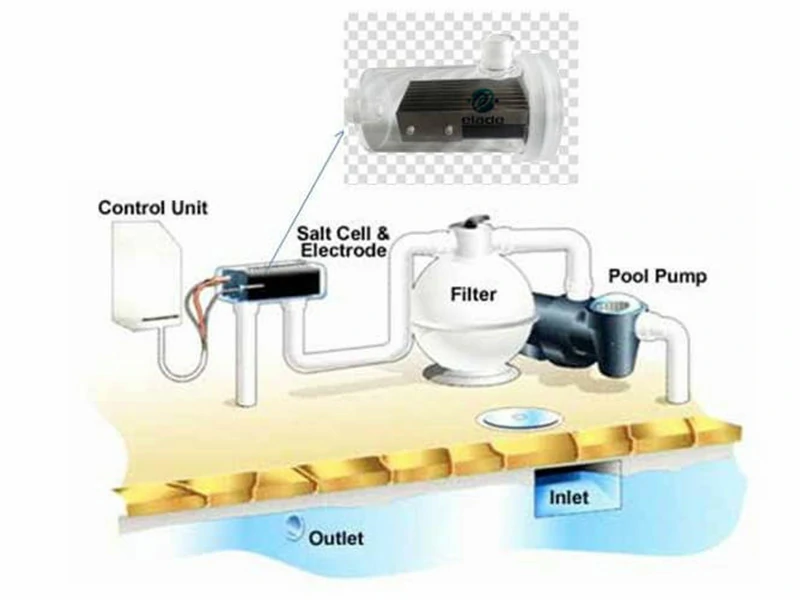
A salt chlorinator, also known as a salt chlorine generator or saltwater chlorinator, is an electrolytic device used in pool salt-chlorination disinfection systems. It generates active chlorine for pool sanitation by electrolyzing salt-containing pool water.
A complete salt chlorinator typically consists of a controller, power supply, salt chlorinator cell, sensors, and plumbing fittings. The titanium electrode is installed inside the cell and serves as the core component responsible for electrolytic chlorine generation from saltwater.
As saltwater flows through the salt chlorinator cell, current passes through the titanium electrode plates, enabling electrochemical reactions on their surfaces. The electrode's coating, effective surface area, number of plates, connection method, and operating current all influence the chlorine output performance and service life of the salt chlorinator.
What is a titanium electrode for salt chlorinator?
A titanium electrode for salt chlorinator is a titanium-based component installed inside the salt chlorinator cell, typically composed of a titanium substrate and an MMO coating, used for chlorine generation via saltwater electrolysis.
During operation of the salt chlorinator, the energized titanium electrode plates come into contact with saltwater, converting chloride ions into active chlorine on the electrode surface. This process provides daily disinfection for pools, SPAs, and commercial pool systems.
Chalco Titanium offers MMO-coated titanium electrodes, Ru-Ir coated titanium anode plates, titanium electrode assemblies, replacement titanium electrodes, and custom titanium electrode components suitable for salt chlorinators, salt cells, pool chlorinators, and salt chlorine generators.
Where is the titanium electrode used in a salt chlorinator?
The titanium electrode is used inside the salt chlorinator cell and serves as the core electrode component for electrolytic chlorine generation.
Salt chlorinator → Salt chlorinator cell → Titanium electrode → MMO / Ru-Ir coating
| Part | Function |
| Salt chlorinator | Complete salt chlorination system for pool disinfection |
| Salt chlorinator cell | Electrolysis reaction chamber where saltwater undergoes electrolysis |
| Titanium electrode | Installed inside the cell to participate in chlorine generation from saltwater electrolysis |
| MMO / Ru-Ir coating | Catalytic coating on the titanium electrode surface that affects chlorine generation efficiency and service life |
Chalco Titanium provides MMO-coated titanium electrodes, Ru-Ir coated titanium anode plates, titanium electrode assemblies, and replacement electrodes for use inside the cell, which can be evaluated based on plate dimensions, hole positions, spacing, and connection methods.
Salt chlorinator titanium electrode technical specifications
Chalco Titanium offers MMO-coated titanium electrodes for salt chlorinators, salt cells, and salt chlorine generators, which can be matched according to electrolyzer structure, number of plates, installation dimensions, and chlorine output requirements.
| Item | Specification |
| Product name | Titanium electrode for salt chlorinator |
| Substrate | Pure titanium, Grade 1 or Grade 2 |
| Coating material | Iridium oxide + ruthenium oxide, IrO₂/RuO₂-based MMO coating |
| Coating thickness | 8–20 μm |
| Coated area | Double-sided coating |
| Shape | Solid titanium plate |
| Number of plates | 7 plates, 11 plates, or customized according to salt cell structure |
| Current density | <300 A/m² |
| Salt concentration | 0.3–0.5% |
| Service life | 10,000–18,000 hours, depending on current density, water quality, salt concentration, and operating conditions |
| Dimensions | 100×20 mm, 100×25 mm, 120×20 mm, 130×25 mm, 140×25 mm, 150×25 mm, 160×40 mm, 180×40 mm, 200×40 mm; also available via drawing-based customization using old electrode samples, cell housing, or technical drawings |
| Process | Sandblasting, acid pickling, brush coating |
| Warranty period | Can be confirmed based on project requirements and operating conditions |
Exact specifications must be determined in conjunction with the internal space of the salt chlorinator cell, plate spacing, connection method, operating current, target chlorine output, and required service life. Customers can provide photos of old electrodes, dimensions, hole positions, number of plates, or equipment drawings, and Chalco Titanium can assist in evaluating a suitable titanium electrode solution.
How does the titanium electrode work in saltwater electrolysis?
Saltwater enters the electrolyzer
Salt-containing pool water enters the salt chlorinator cell and flows through the area between the internal titanium electrode plates.
Current passes through the titanium electrode
Once powered, current flows through the titanium electrode plates, activating electrochemical reactions on their surfaces.
Chloride ions convert to active chlorine
Chloride ions in the saltwater react on the titanium electrode surface to generate active chlorine for pool disinfection.
Active chlorine enters the pool circulation system
The generated active chlorine is carried by the circulating water into the pool system for routine water disinfection.
Why do salt chlorinators use MMO-coated titanium electrodes?
- Suitable for saltwater electrolysis environments: Salt chlorinators operate long-term in saline water under electrical current and chlorine evolution conditions, requiring electrodes with excellent corrosion resistance and stability. Titanium substrates serve as stable carriers for MMO coatings and are well-suited for salt chlorinator electrolytic cells.
- Supports stable chlorine evolution: The MMO coating is the functional layer on the titanium electrode surface, commonly used to enhance chlorine evolution efficiency during saltwater electrolysis. Ru-Ir MMO-coated titanium electrodes are a common anode solution in salt chlorinators.
- Impacts chlorine output and service life: The electrode's coating system, effective surface area, number of plates, and current density directly affect the salt chlorinator's chlorine output, operating voltage, and service life.
- Suitable for custom electrode structures: MMO-coated titanium electrodes can be fabricated into plates, meshes, electrode assemblies, or custom components for various salt cell, pool chlorinator, and salt chlorine generator designs.
MMO coating types for salt chlorinator applications
Not all MMO coating formulations are optimized for saltwater electrolysis. Different coating systems vary in current density tolerance, chlorine evolution efficiency, service life, and cost. Selection should be based on the salt chlorinator's equipment type, chlorine output requirements, and operating conditions.
Ruthenium-iridium mixed oxide coating (RuO₂-IrO₂)
This coating is suitable for residential and light-commercial salt chlorine generators, typically operating at current densities of 5–20 mA/cm², and is one of the most commonly used formulations for pool chlorination.
RuO₂ provides primary catalytic sites for chlorine evolution, while IrO₂ stabilizes the coating and reduces risks of corrosion and passivation. Typical composition includes 40–60% RuO₂, 30–50% IrO₂, and 5–15% TiO₂ binder.
Chlorine conversion efficiency is typically 85–90%, with a service life of approximately 5–8 years under residential current densities. High current densities (>30 mA/cm²) may accelerate ruthenium dissolution and coating degradation.
Iridium-tantalum mixed oxide coating (IrO₂-Ta₂O₅)
This coating is suitable for high-current-density commercial and industrial chlorinators, typically operating at 20–100 mA/cm².
IrO₂ provides the electrocatalytic surface, while Ta₂O₅ forms a stable framework that helps reduce iridium migration and dissolution. Typical composition includes 60–80% IrO₂ and 20–40% Ta₂O₅.
Chlorine conversion efficiency is typically 88–93%, with a service life of approximately 8–12 years under commercial current densities. This coating is more expensive than Ru-Ir systems and is generally unnecessary for residential salt chlorinators.
Ruthenium-tin-cobalt ternary oxide coating
This coating is suitable for certain low-voltage, high-efficiency chlorinator designs. The addition of SnO₂ and Co₃O₄ reduces ruthenium content while maintaining adequate catalytic activity.
Chlorine efficiency is typically 82–88%, with a service life of approximately 4–7 years. Compared to Ru-Ir and Ir-Ta systems, this formulation has less field validation and should be evaluated only after clearly defining cost, efficiency, and lifespan requirements.
Chalco Titanium can assist in selecting an appropriate MMO-coated titanium electrode coating solution based on salt chlorinator cell structure, operating current, salt concentration, chlorine output, and target service life.
How to select coated titanium anodes for salt chlorine generators
When selecting titanium anodes for salt chlorine generators, consider more than just size or price-evaluate based on chlorine production requirements, electrolyzer structure, operating current, salt concentration, and target service life.
Anode plate size
Larger salt chlorine generators typically require larger anode plates or more plates to meet higher chlorine production rates. Anode plate dimensions should be confirmed based on cell housing, available space, plate spacing, and water flow path.
Parallel or series configuration
Titanium anodes can be configured in parallel or series depending on equipment design. Different connection methods affect current distribution, operating voltage, chlorine generation efficiency, and electrode assembly.
Anode service life
The service life of titanium anodes depends on the MMO coating system, coating thickness, current density, operating time, water quality conditions, and cleaning and maintenance methods. For continuously operated or commercial pool equipment, coating durability and long-term stability should be prioritized in evaluation.
Brine concentration
Brine concentration affects electrical conductivity and electrolysis efficiency. Excessively low salinity may impair chlorine generation performance, while excessively high salinity can increase operational risks for equipment. Salinity should be maintained within the design range specified for the salt chlorinator.
Chlorine production cost requirements
If a project has specific requirements regarding chlorine generation cost, energy consumption, or maintenance expenses, a comprehensive comparison should be made based on anode material, coating type, effective surface area, operating current, and replacement cycle-rather than judging solely by the unit price of a single anode.
Pool salt chlorinator electrolytic cell product series
Chalco Titanium offers a range of titanium electrode series for pool salt chlorinator electrolytic cells with varying dimensions and chlorine output capacities, suitable for pool salt chlorinators, salt cell replacements, and OEM salt chlorine generator integration projects. The specifications listed below serve as general selection references, but custom designs can also be developed based on existing electrode samples, electrolytic cell housings, number of plates, and connection methods.
| Model | Length (mm) | Width (mm) | Thickness (mm) | Number of plates | Output current | Chlorine output (g/h) |
| 001 | 250 | 60 | 1 | 7 | 27A | 50 |
| 002 | 200 | 60 | 1 | 7 | 21A | 35 |
| 003 | 130 | 60 | 1 | 7 | 14A | 25 |
| 004 | 110 | 60 | 1 | 7 | 12A | 20 |
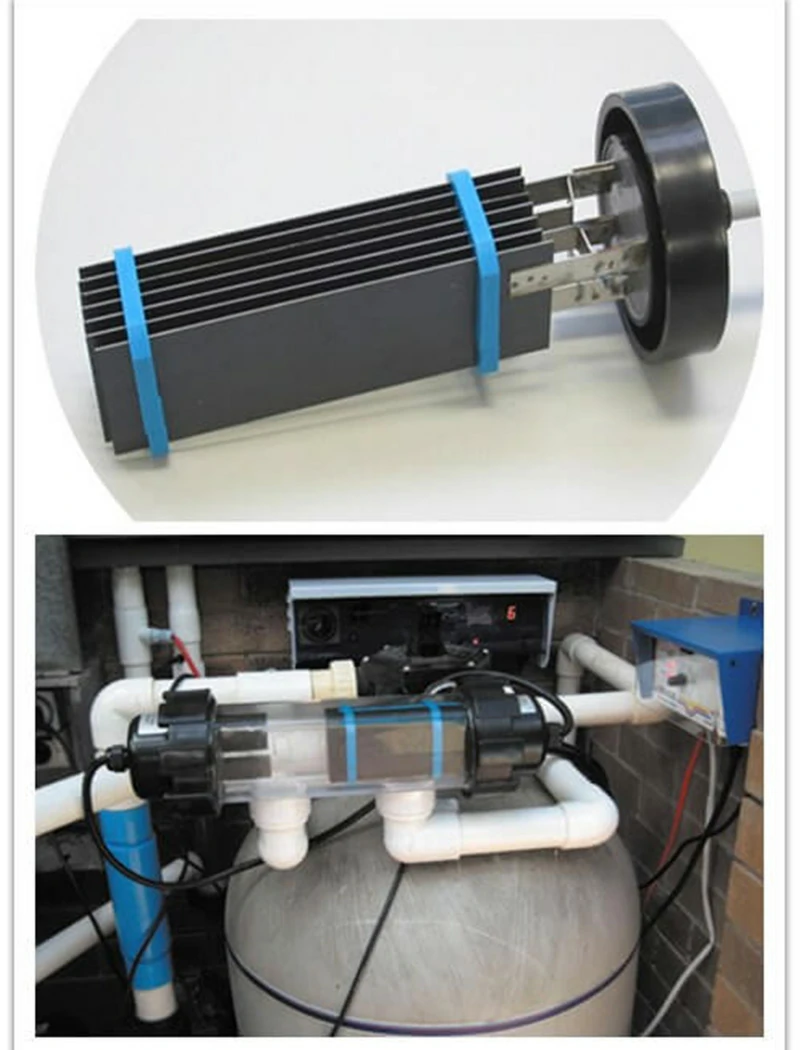
Proper maintenance of salt chlorinators
Proper maintenance of salt chlorinators and electrolytic cells helps reduce scale buildup, minimize electrode wear, and extend the service life of the salt chlorine generator.
Use of polarity-reversing electrodes
Polarity-reversing electrodes periodically switch electrode polarity during operation, helping to reduce scale accumulation inside the electrolytic cell, decrease the frequency of manual cleaning, and extend the lifespan of the chlorinator cell.
Maintain stable salinity
Salt chlorinators must operate within an appropriate salinity range. Most residential pool salt chlorination systems typically maintain salinity between 2700–3900 ppm, though the exact range should follow the equipment manufacturer's specifications.
Regularly clean the electrolytic cell
It is recommended to clean the chlorinator's electrolytic cell at least once per quarter, or more frequently depending on water quality, scaling conditions, and equipment performance. Care should be taken during cleaning to avoid damaging the MMO coating on the titanium electrode surface.
Avoid excessive cleaning
Overly frequent acid washing or aggressive cleaning may degrade the electrode coating. Cleaning intervals should be determined based on actual scaling conditions; routine cleaning of the cell is not recommended in the absence of visible scale buildup.
Prevent damage from power surges
It is advisable to turn off pool equipment during thunderstorms to prevent damage to the controller, power supply, or salt chlorinator cell caused by electrical surges.
Control calcium levels
High calcium hardness accelerates scaling in electrolytic cells. Calcium levels should be kept as low as reasonably possible while still complying with the water quality guidelines specified by the pool equipment manufacturer.
Other titanium anode products available from Chalco
In addition to MMO-coated titanium electrodes for salt chlorinators, Chalco Titanium also supplies various titanium anode products for electroplating, water treatment, seawater electrolysis, cathodic protection, electrochemical equipment, and custom electrolytic cell projects.
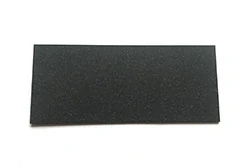
Ruthenium-iridium titanium anode
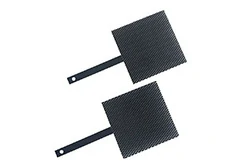
MMO titanium mesh anode

Titanium anode basket

Platinized titanium anode

Titanium anode tube
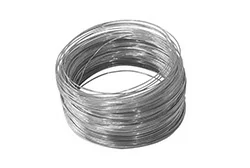
Platinized titanium anode wire
Quotation checklist for salt chlorinator titanium electrodes
Please provide the following information so Chalco Titanium can evaluate the specifications, coating solution, and quotation for your salt chlorinator titanium electrodes.
- Equipment type: salt chlorinator, salt cell, pool chlorinator, or salt chlorine generator
- Application scenario: residential pool, commercial pool, SPA, OEM equipment, or replacement of existing units
- Documentation: drawings of the electrolytic cell, photos of old electrodes, sample images, or installation structure diagrams
- Plate dimensions: length, width, thickness, hole positions, spacing, and number of plates
- Electrode structure: titanium plate, titanium mesh, electrode assembly, anode/cathode combination, or custom components
- Coating requirements: Ru-Ir MMO coating, IrO₂/RuO₂ coating, or other specified coatings
- Operating parameters: current, voltage, salt concentration, water temperature, operating time, and target chlorine output
- Procurement needs: sample testing, small-batch purchase, OEM integration, or long-term bulk supply
- Document requirements: MTC, COC, dimensional inspection reports, coating inspection records, or third-party inspection
Frequently asked questions
Can MMO titanium anodes be used in low-salinity pools?
Yes. MMO titanium anodes are suitable for salinity levels around 2500–3500 ppm, making them appropriate for most residential pools, above-ground pools, and standard salt chlorinator systems.
What happens when an MMO titanium anode fails?
MMO titanium anodes typically degrade gradually. As the coating's activity diminishes, chlorine output may decrease and cell voltage may rise, potentially triggering alarms or causing the system to shut down. At this point, electrode replacement should be considered.
Can MMO titanium anodes generate both ozone and chlorine simultaneously?
Standard MMO titanium anodes used in pool salt chlorinators are primarily designed for chlorine evolution and are not intended for ozone generation. If ozone production is required, the anode coating, potential, and overall electrolytic system design must be separately evaluated.
How do you calculate the required anode surface area for a salt chlorinator?
You can use the formula: Required surface area (cm²) = Operating current (mA) ÷ Design current density (mA/cm²).For example, a 50A salt chlorinator with a design current density of 30 mA/cm² requires approximately 1,667 cm² of active anode surface area.
Can only the anode plate be replaced in a salt chlorinator titanium electrode?
This depends on the structure of the existing electrode. Customers can provide photos of the old salt cell, anode plate dimensions, hole positions, number of plates, and connection method, and Chalco Titanium can assist in evaluating replacement options.
Is Ru-Ir MMO coating suitable for all salt chlorinators?
Ru-Ir MMO coating is suitable for most standard salt chlorinators and pool salt chlorine generators. For applications involving high current density, continuous operation, or special water conditions, alternative MMO systems such as Ir-Ta may be further evaluated.
What factors affect the service life of salt chlorinator titanium electrodes?
Key factors include the coating system, coating thickness, current density, salt concentration, water quality, operating time, cleaning methods, and electrolytic cell design.
Can Chalco Titanium provide custom electrode assemblies?
Yes. Chalco Titanium can supply custom titanium electrode components-including titanium anode plates, titanium mesh anodes, electrode assemblies, replacement electrodes, and tailored configurations-based on the specific structure of salt chlorinator cells.


